
Views: 222 Author: Amanda Publish Time: 2025-12-09 Origin: Site


Content Menu
● Shangchen: Data-Driven Rapid Prototyping Partner
● What Is Rapid Prototyping in Modern Manufacturing?
● Why Analytics Matters for Rapid Prototyping
● Core Analytics Types Used in Rapid Prototyping
● Analytics Throughout the Rapid Prototyping Workflow
● Design Analytics: Making Better Decisions Before Cutting Chips
● Process and Quality Analytics on the Shop Floor
● Customer and User Feedback Analytics
● AI and Predictive Analytics in Rapid Prototyping
● From Rapid Prototyping to Production: Using Analytics to Bridge the Gap
● How Analytics Supports Each Rapid Prototyping Stage
● Working with Shangchen on Analytics-Enabled Rapid Prototyping
● Best Practices for Using Analytics in Rapid Prototyping
● FAQ
>> 1: How do analytics tools reduce Rapid Prototyping time?
>> 2: What kind of data should be tracked during Rapid Prototyping?
>> 3: Can small companies benefit from analytics-driven Rapid Prototyping?
>> 4: How does analytics-supported Rapid Prototyping improve mass production?
>> 5: Why choose Shangchen for analytics-enabled Rapid Prototyping and manufacturing?
Rapid Prototyping has become a data‑driven process, where analytics tools guide design decisions, validate every iteration, and shorten the time from concept to market. When combined with an integrated OEM partner like Shangchen (sc-rapidmanufacturing.com), analytics‑driven Rapid Prototyping turns product development into a predictable, measurable, and scalable growth engine.
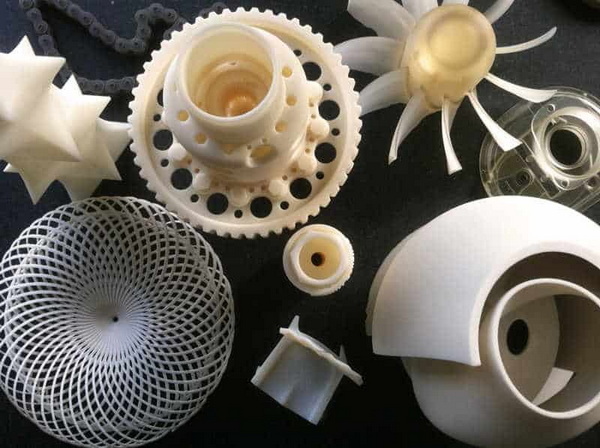
Shangchen (sc-rapidmanufacturing.com) is a China‑based factory integrating Rapid Prototyping, CNC machining, precision batch production, turning, sheet metal fabrication, 3D printing, and mold making under one roof for overseas brands, wholesalers, and manufacturers. By embedding analytics into each step—from CAD review to ramp‑up—Shangchen helps OEM clients iterate faster, de‑risk projects, and optimize cost and quality before mass production.
To make engineering communication clear for international teams, Shangchen's engineers can provide structured reports, dimensional summaries, and digital dashboards that visualize key Rapid Prototyping metrics across iterations. Combined with online video reviews of prototype builds, assembly checks, and test procedures, overseas customers gain full visibility into each iteration stage without needing on‑site visits.
Rapid Prototyping is a collection of methods that allow teams to quickly build physical or digital models of a product, test them, and refine the design through multiple short cycles. In manufacturing, Rapid Prototyping typically combines CNC machining, 3D printing, sheet metal fabrication, and soft tooling to create functional parts that resemble the final production design as closely as possible.
Analytics enhances this process by capturing data from every Rapid Prototyping cycle—dimensional accuracy, functional test results, defect types, lead times, and user feedback—and turning it into structured insights. This data‑driven view allows engineers and product managers to compare design options objectively, prioritize changes, and estimate how each Rapid Prototyping decision affects cost and time‑to‑market.
Without analytics, Rapid Prototyping can become a sequence of trial‑and‑error experiments that are hard to measure, repeat, or scale. Analytics tools solve this by defining measurable KPIs like cycle time per prototype, failure rate, tolerance deviation, and scrap levels, converting each Rapid Prototyping loop into a controlled experiment.
For OEM customers, this means that Rapid Prototyping is no longer just about “having samples on the table” but about understanding how the product and process behave together. When data is tracked consistently, every new prototype version can be compared to previous iterations, so teams can see clearly whether quality, cost, and manufacturability are improving or drifting.
Different analytics types support different phases of Rapid Prototyping and iteration, and combining them creates a powerful framework for decision‑making.
- Descriptive analytics summarizes what has happened in earlier Rapid Prototyping cycles, such as lead times, defect counts, and measurement results, making past performance visible.
- Diagnostic analytics helps teams understand why issues occurred by correlating problems with factors like material lot, machine, process settings, or design features.
- Predictive analytics uses historical Rapid Prototyping and production data to anticipate where failures or delays are likely to appear, so engineers can adjust design or process before building the next prototype.
- Prescriptive analytics goes a step further by suggesting specific actions—such as increasing wall thickness, changing fillet radii, or modifying machining parameters—to improve the next Rapid Prototyping iteration.
Shangchen can incorporate these analytics modes through structured reports, DFM feedback, and quality analysis so that each Rapid Prototyping cycle becomes smarter than the last.
Analytics adds value at almost every step of a Rapid Prototyping project, from the first CAD model to the pre‑production run.
At the concept and design stage, analytics tools can be used to review historical failure modes, cost structures, and lead times of similar products, helping teams choose better concepts before starting Rapid Prototyping. During manufacturing of prototypes, process and quality analytics track how closely real parts match design intent, revealing whether the design is realistic and robust. After testing, feedback analytics interpret laboratory, field, and user data to guide what the next Rapid Prototyping cycle should focus on.
Because Shangchen covers CNC machining, turning, sheet metal fabrication, 3D printing, and mold making, all these data points can be collected in a unified environment. This integrated view avoids the fragmentation that often occurs when Rapid Prototyping is spread across multiple suppliers.
Design analytics helps engineering teams optimize models before physical Rapid Prototyping starts, which often prevents costly rework.
Using rules and simulations, CAD‑based analytics can highlight thin walls, sharp corners, undercuts, unsupported overhangs, and other features that may cause difficulties in CNC machining, 3D printing, or mold making. Engineers can then adjust these features to align with Rapid Prototyping capabilities, reduce risk, and keep production routes efficient.
For Shangchen's OEM projects, design analytics can also recommend the most suitable technology for each phase of Rapid Prototyping, such as 3D printing for concept verification followed by CNC or sheet metal for functional prototypes. This avoids over‑engineering early samples and allows budgets to be used where they create the most value.
Process and quality analytics focus on what happens when Rapid Prototyping moves from CAD to physical manufacturing.
For CNC machining and turning, analytics can track cycle times, tool wear indicators, machine utilization, and key dimensional results for each Rapid Prototyping build. For 3D printing, analytics may record orientation, build height, layer thickness, support strategy, and material parameters, which can then be compared across iterations.
Quality analytics aggregates inspection data—caliper readings, CMM results, functional test outcomes, and visual checks—to show which features are consistently stable and which require design or process changes. Over multiple Rapid Prototyping cycles, these insights help to converge on a design that is repeatable, robust, and ready to scale.
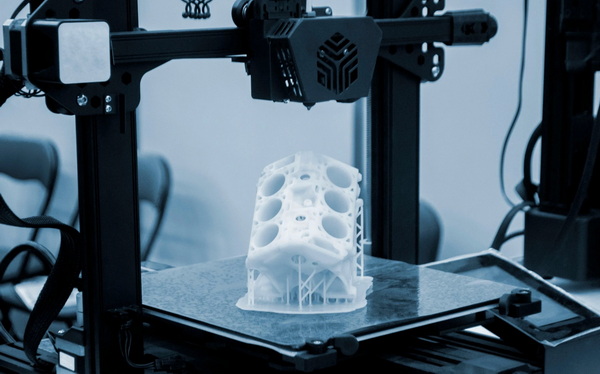
While engineering metrics are crucial, Rapid Prototyping exists primarily to delight users and satisfy market requirements, so feedback analytics are equally important.
Structured feedback from internal stakeholders, pilot customers, and test users can be collected through surveys, usability sessions, and performance reviews. When this feedback is analyzed and linked to specific Rapid Prototyping versions, it becomes clear which design choices improve user satisfaction and which do not.
Overseas OEM teams cooperating with Shangchen can link these insights directly to design changes and future Rapid Prototyping cycles. For example, if data shows that users struggle with assembly, Shangchen can help adjust part interfaces, tolerances, and features in the next iteration to improve usability and reduce field complaints.
AI‑driven predictive analytics is increasingly used to accelerate Rapid Prototyping and reduce risk by learning from past projects.
Machine learning models can discover patterns in historical Rapid Prototyping data, such as which geometries tend to warp in certain materials or which tolerance stacks frequently cause assembly issues. These insights can be applied automatically to new designs, warning engineers of potential problems before any physical prototype is produced.
For a factory like Shangchen that handles diverse Rapid Prototyping projects across sectors, this accumulated knowledge becomes a valuable resource. OEM customers benefit because each new project is guided not only by human expertise but also by a growing database of real‑world results.
One of the main challenges in product development is scaling smoothly from Rapid Prototyping to mass production. Analytics plays a crucial role in closing this gap.
All data gathered during Rapid Prototyping—validated dimensions, stable processes, proven materials, and known risk areas—can be reused to design tools, fixtures, and production workflows. Instead of treating Rapid Prototyping as a separate phase, analytics helps convert it into a preliminary version of the production system.
Because Shangchen also provides mold making, precision batch production, and related downstream processes, this continuity is particularly strong. The same team that handled Rapid Prototyping can apply the analytics history to calculate realistic cycle times, quality controls, and cost structures for mass production.
The following points summarize how analytics functions across key Rapid Prototyping stages.
- Requirements and concept: Analytics clarifies market needs, target costs, and performance benchmarks, giving the Rapid Prototyping process a clear objective.
- Design and DFM: CAD and simulation analytics assess manufacturability, stress behavior, and risk areas, so prototypes focus on the most promising design space.
- Prototype manufacturing: Process analytics track parameters, cycle times, and defects, giving clear feedback on how stable and efficient each Rapid Prototyping route is.
- Testing and validation: Quality analytics aggregate test data and inspection results, showing which features meet requirements and which need rework.
- User and market feedback: Feedback analytics connect real‑world reactions to specific prototype versions, guiding final design choices.
- Scale-up: Production analytics compare pilot runs and early mass production output with Rapid Prototyping benchmarks to maintain consistency and quality.
Shangchen can help OEM clients structure these stages and data flows into a single, coherent development system rather than separate activities.
For overseas brands, wholesalers, and manufacturers, one of the biggest advantages of working with Shangchen is the ability to connect internal analytics practices with a flexible Rapid Prototyping and production environment.
OEM teams can share CAD data, requirement documents, existing test results, and even dashboard screenshots to align KPIs before Rapid Prototyping begins. Shangchen can then mirror these metrics in its own reports and communication, ensuring that both sides interpret the data the same way.
By running Rapid Prototyping cycles on an agreed schedule and reviewing results via online meetings, annotated reports, and clear engineering summaries, decision‑making becomes transparent and repeatable. This method is particularly valuable for customers who want to maintain strong technical control while outsourcing manufacturing to a trusted partner.
To get the most value from analytics‑enabled Rapid Prototyping, OEM teams can follow several practical guidelines.
First, focus on a limited set of high‑impact KPIs instead of tracking too many metrics at once; typical examples are functional performance, dimensional stability, lead time, and cost. Second, standardize data collection methods and formats across Rapid Prototyping iterations to ensure that trends are reliable and actionable.
Third, combine quantitative analytics with visual and qualitative evidence from operators, engineers, and users, as these stories often reveal context that raw numbers cannot. Finally, establish a feedback loop where production data from later stages informs new Rapid Prototyping efforts when updating or redesigning products.
Analytics tools have transformed Rapid Prototyping from a purely hands‑on, intuition‑driven practice into a structured, measurable, and repeatable development process. When data is systematically collected and analyzed, every Rapid Prototyping iteration contributes not only to product improvement but also to a deeper understanding of manufacturing behavior and user needs.
For overseas brands, wholesalers, and manufacturers, partnering with Shangchen (sc-rapidmanufacturing.com) means accessing a full range of Rapid Prototyping services—CNC machining, turning, sheet metal, 3D printing, and mold making—supported by data‑driven decision‑making. This integration of Rapid Prototyping and analytics allows OEM customers to move from concept to production with less risk, higher confidence, and a stronger competitive position in global markets.
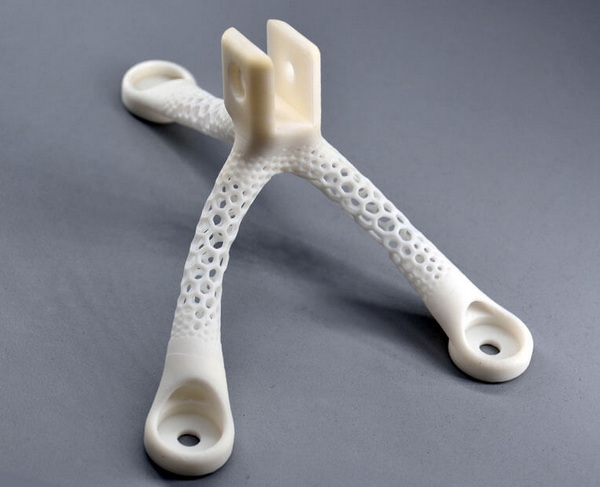
Analytics tools reduce Rapid Prototyping time by revealing problems earlier, so fewer physical cycles are needed to reach a production‑ready design. By tracking cycle times, defect patterns, and process stability, teams can identify and eliminate bottlenecks quickly instead of relying on trial and error.
Useful data includes dimensional inspection results, functional test outcomes, defect types, machine settings, material information, and user feedback related to each prototype version. When this data is recorded consistently throughout Rapid Prototyping, engineers can identify trends, trace root causes, and make targeted improvements to both design and process.
Small companies can benefit significantly because analytics‑driven Rapid Prototyping helps them use limited budgets and resources more effectively. Even simple dashboards and structured spreadsheets can reveal which design or process changes deliver the biggest impact, allowing smaller teams to make enterprise‑level decisions.
Analytics-supported Rapid Prototyping improves mass production by turning every prototype into a data point that helps define stable processes and robust design features. When these lessons are carried into tooling design, process planning, and early production, ramp‑up becomes smoother, with fewer surprises and lower quality risks.
Shangchen offers a complete chain of services—from Rapid Prototyping and CNC machining to batch production, sheet metal, 3D printing, and mold making—combined with structured engineering communication for overseas OEM clients. This combination of technical capability and analytics‑oriented workflows helps international customers manage risk, control quality, and scale products efficiently.

