
Views: 222 Author: Amanda Publish Time: 2025-12-24 Origin: Site


Content Menu
● What Is Rapid Prototyping Today?
● Why Analytics Platforms Matter for Rapid Prototyping
● How Analytics Speeds Each Stage of Rapid Prototyping
>> Optimized CNC and Turning Parameters
>> Smarter Material Selection and Sheet Metal Strategies
>> 3D Printing and Additive Process Control
>> Tooling, Molding, and Bridge Production
● Real-World Outcomes: Rapid Prototyping Powered by Data
● Integrating Analytics Into an OEM Rapid Prototyping Workflow
● Best Practices for OEMs Using Analytics-Driven Rapid Prototyping
● How Analytics Supports Cross-Border OEM Collaboration
● Enhancing Quality Control in Rapid Prototyping With Analytics
● Supporting Sustainability Goals in Rapid Prototyping
● FAQ About Analytics and Rapid Prototyping
>> 1. How do analytics platforms reduce Rapid Prototyping lead time?
>> 2. What data sources matter most for Rapid Prototyping analytics?
>> 3. Can analytics help choose between CNC, 3D printing, and sheet metal for Rapid Prototyping?
>> 4. How does predictive maintenance support Rapid Prototyping?
>> 5. What should OEMs look for in a Rapid Prototyping partner that leverages analytics?
Analytics platforms have become a core enabler of rapid prototyping by turning scattered design, process, and quality data into real-time insight that speeds every iteration loop. This is especially powerful when combined with CNC machining, turning, sheet metal fabrication, 3D printing, and molding services that can translate optimized parameters into physical parts for OEMs.[1]
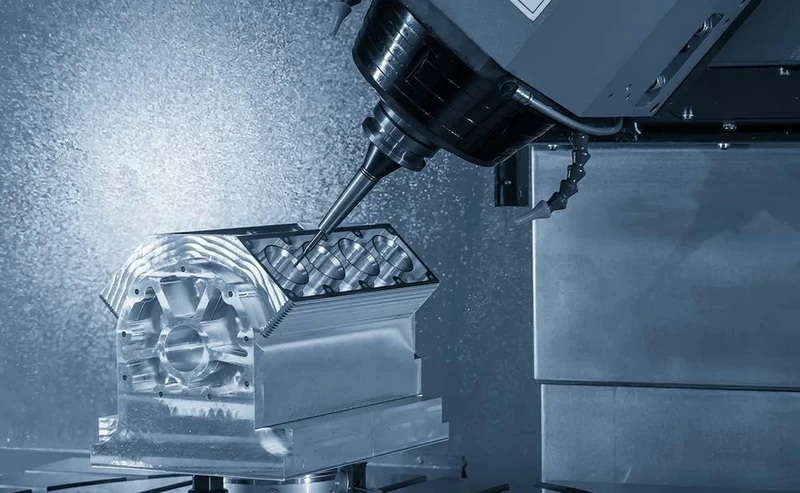
Modern Rapid Prototyping is a family of digital manufacturing methods used to quickly build physical parts from 3D CAD data for design verification, functional testing, and early market feedback. It compresses the time between idea and tangible prototype so that design, engineering, and marketing teams can learn and iterate much faster than with traditional tooling.[2]
Typical Rapid Prototyping workflows rely on:
- CNC machining and turning for high-precision metal and plastic components
- 3D printing for complex, lightweight, or highly customized geometries
- Sheet metal fabrication for enclosures, brackets, and structural parts
- Rapid tooling and molding for early injection-molded samples that mimic mass-production quality[2]
For OEM customers working with a partner like Shangchen (SC-RapidManufacturing.com), Rapid Prototyping projects can integrate all these processes in one coordinated workflow, making it easier to compare methods and move smoothly into bridge or low-volume production when designs stabilize.[1]
Analytics platforms consolidate data from machines, sensors, ERP/MES systems, and quality inspection into one environment for monitoring, prediction, and optimization. In Rapid Prototyping, this means every design iteration is informed by measurable, visualized performance instead of subjective impressions or isolated spreadsheets.[1]
Key capabilities of analytics that directly support Rapid Prototyping include:
- Real-time dashboards showing cycle time, defect rates, scrap, and machine utilization per prototype batch
- Predictive models that anticipate dimensional deviations, tool wear, or process drift before parts fail inspection
- Closed-loop feedback systems that push manufacturing and test data back to designers for the next Rapid Prototyping revision[1]
For international OEMs outsourcing to a Chinese Rapid Prototyping factory, analytics also brings transparency: stakeholders can see the status and performance of each Rapid Prototyping order without being physically present in the workshop.[1]
Analytics platforms change the tempo of Rapid Prototyping at every step—from initial concept evaluation to pre-production validation.
During early design exploration, analytics integrates user data, simulation results, and prototype test outcomes. This gives teams a fact-based way to decide which concepts deserve Rapid Prototyping and which can be dropped or parked before committing machining or 3D printing capacity.[1]
For design teams, the impact on Rapid Prototyping is significant:
- Requirements are prioritized using real usage or market data instead of assumptions
- Design A/B tests can be evaluated quantitatively across multiple Rapid Prototyping cycles
- Weak or redundant concepts are filtered early, reducing the number of physical prototypes that need to be built[1]
By the time CAD files reach a Rapid Prototyping supplier, they already represent designs that have been validated through analytics-driven reasoning, which makes every subsequent iteration more focused and efficient.
For CNC Rapid Prototyping, parameters such as feed rate, spindle speed, depth of cut, and toolpath strategy strongly influence accuracy, surface finish, and lead time. Analytics platforms mine historical machining data to discover which parameter sets deliver the best balance of speed and quality for specific materials, wall thicknesses, and geometries.[1]
In practice, this supports Rapid Prototyping by:
- Reducing trial-and-error setups through parameter libraries mapped to typical OEM features (pockets, ribs, thin walls)
- Cutting the risk of chatter, tool breakage, or warping via anomaly detection and alerts during machining
- Allowing “first-time-right” Rapid Prototyping on complex parts that would otherwise require multiple adjustments[1]
For turning operations, analytics can link insert type, cutting speed, and coolant strategy to dimensional stability and surface roughness, giving engineers data-backed recipes for future Rapid Prototyping runs on shafts, bushings, and rotational parts.[1]
Analytics can correlate material properties, supplier batches, and downstream test performance to guide smarter material selection during Rapid Prototyping. Instead of choosing materials only by specification sheets, teams see how each material actually behaves in machining, forming, and functional tests.[1]
For sheet metal Rapid Prototyping, data-driven insight helps:
- Predict springback and bending accuracy for specific thicknesses and bend radii
- Optimize nesting and cutting strategies to minimize scrap and reduce Rapid Prototyping lead times
- Select sheet metal materials that offer both fast manufacturability and realistic production-grade mechanical behavior[1]
This approach improves Rapid Prototyping quality while keeping the flexibility to adjust materials quickly if test results reveal better alternatives.
Additive manufacturing is central to many Rapid Prototyping projects because of its geometric freedom and low tooling cost. Analytics platforms track layer-by-layer data such as temperature, energy input, build time, and sensor-detected anomalies to stabilize print quality and shorten iteration loops.[2]
For Rapid Prototyping with 3D printing, analytics helps to:
- Tune parameters like layer height, scan speed, infill pattern, and support strategy for each part family
- Detect potential build failures early and allow interventions, saving time and material during Rapid Prototyping
- Link 3D printing parameters to downstream testing results, building a knowledge base for future Rapid Prototyping programs[2]
Over time, this knowledge base lets engineers choose the best additive process for each Rapid Prototyping requirement—whether the goal is functional testing, visual models, or pre-production fit checks.
When Rapid Prototyping transitions into soft tooling or rapid molds, analytics reduces risk by closing the loop between simulation, molding parameters, and actual part measurements. Gate locations, cooling channel designs, and venting strategies can all be evaluated against cycle times and quality results stored in the analytics platform.[1]
For OEMs, the benefits for Rapid Prototyping and early production include:
- Fewer mold trials before reaching stable, repeatable part quality
- Clear data on when Rapid Prototyping with 3D printing or CNC should give way to rapid tooling
- Better forecasting of yield and cost when ramping from Rapid Prototyping to pilot or small-batch production[1]
This creates a smooth continuum where Rapid Prototyping is not a separate world from production, but an integrated learning phase that feeds directly into long-term manufacturing strategy.
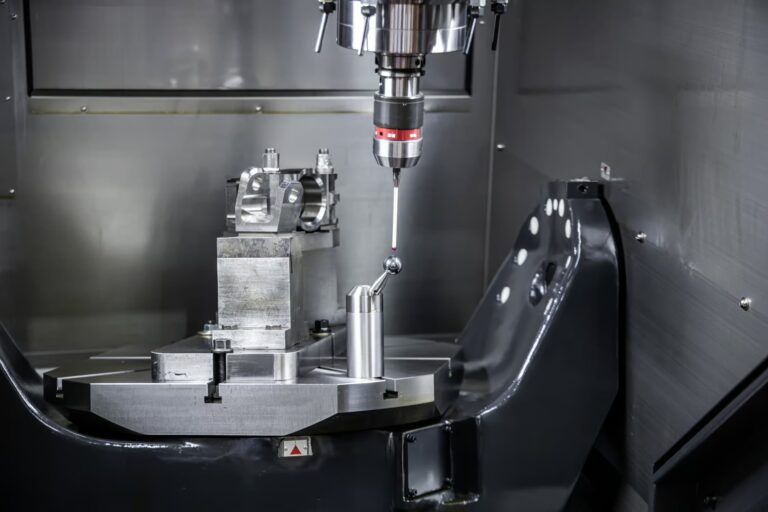
When a CNC and 3D printing supplier implements automated data collection from machines and inspection equipment, then adds dashboards and machine-learning models, the effect on Rapid Prototyping performance is measurable. Lead times can shrink, deviations can drop, and variation between batches can be systematically reduced.[1]
Case studies from data-driven Rapid Prototyping environments typically show patterns such as:
- Lead time reductions of 20–30% across repeated part families as parameter recipes and workflows are standardized
- Significant drops in dimensional non-conformities due to predictive adjustments in cutting or printing parameters
- More stable Rapid Prototyping results across different shifts and operators because decisions rely on analytics instead of personal habits[1]
Suppliers such as Shangchen that combine CNC machining, turning, sheet metal fabrication, 3D printing, and mold manufacturing with an analytics layer can offer OEM partners an integrated Rapid Prototyping ecosystem. This gives engineering teams one environment where data, processes, and physical prototypes reinforce each other across many iterations.[1]
Modern analytics platforms are designed to connect to IoT devices, MES, ERP, and standalone equipment commonly found in Rapid Prototyping workshops. For multinational OEMs working with Chinese factories, this connectivity enables a unified view of Rapid Prototyping projects across different sites, technologies, and time zones.[1]
A practical roadmap for analytics-enabled Rapid Prototyping often includes:
- Defining KPIs such as lead time per iteration, first-pass yield, engineering change frequency, and cost per prototype
- Instrumenting CNC machines, turning centers, 3D printers, and sheet metal lines to capture structured, time-stamped data
- Implementing dashboards for design, production, and quality teams to highlight bottlenecks in Rapid Prototyping flows
- Introducing predictive models for maintenance, tolerance drift, or surface defects once sufficient history has been collected[1]
By treating Rapid Prototyping data as a shared asset, OEMs can connect decisions made at the CAD stage with results seen at the machine, in inspection, and in the field.
To unlock the full value of analytics, OEMs need more than software—they need clear collaboration practices with their Rapid Prototyping partners.
Recommended best practices include:
- Aligning design and manufacturing teams around common Rapid Prototyping metrics and acceptance criteria
- Selecting suppliers capable of capturing and sharing detailed process data while protecting IP and confidentiality
- Using analytics to compare different Rapid Prototyping methods (CNC, turning, sheet metal, 3D printing, molding) for each part in terms of speed, cost, and performance
- Feeding market and field data back into the Rapid Prototyping phase so each new generation of product starts from a stronger baseline[1]
For many OEMs, partnering with a factory like Shangchen, which already combines multi-process capability with data-driven optimization, dramatically lowers the barrier to implementing analytics-enabled Rapid Prototyping.
Rapid Prototyping is often distributed: design teams may sit in Europe or North America while manufacturing partners operate in Asia. This geographical spread introduces communication gaps and delays that can slow Rapid Prototyping cycles if not handled carefully.[1]
Analytics platforms help bridge this distance by:
- Providing shared dashboards where OEM engineers can see the status of Rapid Prototyping orders in near real time
- Offering traceability from each design iteration to specific machine settings, materials, and inspection results at the factory
- Making it easier to discuss design and process changes based on objective data instead of long email threads or ambiguous reports[1]
For a Chinese Rapid Prototyping supplier, this level of transparency becomes a competitive differentiator, enabling smoother collaboration with brand owners, wholesalers, and manufacturers worldwide.
Quality control is often perceived as a final gate, but in an analytics-enabled Rapid Prototyping environment, it becomes a continuous, proactive function. Inspection data from CMMs, vision systems, and handheld gauges can be streamed into the analytics platform and correlated with process parameters and environmental conditions.[1]
The impact on Rapid Prototyping quality is substantial:
- Out-of-tolerance trends are detected earlier, prompting parameter adjustments or tool replacements before entire prototype lots are scrapped
- Critical features on OEM parts—such as sealing surfaces, alignment holes, or bearing fits—receive prioritized monitoring across iterations
- Quality data from Rapid Prototyping also informs future design decisions, making parts more robust and easier to manufacture in production[1]
Instead of treating each Rapid Prototyping batch as a standalone event, analytics turns them into a continuously expanding knowledge base about how the product behaves in manufacturing.
Many brands now include sustainability and resource efficiency in their product development KPIs. Analytics can support these goals directly within Rapid Prototyping campaigns by tracking material use, energy consumption, scrap, and rework rates across prototype iterations.[1]
When applied thoughtfully, this enables:
- Identification of Rapid Prototyping processes and materials with lower environmental impact for similar functional performance
- Reduction of unnecessary prototypes by improving the information yield of each iteration through smarter experiment design
- Data-backed communication of sustainability gains to stakeholders and end customers as part of broader ESG reporting[1]
In this way, analytics not only accelerates Rapid Prototyping but also ensures that iteration loops are aligned with long-term sustainability objectives.
Analytics platforms transform Rapid Prototyping from a sequence of isolated experiments into a continuously optimized, insight-driven system. By capturing machine data, quality results, and user feedback, they allow OEMs and manufacturing partners to reduce iteration time, increase accuracy, and make better decisions at every stage of Rapid Prototyping. When integrated with CNC machining, turning, sheet metal fabrication, 3D printing, and molding—such as those offered by Shangchen—analytics-enabled Rapid Prototyping becomes a powerful competitive advantage for global brands seeking fast, reliable, and scalable product development.[1]
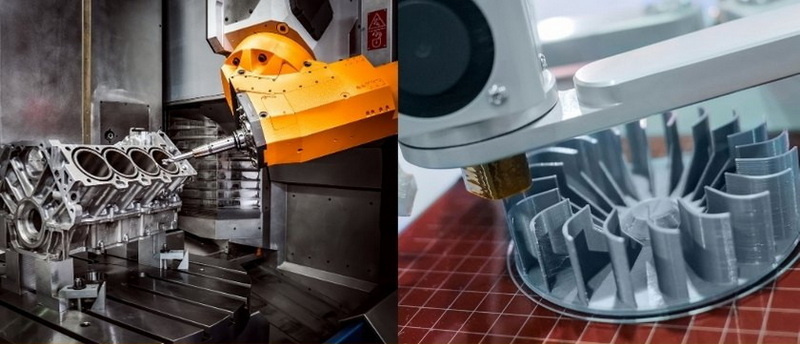
Analytics platforms reveal bottlenecks in machining, printing, inspection, and logistics so teams can eliminate waiting, rework, and unnecessary steps in each Rapid Prototyping cycle. They also standardize successful parameter sets and workflows, making setup and iteration faster for similar parts and future Rapid Prototyping projects.[1]
The most valuable data sources are CNC and 3D printing machine logs, material and supplier records, quality inspection results, and test or field feedback linked to specific Rapid Prototyping builds. Combining these with planning or ERP data gives a complete view of cost, time, and risk across the Rapid Prototyping lifecycle.[1]
Yes, analytics can compare historical cost, lead time, tolerance achievement, and failure rates for different processes applied to similar geometries and materials in Rapid Prototyping projects. OEMs can then choose the Rapid Prototyping route that best balances speed, precision, and realism for each design iteration.[1]
Predictive maintenance uses analytics to forecast when tools or machines will fail or drift out of specification, based on patterns in vibration, power use, cycle counts, and quality data from Rapid Prototyping runs. Servicing equipment before failure keeps Rapid Prototyping schedules stable and ensures consistent prototype quality across iterations.[1]
OEMs should seek partners who can capture detailed process data across CNC machining, turning, sheet metal, 3D printing, and molding, and who provide transparent analytics views for Rapid Prototyping projects. A partner like Shangchen that combines multi-process capability with data-driven optimization can support faster, more reliable global Rapid Prototyping and iteration cycles.[1]

