
Views: 222 Author: Amanda Publish Time: 2025-12-24 Origin: Site


Content Menu
● What Is Rapid Prototyping for Digital Experiences?
● Why Agencies Are Critical for Rapid Prototyping
● Typical Agency Rapid Prototyping Workflow
>> Discovery and Goal Definition
>> User Research and Experience Mapping
>> Information Architecture and Wireframing
>> High-Fidelity Rapid Prototyping
>> User Testing and Iteration Loops
>> Validation, Roadmapping, and Handoff
● Benefits of Agency-Led Rapid Prototyping
>> Speed to Market and Competitive Advantage
>> Cost Reduction and Risk Mitigation
>> Better Stakeholder Alignment
>> Stronger User Experience Quality
● Where Physical and Digital Rapid Prototyping Meet
● How Agencies Use Visuals and Media to Accelerate Rapid Prototyping
● Collaboration Models Between Agencies and Clients
● How to Choose an Agency for Rapid Prototyping
● FAQ
>> 1. How does Rapid Prototyping differ from traditional design?
>> 2. How fast can an agency deliver a Rapid Prototyping project?
>> 3. What types of digital products benefit most from Rapid Prototyping?
>> 4. How does Rapid Prototyping reduce development costs?
>> 5. Can Rapid Prototyping support both digital and physical product development?
Rapid prototyping has become the backbone of modern digital experience design, helping brands move from abstract ideas to validated interactive concepts in weeks rather than months. Agencies now act as end-to-end partners, blending UX strategy, interface design, engineering insight, and sometimes manufacturing-grade thinking to make Rapid Prototyping faster, less risky, and far more user-centric.[1][2]
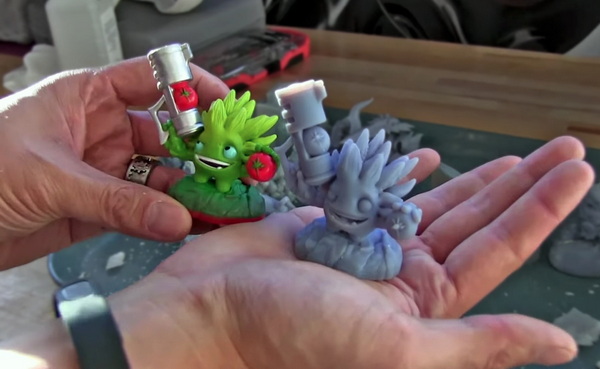
Rapid Prototyping in digital experiences is the practice of quickly creating interactive versions of apps, websites, or software so teams can test ideas, gather feedback, and refine UX before full-scale development. These prototypes often look and feel close to the final product but focus on the most critical flows or features rather than every edge case.[2][3]
For agencies, Rapid Prototyping is both a methodology and a service offering that unites user research, information architecture, interface design, and technical feasibility into fast design sprints. In many engagements, agencies deliver functional or clickable prototypes within two to four weeks so stakeholders can experience the product vision early and make informed decisions.[4][1]
Agencies specialize in Rapid Prototyping because they bring together cross-disciplinary skills that many in-house teams struggle to maintain. Their structured processes, tools, and experience reduce rework and accelerate the path from concept to minimum viable product (MVP).[5][1]
Key reasons brands rely on agencies for Rapid Prototyping include:[6]
- Deep UX and UI expertise focused on user-centric journeys that are easy to test and refine.
- Technical knowledge to ensure Rapid Prototyping remains aligned with scalable architecture and technology stacks.
- Experience orchestrating stakeholder workshops and decision-making sessions to reduce ambiguity.
- Access to advanced tools, from design platforms to hardware-oriented Rapid Prototyping capabilities when digital concepts connect to physical devices.[7]
Because agencies do this repeatedly across industries, their Rapid Prototyping practices bake in patterns and best practices that help clients avoid common pitfalls such as scope creep, unclear requirements, or misaligned expectations. This makes Rapid Prototyping not only faster but also more predictable and measurable for stakeholders.[8][9]
Agencies follow a repeatable Rapid Prototyping workflow that keeps speed and learning at the center of the engagement while still maintaining a high quality bar. Although details vary, the core phases are usually similar across digital experience projects.[3][4]
In discovery, the agency clarifies business objectives, user needs, and technical constraints that will shape Rapid Prototyping. Teams align on success metrics, target personas, and critical journeys such as onboarding, checkout, or device configuration flows.[10][11]
- Stakeholder interviews and requirement workshops clarify scope and priorities.
- Existing analytics, support logs, and market research are reviewed to understand current pain points.
- The agency identifies which parts of the experience will deliver the highest learning value through Rapid Prototyping.[8]
A strong discovery phase ensures Rapid Prototyping focuses on the right problems rather than just creating polished prototypes that do not address real user needs.[9]
Next, agencies conduct lean user research to ground Rapid Prototyping in real-world behavior instead of assumptions.[4]
- Methods include interviews, surveys, contextual inquiry, and competitor analysis to understand user expectations.
- Customer journeys and service blueprints visualize pain points, handoffs, and emotional highs and lows.
- The team decides which critical interactions and contexts must be reflected in the first Rapid Prototyping iteration.[11]
This research-driven approach makes Rapid Prototyping more effective because the resulting prototypes are anchored in observed needs and frustrations rather than internal opinions alone.[2]
Before applying visual polish, agencies define the structure and flow of the digital product.[3]
- Site maps, navigation schemas, and content hierarchies are created to outline the information architecture.
- Low-fidelity wireframes explore multiple options for layout and flow without getting bogged down in detailed styling.
- Rapid Prototyping at this stage emphasizes breadth, validating overall structure rather than perfecting individual screens.[12]
By separating information architecture from detailed visual design, agencies keep Rapid Prototyping agile and open to change in early rounds.[2]
Once the architecture is validated, agencies move into high-fidelity Rapid Prototyping that brings the interface to life.[8]
- Wireframes evolve into detailed UI designs with typography, color, spacing, and component systems.
- Interactive prototypes simulate real user flows such as sign-up, search, configuration, purchasing, or device control.
- Microinteractions and transitions are integrated so testers can experience the timing and feedback of the interface.[2]
For connected products and IoT experiences, digital Rapid Prototyping often runs in parallel with physical models produced by manufacturing partners using CNC machining, 3D printing, or sheet metal processes, ensuring the interface matches the physical ergonomics and constraints.[7]
Rapid Prototyping is most powerful when paired with frequent usability testing and structured iteration cycles.[13]
- Agencies recruit or access representative users and observe them completing tasks with the prototype.
- Qualitative feedback and performance metrics highlight friction, confusion, or unmet expectations in the experience.
- Each test round feeds into Rapid Prototyping refinements, from simplifying navigation to clarifying messaging and adjusting interaction patterns.[4]
Because these Rapid Prototyping loops are short—often one or two weeks—teams can make evidence-based decisions quickly and reduce the risk of building the wrong product.[1]
After several Rapid Prototyping cycles, the agency consolidates learnings and prepares the solution for full development.[3]
- Design systems, UI kits, and interaction guidelines are documented to ensure consistency during build.
- Technical handoff includes detailed specs, annotation, and flows that developers can implement with fewer ambiguities.
- A roadmap lays out future releases, incorporating insights gained during Rapid Prototyping and planning for incremental improvement.[11]
This structure ensures that Rapid Prototyping is not a throwaway exercise but the foundation for a scalable digital product strategy.[1]
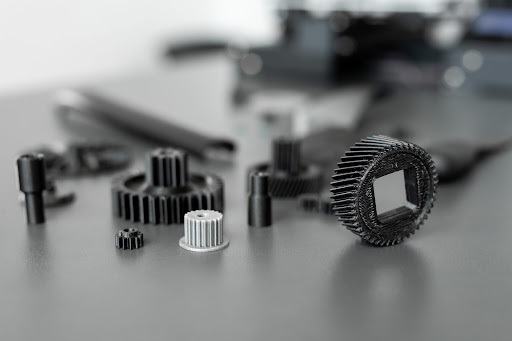
Agency-led Rapid Prototyping delivers both strategic and operational benefits that go beyond “faster design.” It affects how organizations prioritize, invest, and compete in digital markets.[14][7]
Rapid Prototyping significantly shortens product cycles by enabling teams to test ideas early rather than waiting for full implementation.[7]
- Brands can launch MVPs faster and use market feedback to refine features in production.
- Time-sensitive opportunities, such as seasonal campaigns or emerging technology trends, are easier to capture.
- Rapid Prototyping helps validate value propositions quickly, making it easier to pivot when necessary.[9]
By moving faster with less waste, companies gain a competitive edge against slower, more rigid rivals.[8]
Rapid Prototyping reduces the cost of learning what works by shifting experimentation into a lighter, more flexible space.[13]
- Prototypes are cheaper to build and change than production software or hardware, especially for complex, integrated systems.[12]
- Early Rapid Prototyping exposes conceptual and usability flaws before they become expensive engineering or manufacturing problems.[14]
- Agencies help teams focus budgets on the features that deliver the most impact, avoiding over-investment in low-value ideas.[1]
This approach makes spending more predictable and reduces the likelihood of high-cost project failures.[7]
Interactive Rapid Prototyping has a powerful effect on stakeholder alignment across business, design, and engineering teams.[2]
- Clickable prototypes provide a shared reference for discussions, removing ambiguity from text-only requirement documents.
- Executives, marketers, and developers can experience the same flows and resolve disagreements through concrete examples.
- Rapid Prototyping supports faster approvals because stakeholders can see and test how ideas translate into user journeys.[11]
This alignment is especially important in large organizations where multiple departments must agree on direction before development can start.[3]
Because user feedback is built into every Rapid Prototyping cycle, UX quality improves steadily rather than being “fixed” late in the process.[4]
- Usability insights drive decisions on navigation, layout, language, and feedback mechanisms.
- Accessibility considerations and inclusive design can be integrated early instead of being bolted on later.
- Rapid Prototyping helps prioritize delight and clarity in critical moments such as onboarding, error handling, and key transactions.[8]
Products that go through multiple Rapid Prototyping rounds are more likely to meet user expectations and build long-term loyalty.[1]
Many modern digital experiences are tightly coupled with physical devices, from consumer electronics to industrial equipment. In these scenarios, agencies often coordinate with advanced manufacturing partners to align digital Rapid Prototyping with hardware development.[12][7]
A manufacturing-focused partner can support agency-driven Rapid Prototyping in several ways:[15]
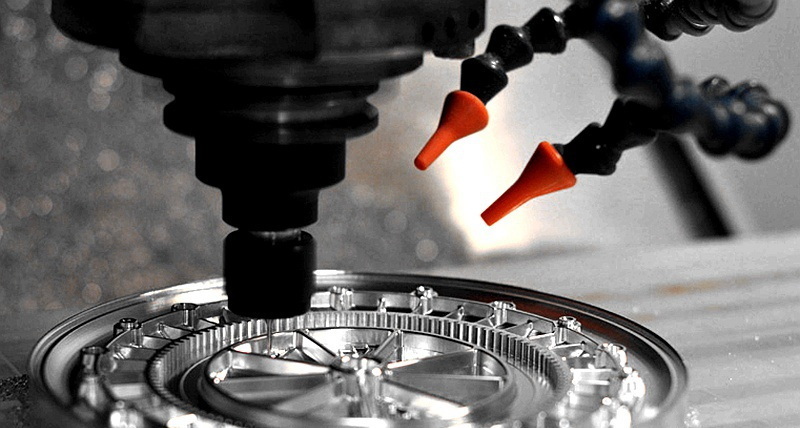
- CNC machining and turning for precise mechanical parts that must integrate with digital control interfaces.
- 3D printing for fast functional mockups of enclosures, mounts, and internal components needed for ergonomic testing.
- Sheet metal fabrication and tooling for near-production housings used in durability or environmental testing.
- Low-volume production runs that validate the combined digital–physical experience in real operating conditions.[7]
This close collaboration ensures that Rapid Prototyping covers the complete experience: the interface, the tactile feel, the mechanical performance, and the manufacturing feasibility. As a result, both digital and physical elements move toward production with fewer surprises and rework cycles.[5][12]
Agencies rely heavily on rich visuals and media throughout the Rapid Prototyping process to make abstract concepts tangible. These elements support communication, decision-making, and user testing across distributed teams and stakeholders.[1][8]
Common media used during Rapid Prototyping for digital experiences include:[2]
- Interface walkthrough sequences that show how users progress through critical flows step by step.
- Interaction sequences that demonstrate transitions, hover states, and microinteractions under realistic conditions.
- Usability session recordings used for internal review and training, highlighting where users succeed or struggle.
- Design critique sessions captured for asynchronous feedback, especially in global organizations.
- Concept presentation reels that synthesize the outcomes of Rapid Prototyping and tell a compelling story to leadership.[4]
Because these media artifacts make Rapid Prototyping outcomes easier to understand and share, they play a central role in sustaining momentum and alignment throughout the project lifecycle.[11]
How agencies and clients work together during Rapid Prototyping can significantly influence outcomes. Engagement models are becoming more flexible to accommodate different team sizes, budgets, and product complexities.[6][5]
Common collaboration patterns for Rapid Prototyping include:[1]
- Embedded squads, where agency designers and strategists join the client's product team for the duration of Rapid Prototyping.
- Studio-led engagements, where the agency operates as a dedicated external lab delivering Rapid Prototyping outputs on a defined cadence.
- Hybrid models, where core UX and UI Rapid Prototyping is handled by the agency while internal teams manage research or implementation.[8]
Transparent communication, shared tools, and clear decision-making frameworks are essential in all these models to keep Rapid Prototyping productive and focused on measurable results.[9]
Selecting the right partner is crucial to unlocking the full value of Rapid Prototyping for digital experiences. A poor fit can slow projects down and dilute the benefits of an iterative approach.[16][15]
Key evaluation criteria when choosing an agency for Rapid Prototyping include:[6]
- Demonstrated case studies involving Rapid Prototyping for similar products, industries, or technologies.
- A clear, documented process for research, design, testing, and iteration with defined milestones.
- Ability to support both UX and technical architecture, ensuring Rapid Prototyping can scale into production.
- Experience collaborating with engineering and manufacturing partners when the product includes physical components.
- Strong communication practices, including frequent check-ins, transparent reporting, and accessible collaboration platforms.[4]
Brands that require high-precision mechanical parts or enclosures alongside digital interfaces benefit most from agencies that are comfortable coordinating physical Rapid Prototyping with manufacturing specialists. This alignment saves time and reduces risk across the entire product development lifecycle.[12][7]
Rapid Prototyping has transformed the way digital experiences are conceived, validated, and launched, turning long, risky projects into fast, iterative journeys guided by real user feedback. Agencies sit at the center of this transformation by combining UX strategy, interaction design, technical expertise, and, where necessary, close collaboration with manufacturing partners to bring both digital interfaces and physical components to life quickly.[7][1]
By embracing agency-led Rapid Prototyping, brands reduce time-to-market, limit risk, and deliver higher-quality digital products that better align with real-world needs and constraints. For organizations building connected or hardware-related experiences, the most effective approach unites digital Rapid Prototyping with advanced manufacturing capabilities such as CNC machining, sheet metal fabrication, 3D printing, and low-volume production so the entire end-to-end experience is validated before scaling.[13][12]
Rapid Prototyping focuses on building interactive versions of a product quickly, testing them with users, and iterating in short cycles instead of waiting for a finished design before validation. Traditional design often follows long, linear phases where feedback arrives late, making course-corrections slower and more expensive.[9][2]
Many agencies can deliver a first functional or clickable prototype within two to four weeks, depending on complexity and scope. Later Rapid Prototyping cycles are typically shorter because they refine and extend existing work instead of starting from zero.[3][1]
Rapid Prototyping is especially valuable for complex applications, enterprise dashboards, transactional websites, and connected device interfaces where workflows are intricate and high-risk. Any digital product with significant user journeys or integrations with physical systems can gain from Rapid Prototyping before full development.[10][12]
By validating flows, content, and interaction patterns early, Rapid Prototyping prevents teams from investing heavily in features or architectures that do not work for users. Fixing issues at prototype stage is much less expensive than reworking production code, tooling, or manufacturing setups after launch.[14][13]
Yes. Rapid Prototyping can combine digital UX prototypes with physical models built using methods such as CNC machining, 3D printing, and sheet metal fabrication to test the full product experience. Agencies often partner with specialized manufacturing providers so digital interfaces and physical components evolve together during Rapid Prototyping and move smoothly into production.[15][7]
[1](https://www.nerdery.com/rapid-software-prototyping-services/)
[2](https://www.graphitedigital.com/services/rapid-prototyping)
[3](https://www.sitepen.com/services/rapid-prototyping-and-design)
[4](https://wezom.com/rapid-prototyping)
[5](https://pnp.digital/services/rapid-prototyping/)
[6](https://octet.design/rapid-prototyping/)
[7](https://www.openbom.com/blog/rapid-prototyping-accelerating-new-product-development)
[8](https://slideux.com/interactive-prototypes)
[9](https://www.sei.com/insights/article/achieving-faster-better-product-development-with-rapid-prototyping/)
[10](https://www.thinkcompany.com/services/capabilities/digital-prototyping/)
[11](https://www.lazarev.agency/services/ux-prototyping)
[12](https://engineeringproductdesign.com/knowledge-base/rapid-prototyping-techniques/)
[13](https://parts-badger.com/top-7-benefits-of-rapid-prototyping/)
[14](https://prototaluk.com/blog/advantages-of-rapid-prototyping/)
[15](https://uptivemfg.com/rapid-prototyping-companies/)
[16](https://bricxlabs.com/ux-agencies/best-prototyping-design-agencies)

