
Views: 222 Author: Amanda Publish Time: 2025-11-08 Origin: Site


Content Menu
● The Central Role of Advanced Testing in Moulding Production
● Core Testing Technologies Driving Precision
● How These Technologies Integrate into the Moulding Workflow
● Benefits Across the Value Chain
● Industry-Specific Considerations
● Case Studies and Real-World Impacts
● Best Practices for Choosing and Deploying Testing Equipment
● Safety, Compliance, and Quality Assurance
● The Path Forward: Automation and AI-Driven Quality
● Practical Guidelines for Shangchen: OEM Moulding Capabilities
● FAQ
>> 1Q: What are the most essential testing methods for new moulds in production?
>> 2Q: How can real-time process monitoring improve moulding production precision?
>> 3Q: What role does calibration play in maintaining measurement accuracy?
>> 4Q: How can automation and AI enhance defect detection in moulded parts?
Precision in moulding production remains the cornerstone of delivering reliable components for automotive, medical, electronics, consumer goods, and industrial applications. With the rapid evolution of manufacturing technologies, advanced testing equipment now plays a pivotal role in ensuring dimensional accuracy, mechanical performance, and long-term stability of moulded parts. This expanded article builds on prior foundations and integrates broader industry insights to deliver a comprehensive view of how testing instrumentation enhances moulding production quality, efficiency, and competitiveness.
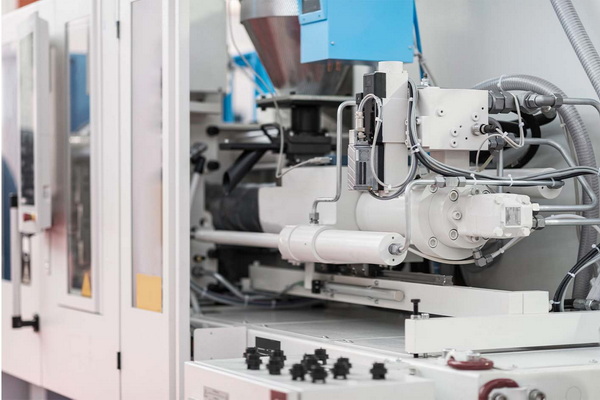
In modern moulding production, precision is not a luxury but a necessity. High-precision moulding requires tight tolerances, reproducible results, and traceable quality data across lots and production shifts. Advanced testing equipment provides the means to verify, monitor, and control these variables, turning variability into predictable processes. Through real-time measurements, systematic calibration, and robust data analytics, moulding operations can reduce waste, shorten development cycles, and accelerate time-to-market for new products.
There are several categories of equipment that collectively elevate accuracy in moulding production:
- Coordinate Measuring Machines (CMMs): Critical for verifying complex geometries and feature alignments on finished moulded parts, ensuring conformity to CAD models and print specifications.
- Optical Profilers and 3D Scanners: Non-contact tools that rapidly capture surface topography, part profiles, and micro-geometry with high resolution, allowing quick screening of surface finishes and dimensional fidelity.
- Tensile, Compression, and Impact Testers: Mechanical testing suites that evaluate strength, stiffness, ductility, and toughness, ensuring moulded components meet functional requirements under expected loading conditions.
- Melt Flow Rate (MFR) and Rheology Apparatus: Instruments that characterize polymer melt behavior, enabling optimisation of processing windows, fill quality, and repeatability in moulding cycles.
- Calibrated Calipers, Micrometers, and Gauge Systems: Essential for quick, on-line dimensional checks of feature sizes, wall thicknesses, and bore diameters during production run inspections.
- Hardness Testers and Surface Roughness Analyzers: Provide material characterization and surface quality data that influence assembly fit, wear resistance, and aesthetics.
- Process Monitoring and Data Acquisition (DAQ) Systems: Integrated sensors monitor temperature, pressure, injection speed, and clamping force in real time, feeding analytics that guide process improvement and predictive maintenance.
- Design and simulation: Before moulding begins, tooling engineers use simulation tools to predict flow, air traps, and packing; physical testing then validates these predictions and informs design refinements.
- Tooling and material validation: Mould inserts, metals, and polymers are validated through a combination of material tests and dimensional checks to ensure compatibility with intended geometries and cycle conditions.
- In-process control: Real-time sensors monitor critical process variables; automated responses adjust process parameters to maintain tolerance bands.
- Post-process inspection: Finished parts undergo dimensional, mechanical, and surface evaluations to confirm conformity with specifications and functional requirements.
- Continuous improvement: The captured data supports statistical methods (e.g., SPC) to detect shifts, root causes, and opportunities for process optimization.
- Consistent part quality reduces rework and scrap, lowering production costs.
- Tighter tolerances enable higher assembly yield and better performance in final products.
- Data-driven decisions shorten development cycles and support regulatory compliance where applicable.
- Enhanced traceability improves customer confidence and opens doors to new business opportunities.
- Automotive moulding production often demands rigorous dimensional control and repeatable mechanical properties to meet safety and reliability standards.
- Medical device moulding emphasizes ultra-cleanliness, material compatibility, and traceable QA documentation to satisfy regulatory requirements.
- Electronics and consumer goods require aesthetic surface finishes and precise tolerances for seamless product integration.
- A plastics supplier serving the automotive sector implemented a comprehensive metrology and in-process monitoring strategy, achieving a significant reduction in defect rates and a measurable uplift in first-pass yield across multiple multi-cavity moulds.
- A medical device manufacturer integrated tensile testing and 3D surface scanning into its moulding line, ensuring consistent mechanical performance and improved regulatory readiness, with fewer discrepancies detected during final QA checks.
- A consumer electronics assembler deployed inline gauging and CMM-based sampling to ensure tight wall thickness control and consistent fit of enclosures, resulting in smoother assembly and reduced warranty claims.
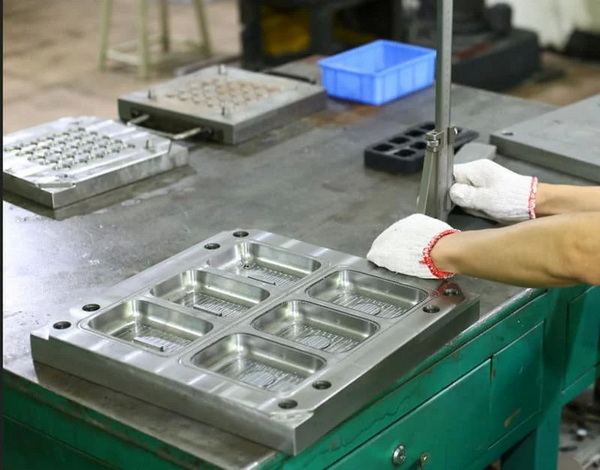
- Align equipment selection with critical tolerances and failure modes: Prioritize tools that directly monitor the most sensitive dimensions and performance criteria for the intended parts.
- Favor modular, scalable solutions: Start with essential testing capabilities and scale as production volume, complexity, and customer requirements grow.
- Emphasize data integration: Ensure measurement devices connect with centralized data systems, enabling cohesive analytics, traceability, and reporting.
- Implement a rigorous calibration regime: Regular calibration and validation maintain measurement integrity over time, minimizing drift and inconsistency.
- Train operators and engineers: Comprehensive training on instrument operation, measurement protocols, and data interpretation is essential for reliable results.
- Documented QA procedures supported by robust metrology data aid compliance with industry standards and customer specifications.
- Calibration records provide auditable evidence of process control and part conformity, which is invaluable during supplier audits and regulatory reviews.
- Consistent measurement practices reduce the risk of latent defects and support continuous improvement initiatives across the organisation.
- Intelligent inspection systems use machine vision and AI to identify deviations in real time, enabling faster decision-making and reduced reliance on manual checks.
- Predictive maintenance informed by sensor data minimizes unplanned downtime, sustaining higher overall equipment effectiveness (OEE).
- Digital twin models simulate moulding processes, allowing pre-production optimization and risk assessment before committing to large-scale runs.
- Capable of rapid prototyping and high-precision CNC machining: Aligning with client specifications for intricate mould inserts and fixtures to ensure accurate replication of design intent.
- Metal and alloy choices optimized for durability and cost: Selecting hardened steels, aluminum, or specialty alloys to balance lifespan against project economics.
- Comprehensive testing suite support: Providing in-house measurement, material testing, and functional verification to guarantee conformance from first part to full production.
- End-to-end service for foreign brands and wholesalers: Leveraging extensive QA protocols, traceability, and scalable manufacturing to fulfill diverse OEM requirements.
Advanced testing equipment is a strategic asset in moulding production, turning variability into predictable, controllable outcomes. By combining precise measurement technologies, automated data collection, and advanced analytics, manufacturers can achieve superior part quality, reduce waste, and accelerate time-to-market for new products. The ongoing trajectory includes deeper automation, AI-assisted inspection, and digital-twin simulations that will further enhance moulding production precision and operational resilience. For OEM partners and international brands engaging with Shangchen, this integrated approach translates into reliable, scalable, and compliant moulding production services that meet global expectations.
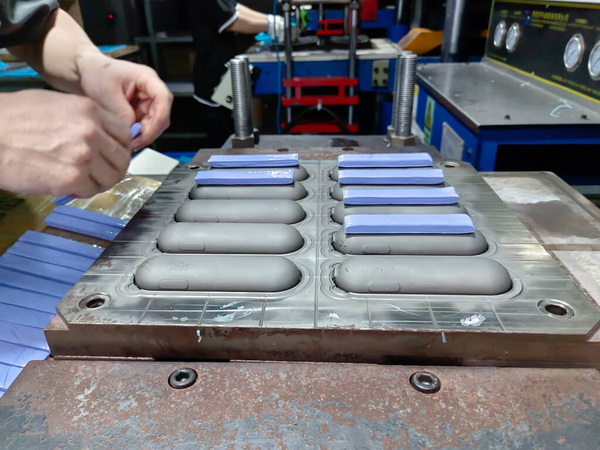
A: Essential methods include dimensional inspection, material property verification, and process validation to ensure moulds produce parts within required tolerances and performance specs.
A: Real-time monitoring detects drift and anomalies early, enabling immediate parameter adjustments to maintain consistent part quality and reduce waste.
A: Calibration ensures measurement accuracy over time, preserving traceability and repeatability across batches and shifts.
A: Automation and AI enable faster, more consistent defect detection, reducing human error and enabling proactive quality interventions.
A: Consider material, tolerances, part geometry, production volume, and regulatory requirements to choose equipment with the right precision, throughput, and data integration.
[1](https://tekwellmachinery.com/standard-test-process-of-injection-mold/)
[2](https://prophecysensor.com/understanding-injection-molding-tools-a-complete-guide-to-plastic-injection-mold-tooling-and-manufacturers/)
[3](https://geomiq.com/injection-moulding-guide/)
[4](https://zetarmold.com/injection-molding-machines-a-comprehensive-guide/)
[5](https://www.protolabs.com/resources/guides-and-trend-reports/designing-for-moldability-fundamental-elements/)
[6](https://www.fictiv.com/articles/injection-molding-used-in-medical-devices)
[7](https://ogm.uk.com/plastic-injection-moulding-beginners-guide/)
[8](https://sybridge.com/injection-molding-guide/)
[9](https://www.hmel.in/wp-content/uploads/2025/08/technical_guide_to_Injection_moulding_process__polysure_products-final_small.pdf)

