
Views: 222 Author: Amanda Publish Time: 2025-11-11 Origin: Site


Content Menu
● Workflow of Turning Lathe Batch Production
>> 1. Digital Design and Preparation
>> 2. Toolpath Programming and Setup
>> 4. In-Process Inspection and Quality Control
>> 5. Final Inspection and Post-Processing
● Key Benefits of Turning Lathes in Batch Production
>> Superior Consistency and Repeatability
>> Intelligent Tool and Parameter Optimization
>> Energy and Resource Efficiency
● Advanced Strategies for Maximizing Lathe Efficiency
>> Toolpath and Cycle Time Optimization
>> Material-Specific Tooling and Methods
● Application Examples in Modern Manufacturing
>> Aerospace and Medical Components
>> Custom OEM and Contract Manufacturing
● Overcoming Batch Production Challenges
>> Setup and Changeover Efficiency
>> Sustaining Quality Under High Volumes
● The Future of Turning Lathe Batch Production
● FAQ
>> 1. What is the main advantage of using a turning lathe in batch production?
>> 2. How do automated turning lathes minimize setup and changeover time?
>> 3. What are best practices for maintaining tool life and quality?
>> 4. How does automation with turning lathes impact labor costs?
>> 5. Why is continuous production data analysis important for turning lathe efficiency?
In today's manufacturing world, achieving greater efficiency, consistency, and quality in batch production has become paramount—especially as global OEM suppliers and factories are faced with fierce market competition. The turning lathe, particularly when integrated with advanced CNC technology, stands as an indispensable solution for these needs, streamlining every aspect of high-precision batch manufacturing. This article comprehensively explains how the turning lathe revolutionizes batch production efficiency, delves into evolving best practices, and offers practical workflow guidance for factories, procurement teams, and engineers in OEM partnerships.[3][11][12]
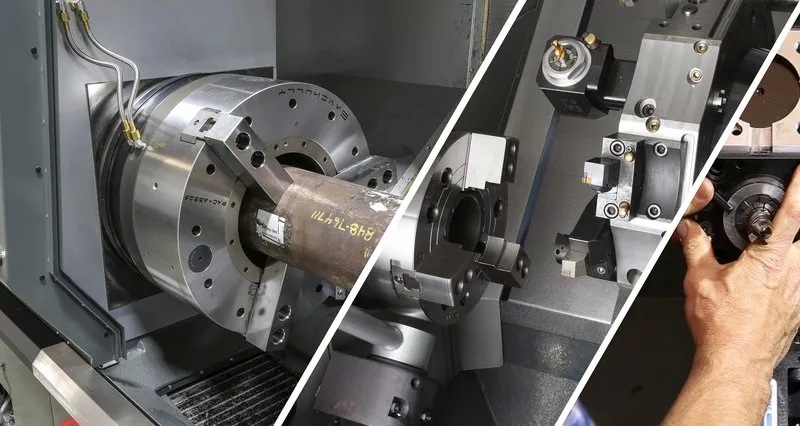
A turning lathe is a machine tool used primarily to produce cylindrical and symmetrical components by rotating the workpiece against a stationary cutting tool. Modern turning lathes can be either manual or numerically controlled, with CNC variants offering precision, automated operation, and programmability. These machines seamlessly adapt to a variety of materials, including metals, plastics, and composites, making them a core player in everything from automotive gears to medical parts.[13][14][15]
The production process begins with CAD modeling and digital process planning. Engineers design the part and convert it to machine instructions (G-code) using CAM software, ensuring manufacturing feasibility and reducing room for error.[14]
Optimized toolpath programming is crucial to minimizing idle time and material waste. Advanced software reduces unnecessary movements and ensures optimal engagement between tool and workpiece, cutting cycle times and enhancing overall productivity.[1]
Proper setup includes precision clamping, setting tool offsets, and automated calibration. Quick-change systems and standardized setup sheets further accelerate changeovers and improve first-article approval rates.[2][1]
Once programs are loaded, modern turning lathes automate spindle speed, tool changes, feed rates, and coolant flow. Automation features such as bar feeders and robotic arms allow for "lights-out" manufacturing—continuous, unattended part production during day and night shifts.[3]
Automated probing and in-process measurement systems check critical dimensions during production, drastically reducing scrap, rework, and manual inspection time. These automated processes ensure tight tolerances, high repeatability, and immediate detection of anomalies.[2]
After machining, finished parts undergo quality assurance protocols, with secondary processes such as deburring, cleaning, or surface treatments applied as needed. Record-keeping of process parameters ensures repeatability for future orders.[16]
Digital and automated operation eliminates much of the inconsistency introduced by manual machining, ensuring that every batch—whether small or large—exhibits identical dimensions, tolerances, and surface finishes. Automated inspection and real-time feedback further prevent production drift.[12][17]
Optimized programming, multi-tool turrets, and quick-change fixtures enable factories to minimize setup and cutting times. Modern software solutions allow simulation and workflow planning, while multi-operation lathes reduce the need for secondary processes and rehandling.[11][1][3]
Efficient production hinges on selecting the right tooling and cutting parameters. Smart CNC systems can monitor tool wear, recommend predictive maintenance routines, and optimize spindle speed, feed rate, and depth of cut for each job. These adjustments yield better chip control, less tool breakage, and longer tool lifespan.[2]
Automation means fewer operators are needed to run multiple machines, directly reducing labor costs and freeing experienced workers for value-added tasks. Lights-out production offers higher output in the same physical footprint, and modular automation solutions allow quick scaling for changing batch sizes.[18][1]
By reducing idle times, eliminating unnecessary tool movement, and optimizing operational parameters, modern lathes help save on electricity and raw material input. Scrap rates decrease, and the factories meet sustainability goals with less environmental impact.[17][1][2]
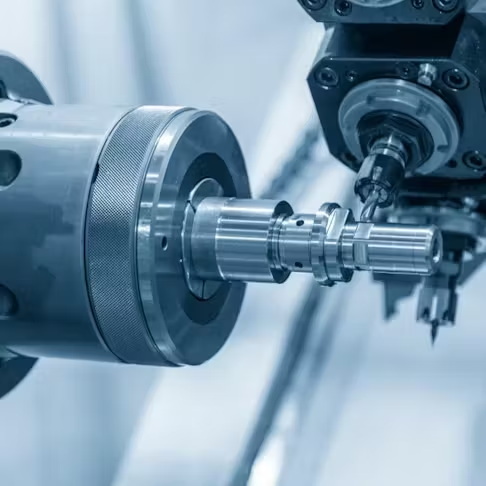
Implementing best practices such as minimizing tool air-cuts, grouping similar operations, and performing essential maintenance during scheduled slow periods helps factories shrink cycle times and maximize batch throughput.[1][2]
Robotic loaders, automated bar feeders, and intelligent part sorting reduce manual intervention. Integration with factory ERP and MES systems allows real-time production monitoring, traceability, and dynamic scheduling for complex orders.[3][2]
Collecting and analyzing performance metrics—such as cycle times, tool wear statistics, and machine utilization—uncovers hidden inefficiencies and reveals bottlenecks. Data-driven factories can predict maintenance needs, refine operational strategies, and sustain continuous improvement for long-term competitiveness.[3]
Choosing advanced carbide, ceramic, or coated tools for specific materials prevents rapid tool wear. Proper tool selection according to workpiece material is crucial for maximizing chip evacuation, heat dissipation, and surface finish.[3]
Regular machine calibration, proper lubrication, and predictive maintenance extend the lifespan of turning lathes and prevent unplanned downtime. Implementing automated tool monitoring and in-machine probing ensures all operations run within specification, batch after batch.[2]
Turning lathes produce shafts, hubs, pistons, and more with extremely tight specifications and repeatability. Automated production lines maximize capacity to meet timely delivery expectations in the highly competitive automotive supply chain.[6][19]
Batch runs in aerospace and medical industries require not only precision but also documentation for traceability. Turning lathes with built-in measurement systems and digital archives are perfectly suited for FAA or FDA-certified production processes.[15][20]
CNC turning lathes enable flexible responses to customized and variable customer needs, allowing quick retooling and process adjustments without sacrificing speed or accuracy. This flexibility is critical for contract manufacturers and OEM suppliers serving dynamic global markets.[9][12]
Quick-change workholding systems, modular toolholders, and standardized setup protocols slash changeover times by up to 70%, allowing rapid response to new orders while keeping valuable spindle hours productive.[2]
Identifying and addressing workflow constraints—such as frequent tool changes, inadequate program optimization, or underutilized automation—directly boosts overall production rates. Regular operator training and advanced simulation software can help manufacturers anticipate and mitigate workflow issues.[3]
Increased throughput must not compromise quality. Smart turning lathes proactively monitor tool load, part dimensions, and process stability to ensure each part meets customer standards, regardless of batch size.[2][3]
The pace of industry change is accelerating. With ongoing advancements in sensor technology, vision systems, and artificial intelligence, future turning lathes will not only control and monitor themselves but also optimize their own parameters in real time, pushing efficiency, quality, and cost-effectiveness to new heights across all types of batch manufacturing.[21]
Turning lathes are the backbone of efficient and scalable batch production. With robust automation, highly optimized workflows, advanced cutting strategies, and seamless integration into digital manufacturing ecosystems, modern turning lathes deliver exceptional repeatability, superior cycle times, and reliable cost-control for OEM suppliers, manufacturers, and factories worldwide. For businesses in fields from automotive to aerospace, investing in advanced turning lathe capabilities ensures they can meet customer needs for both quality and speed—now and in the years to come.[11][12][1][2][3]
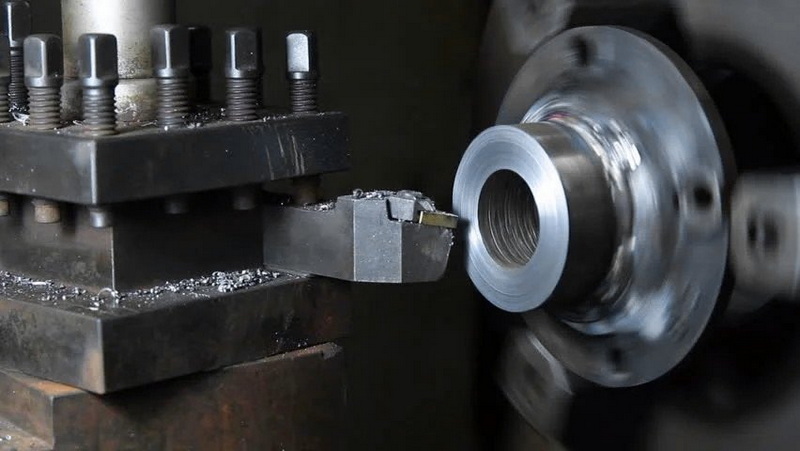
A turning lathe ensures repeatable part accuracy and fast cycle times by automating the cutting process, greatly improving both throughput and dimensional consistency in high-volume batches.[22][11]
Modern lathes utilize quick-change workholding, modular tooling, and standardized setup sheets to reduce downtime and get machines cutting new orders much faster than traditional setups.[1][2]
Best practices include selecting appropriate tooling for each material, regularly monitoring tool wear, performing scheduled machine maintenance, and using in-process inspection systems to ensure part quality batch after batch.[2][3]
By automating material loading, tool changes, and part sorting, turning lathes dramatically reduce direct labor requirements and allow a single operator to supervise multiple machines—all while minimizing errors.[18][2]
Analyzing cycle times, tool wear, and machine utilization helps manufacturers identify bottlenecks, refine processes, and sustain continuous improvement, which directly leads to higher throughput and lower costs.[3]
[1](https://thorrez.com/maximizing-efficiency-with-cnc-turning-a-comprehensive-guide/)
[2](https://machinetoolspecialties.com/blog/1554-maximize-cnc-lathe-performance-optimization-with-smart-tips)
[3](https://www.masscnctech.com/blog/optimize-production-efficiency-cnc-turning-centers/)
[4](https://kesugroup.com/turning-machining-process-preparation-and-safety-guidelines/)
[5](https://phillipscorp.com/india/how-to-improve-productivity-with-cnc-turning-machines/)
[6](https://www.xavier-parts.com/turning-parts-manufacturing-guide/)
[7](https://www.pioneergroup-cn.com/maximizing-efficiency-how-a-lathe-tool-setter-can-help.html)
[8](https://rosnokmachine.com/how-to-operate-a-lathe/)
[9](https://www.rotec-ltd.com/a-comprehensive-guide-to-cnc-production-machining)
[10](https://www.yashmachine.com/blog/understanding-the-working-principles-of-a-cnc-lathe-machine/)
[11](https://www.luyoungcncmachinery.com/blog/how-can-cnc-turning-lathe-machine-improve-production-efficiency587)
[12](https://www.sc-rapidmanufacturing.com/what-are-the-key-benefits-of-cnc-lathe-turning-in-modern-manufacturing.html)
[13](https://swmachinetech.com/cnc-turning-process-applications/)
[14](https://geomiq.com/blog/what-is-cnc-turning/)
[15](https://www.3erp.com/blog/small-batch-machining/)
[16](https://cncwmt.com/qa/how-a-cnc-lathe-works/)
[17](https://cncwmt.com/qa/cnc-lathe-machine-processes-applications-and-benefits/)
[18](https://brightsunindustries.com/blog-detail/why-cnc-lathes-are-essential-in-modern-manufacturing-a-deep-dive)
[19](https://www.sc-rapidmanufacturing.com/top-10-industrial-applications-of-turning-lathes.html)
[20](https://www.muratec-usa.com/resources/news/cnc-turning-centers-and-lathes-a-primer/)
[21](https://radonix.com/the-latest-technological-developments-and-trends-in-lathe-works/)
[22](https://www.smartlathe.com/blogs/benefits-advantages-of-turning-milling-machine)

