
Views: 222 Author: Amanda Publish Time: 2025-10-12 Origin: Site


Content Menu
● Traditional Prototyping: Foundation and Challenges
● The Rise of 3D Print Prototypes in Manufacturing
>> How 3D Printing Transforms Prototyping
● Advantages of 3D Print Prototypes Over Traditional Ones
>> Reduced Costs Without Sacrificing Detail
>> Customization and Personalization
>> Environmentally Friendly Approach
● Limitations and Challenges of 3D Printed Prototypes
>> Dimensional Accuracy and Tolerances
>> Post-Processing Requirements
● The Synergy Between 3D Printing and Traditional Prototyping
● Use Cases Highlighting 3D Print Prototypes' Advantages
● Challenges in Adopting 3D Print Prototypes
● FAQ
>> 1. What materials can be used for 3D print prototypes?
>> 2. How fast is 3D printing compared to traditional prototyping?
>> 3. Are 3D printed prototypes suitable for functional testing?
>> 4. Can 3D print prototypes be used as final products?
>> 5. Does 3D printing replace traditional prototyping entirely?
Prototyping is a pivotal step in the manufacturing process, bridging the gap between concept and production. It allows designers, engineers, and manufacturers to validate ideas, test functionality, and make crucial adjustments prior to mass production. Over recent years, 3D print prototypeshave emerged as a groundbreaking alternative to traditional prototyping techniques. This advancement has reshaped how businesses approach prototype development by offering unique advantages in speed, cost, and complexity. In this article, we will delve deeper into the core differences between 3D printed and traditional prototypes, emphasizing their respective strengths and limitations while illustrating how these approaches influence the manufacturing landscape.
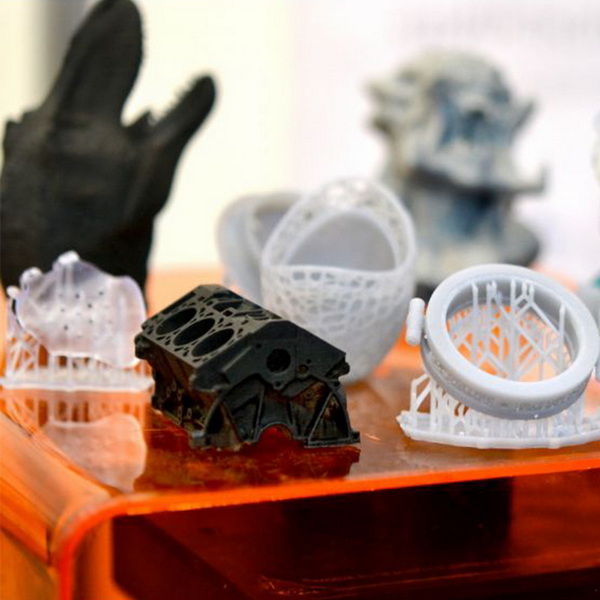
Traditional prototyping methods encompass various manual and mechanical processes such as machining, casting, molding, and hand fabrication. These approaches typically involve shaping raw materials through subtractive methods (removing material) or formative processes (shaping material through force or heat). Common materials include metals, wood, foam, clay, and plastics.
A major drawback of traditional prototyping lies in its relative rigidity and resource intensiveness:
- Time-Consuming Setup: Crafting molds, preparing tooling, or arranging CNC machining requires significant preparation time, often delaying the prototype delivery by weeks.
- High Costs for Low Volumes: Tooling and labor costs make small production runs economically unfeasible.
- Limited Design Flexibility: Complex geometries or intricate assemblies may be impractical or impossible due to tooling limitations or the inherent constraints of subtractive fabrication.
- Material Waste: Subtractive methods inherently create more waste by cutting away from larger stock material blocks.
Despite these challenges, traditional prototyping remains critical in many industries for producing highly accurate and durable prototypes, particularly when replicating end-use material properties is essential.
3D printing, also known as additive manufacturing, builds prototypes by depositing material layer by layer directly from a digital 3D model. This contrasts fundamentally with traditional manufacturing's subtractive or formative approaches.
- Additive Build Process: Creating only what is necessary reduces raw material consumption and waste dramatically.
- Unlimited Geometric Freedom: 3D printing can realize complex internal structures, undercuts, and intricate details that traditional methods struggle to achieve.
- Speed and Agility: Designers can quickly iterate concepts by revising CAD files and printing new prototypes within hours or days.
- Cost-Effective for Small Batches: No tooling changes or special fixtures are required, reducing overhead for low-volume prototype production.
- Direct Digital Workflow: The seamless transition from digital design to physical prototype enhances design validation and communication.
These features enable accelerated product development cycles and greater innovation potential, making 3D print prototypes ideal for a variety of applications — from consumer electronics to automotive parts.

The most significant advantage offered by 3D printing is speed. Prototypes that once took weeks to fabricate can now be produced rapidly, enabling companies to test and refine designs faster than ever. The ability to promptly create multiple design iterations reduces project lead times substantially.
3D printing eliminates many costly steps such as mold fabrication or multiple setup operations on machine tools. This cost-effectiveness is especially marked for one-off or short-run prototypes, where traditional machining costs can be prohibitive.
Additive manufacturing breaks the boundaries of traditional design constraints. Complex assemblies can be printed as a single part, reducing assembly time and improving part integrity. Internal channels for fluid flow or lightweight lattice structures for strength optimization are easily incorporated into 3D printed prototypes.
3D printing supports high degrees of customization without increasing costs, perfect for prototype testing where specific client or end-user feedback drives design changes. This capability is particularly valuable for bespoke products or personalized consumer goods.
Because 3D printing uses only the necessary material and typically consumes less energy per part, it aligns well with sustainable manufacturing initiatives aimed at reducing industrial waste and carbon footprints.
While 3D printing offers many advantages, it is not a universal replacement for traditional prototyping techniques.
Although the range of 3D printable materials has expanded significantly to include metals, plastics, ceramics, and composites, it still does not equal the extensive variety or exact properties achievable by traditional materials. Surface finishes and mechanical strengths of printed parts may not always meet production standards.
Most 3D printers have build volume limits that restrict the maximum size of a single printed prototype. Large parts may require segmentation and assembly, introducing complexity and potential weaknesses.
Traditional CNC machining or molding continues to provide superior precision and tighter tolerances than many current 3D printing technologies, critical for parts requiring exact fits.
Many 3D printed prototypes need post-processing steps such as support removal, surface smoothing, or heat treatment, which can add time and labor costs.
Rather than viewing 3D printing and traditional prototyping as competitors, many manufacturing companies integrate both methods to maximize their benefits. For instance:
- Early-stage prototypes might be rapidly 3D printed to verify form and basic function.
- Advanced iterations can be refined using traditional machining for enhanced fidelity and material characteristics.
- Where complexity and customization dominate, 3D printing is the go-to method.
- For large-scale or highly precise parts, traditional methods prevail.
This hybrid approach allows manufacturers like Shangchen to tailor their services to client requirements, blending speed with quality for OEM solutions.
- Consumer Electronics: Rapid functional prototypes enable quick product refinement and ergonomic validation.
- Automotive Industry: Lightweight lattice structures and complex cooling channels previously impossible are now prototyped with ease.
- Medical Devices: Patient-specific anatomical models and surgical guides showcase customization capabilities.
- Aerospace: Complex geometry and weight reduction are critical, making 3D printed prototypes invaluable.
- Industrial Equipment: Prototyping parts with intricate internal features saves assembly time and allows innovation testing.
Despite its merits, businesses face hurdles when adopting 3D printed prototyping:
- Training and expertise are needed to design specifically for additive manufacturing.
- Post-processing skills must be developed for finishing printed parts.
- Initial investment in 3D printers and software can be substantial.
- Understanding which method best suits particular prototype stages is essential.
Nevertheless, the continuous evolution of 3D printing technologies promises to alleviate many of these challenges.
3D print prototypes have undoubtedly transformed the manufacturing industry by ushering in faster, more cost-effective, and highly flexible prototyping processes. They enable unprecedented design complexity, customization, and sustainable practices. However, traditional prototyping methods still hold invaluable strengths in material diversity, size capacity, and precision. A strategic combination of both 3D printed and traditional prototypes allows manufacturers to leverage their complementary benefits.
For companies like Shangchen offering OEM services globally, adopting 3D print prototypes alongside conventional methods offers a robust, versatile solution to meet the diverse and evolving demands of modern product development.
3D printing supports a broad range of materials including plastics like PLA, ABS, nylon; resins for high detail; metals like stainless steel and titanium; and composite materials, each suited for specific functional and aesthetic prototype requirements.
3D printing can deliver prototypes within hours or a few days, while traditional prototyping often takes several weeks due to tooling, material preparation, and machining setups.
Yes, many 3D print materials allow for functional testing, especially for fit, form, and some mechanical properties. However, certain load-bearing or high-stress applications may require traditional prototypes or specially engineered 3D printed materials.
While possible in some scenarios, 3D printed prototypes are primarily for development purposes due to current material, strength, and finish limitations compared to mass production techniques.
No. Traditional prototyping remains essential for producing large, precise, or production-equivalent prototypes especially when specific material properties or finish qualities are paramount.

