
Views: 222 Author: Amanda Publish Time: 2025-11-12 Origin: Site


Content Menu
>> Key Functions of Turning Lathes
>> Features of Entry-Level Turning Lathes
>> Benefits
>> Limitations
>> Features of Industrial Turning Lathes
>> Benefits
>> Limitations
● Visualizing Turning Lathe Differences
● How Turning Lathe Choice Impacts Your Business
>> Production Volume and Flexibility
>> Material Processing Requirements
● Recent Innovations in Turning Lathe Technology
● Case Study: Precision OEM Manufacturing at Shangchen
>> Custom Prototyping to Production
● Selecting the Right Turning Lathe: Practical Tips
● The Strategic Role of Turning Lathes in Modern Manufacturing
>> Enabling Product Development
>> 1. What is the main difference between entry-level and industrial turning lathes?
>> 2. Can entry-level turning lathes process hard metals?
>> 3. How important is CNC programming in modern manufacturing?
>> 4. What are the main maintenance tasks for a turning lathe?
>> 5. How do I choose the right lathe for my business?
In the modern landscape of manufacturing, the decision between entry-level and industrial turning lathes is crucial for every workshop, factory, and production facility. As manufacturing becomes more competitive worldwide, having the right machinery is foundational to delivering quality parts, innovation, and efficient turnaround times. Understanding how different types of turning lathes operate and knowing their features, strengths, and limitations will empower you to make the best investment—whether for rapid prototyping, precision batch production, or large-scale OEM requirements.
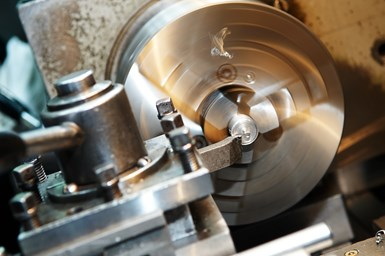
A turning lathe is an essential machine tool found in nearly every fabrication shop and industrial plant. Turning lathes function by rotating a workpiece while a stationary cutting tool shapes it into a precise profile. This process is vital for producing parts ranging from machine components to architectural details and precision medical devices. The core appeal of the turning lathe is its versatility—it can perform cutting, facing, grooving, knurling, and threading on a wide range of materials.
- Cutting: The tool shears away excess material, shaping the workpiece to precise dimensions.
- Facing: Produces a flat surface at the end of the part, often a key requirement in part assembly.
- Grooving and Threading: Allows for specialized designs and secure assembly through threaded features.
- Drilling/Boring: Internal features or hollow parts are achievable with the right accessories.
Modern turning lathe technology has steadily evolved, with both manual and CNC-powered models available, catering to different expertise levels and industry needs.
Entry-level turning lathes are designed primarily for beginners, hobbyists, small workshops, and educational settings. These machines focus on user-friendly interfaces, safe operation, and affordability. They typically work best on small to medium workpieces and materials such as aluminum, mild steel, copper, and plastics.
- Simple Manual Controls: Dials and levers are straightforward, making these machines accessible to new users.
- Smaller Footprint: Compact designs mean they easily fit in small workshops or garages.
- Lower Power Output: Adequate for softer metals and plastics but unsuited for dense or hard alloys.
- Portability: Many entry-level models are light enough to move as needed.
- Personal hobby work, such as crafting, restoration, and model-making.
- Training and technical education, allowing students to learn machining basics safely.
- Prototyping for design validation and limited production runs.
- Affordability and accessibility for startups or individual enthusiasts.
- Easier maintenance and lower part replacement costs due to simpler construction.
- Intuitive controls encourage learning and experimentation without risking expensive mistakes.
- Restricted in the size and hardness of workpieces they can handle.
- Lower accuracy and surface finish compared to advanced CNC options.
- Not well-suited to high-volume or critical-tolerance work.
Industrial turning lathes are engineered to meet the demanding requirements of high-volume production facilities, global OEM suppliers, and advanced prototyping centers. Leveraging either semi-automatic or fully CNC-driven controls, these machines deliver the precision, versatility, and speed needed in modern manufacturing environments.
- CNC Automation: Enables complex part geometries, repeatable tolerances, and hands-off operation for long shifts.
- Rigid Construction: Sturdier bases and supports allow for larger, heavier workpieces and absorb vibrations that can reduce precision.
- Powerful Motors: Capable of cutting through tough materials, including stainless steel, titanium, and high-strength alloys.
- Advanced Tooling Options: Multipurpose tool turrets and live tooling open up additional machining possibilities.
- Automotive manufacturing, where precise, repeatable production is mandatory.
- Aerospace and defense parts requiring tight tolerances and quality assurance.
- High-volume OEM production lines that benefit from rapid part changeovers and automated cycles.
- Consistent, repeatable production with high throughput.
- Ability to manufacture complex custom shapes and components.
- Reduced dependence on operator skill due to programmable cycles and automated precision.
- Substantial upfront investment for both equipment and facility requirements.
- Requires skilled technicians for setup, programming, and advanced troubleshooting.
- Higher maintenance obligations and costs compared to simple manual machines.
The distinction between entry-level and industrial turning lathes is easily visible in their size, build quality, and the sophistication of their control systems.
Entry-level machines often fit atop a workbench, while industrial models can take up entire factory floor sections due to their scale and heavy frames.
Manual machines feature simple dials, whereas industrial models boast LCD panels, touchscreen interfaces, and complex software for part programming.
Basic lathes deliver functional results suitable for light-use components. Industrial solutions, on the other hand, ensure high tolerances and flawless finishes demanded in mission-critical industries.
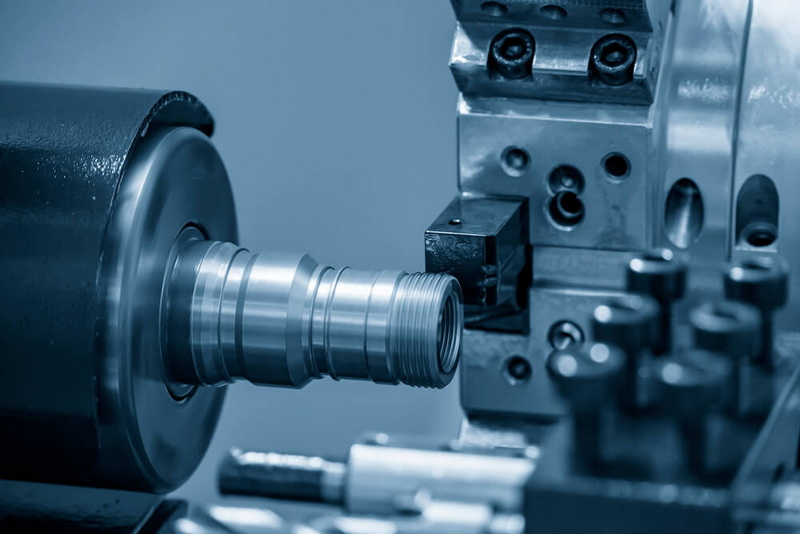
The kind of turning lathe you select shapes your ability to deliver on deadlines, maintain part quality, and scale as your production needs evolve.
If your focus is occasional, small-batch work, an entry-level lathe may suffice. If you seek to fulfill large orders or diversify into complex parts, industrial turning lathes provide the versatility and speed you need.
Harder alloys and exotic materials require robust spindles, powerful motors, and tool rigidity found only in industrial models. Entry-level options may struggle with durability when pushed beyond their intended capacity.
Entry-level machines represent a relatively low-risk initial investment. In contrast, industrial lathes may deliver far greater lifetime value if you anticipate business growth or the transition to higher-volume markets.
Manual machines are less intimidating for new operators, while industrial CNC models require programming knowledge or in-house engineering staff. The support and training available should factor into your decision.
Continuous innovation has rapidly improved turning lathe functionality and efficiency.
CNC-powered turning lathes afford manufacturers a high degree of flexibility. Operators can switch between designs at the push of a button, minimizing downtime and supporting mass customization.
Upgrades such as real-time vibration monitoring, IoT integration, and on-machine inspection systems allow for predictive maintenance and faster issue resolution.
With the adoption of automatic bar feeders and robotic arms for part loading and unloading, industrial turning lathes are central to the push toward lights-out manufacturing—factories capable of running around the clock.
For global OEM clients and leading manufacturers, a robust partnership with a facility like Shangchen—a leader in CNC machining, rapid prototyping, and custom batch production—unlocks new levels of efficiency and product quality.
Shangchen's investment in advanced industrial turning lathes, combined with a skilled engineering team, enables flexible solutions for both high-mix, low-volume runs and consistent, large-scale production. Prototyping processes are accelerated, and repeat orders benefit from accumulated expertise and rigorous process control.
From design consultation to post-production quality inspection, Shangchen leverages the capabilities of its turning lathe fleet to deliver consistent, accurate, and timely products. This seamless approach reduces lead times, improves client communication, and fosters innovation through collaborative engineering.
Making the final decision requires consideration of both current needs and future ambitions.
- List specific part tolerances, surface finishes, and material types.
- Estimate expected volume and flexibility needs—present and future.
- Industrial machines often require reinforced flooring, specialized electrical supply, and more significant spatial allocation.
- Entry-level units are adaptable to most standard shop environments.
- Training is mandatory for CNC lathes to maximize ROI and minimize risk.
- For entry-level lathes, ongoing education is still encouraged for safe and efficient operation.
- Factor in not just purchase price, but tooling, maintenance, servicing, and potential upgrades.
Having the proper turning lathe machinery is no longer just a matter of operational convenience; it has become a strategic pillar for manufacturing businesses aiming to innovate, scale, and lead in their industry.
With rapid prototyping and the ability to efficiently tweak part designs, companies can bring products to market faster and with fewer errors.
Industrial turning lathes accelerate scale-up, turning pilot runs into mass production lines without costly redesign or downtime.
Precision machine tools, when paired with refined quality control and experienced technicians, ensure that every part meets specification, every time.
Investing in the right turning lathe is a foundational decision impacting everything from prototype effectiveness to a company's long-term growth trajectory. Entry-level turning lathes empower new users, craftsmen, and educators to learn machining skills, experiment with designs, and meet straightforward fabrication needs. For established manufacturers and those seeking to scale production, industrial turning lathes deliver superior accuracy, automated efficiency, and the flexibility to undertake complex, high-tolerance work in any material. By thoroughly evaluating your production goals, operator skills, facility constraints, and future requirements, you ensure that your turning lathe investment truly supports your organization's ambitions now and into the future.
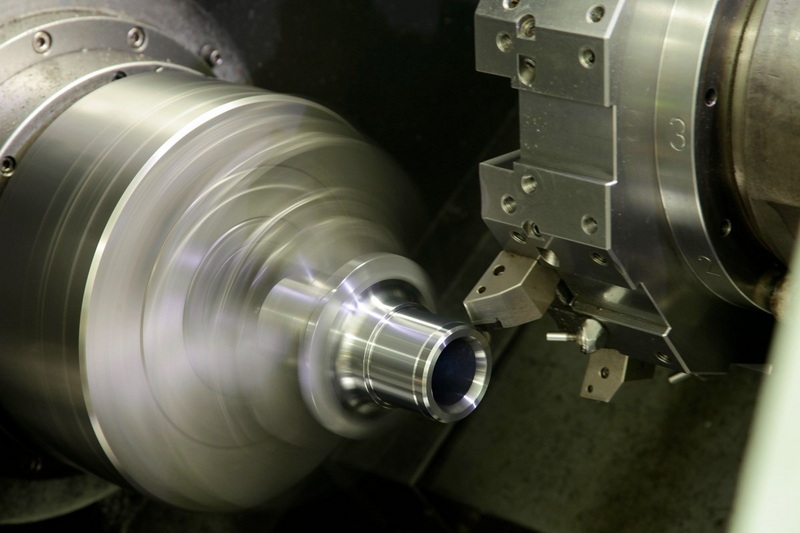
Entry-level turning lathes are best suited for new users and low-volume production, featuring simpler controls and lower costs. Industrial turning lathes, by contrast, offer CNC automation, elevated precision, robust construction, and capacity for handling tougher materials at higher volumes.
Entry-level turning lathes usually excel with softer metals and plastics. Processing stainless steel or harder alloys can exceed their design limits and should be reserved for industrial-grade machinery built for that purpose.
CNC programming is increasingly vital: it enables programmable, repeatable, and complex turning patterns that manual machines cannot achieve reliably, and is a defining feature of most modern industrial turning lathes.
Routine maintenance includes cleaning the machine, lubricating moving parts, regular inspection, and early replacement of worn components. Industrial turning lathes may need advanced care such as software updates and calibration.
Begin by assessing your products, production volumes, material requirements, budget, and staff skills. Startups and SMEs may choose entry-level models for flexibility and low risk, while established manufacturers should prioritize industrial lathes for growth and productivity.

