
Views: 222 Author: Amanda Publish Time: 2025-07-20 Origin: Site


Content Menu
● The Evolution of Rapid Prototyping Technologies
● Additive Manufacturing: The Backbone of Modern Rapid Prototyping
>> Fused Deposition Modeling (FDM)
>> Selective Laser Sintering (SLS)
● Subtractive Manufacturing: Enhanced CNC Machining
>> Sheet Metal Fabrication and Lathe Turning
>> Benefits of Subtractive Manufacturing in Rapid Prototyping
● Hybrid Manufacturing Solutions
● Smart Materials in Rapid Prototyping
● The Role of Artificial Intelligence and Automation
>> AI-Powered Design and Optimization
>> Intelligent Scheduling and Logistics
● Cloud-Based Collaboration and Digital Twins
>> Enhancing Global Prototyping Collaboration
● Advanced Surface Finishing and Post-Processing
>> 1. What are the main benefits of rapid prototyping in manufacturing?
>> 2. How do 3D printing technologies differ from traditional prototyping?
>> 3. Can rapid prototyping be used for final production parts?
>> 4. How does artificial intelligence improve rapid prototyping workflows?
>> 5. What is the importance of hybrid manufacturing in rapid prototyping?
In today's highly competitive global market, rapid prototyping has become an essential tool for manufacturers, designers, and engineers seeking to accelerate innovation and streamline the production cycle. As technology advances, new methods, materials, and digital platforms are revolutionizing how prototypes are developed and tested in various industries. This article delves into the emerging technologies that are reshaping the landscape of rapid prototyping, empowering companies to move quickly from conceptualization to final product, reducing costs, and maintaining superior quality.
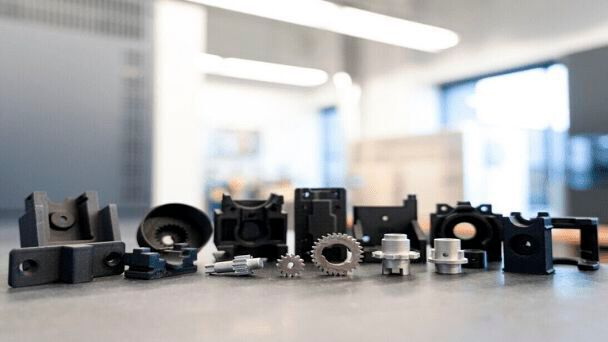
Rapid prototyping refers to a set of techniques used to quickly fabricate a scale model of a physical part or assembly using three-dimensional computer-aided design (CAD) data. This process enables manufacturers to evaluate, refine, and finalize product designs before committing to high-volume production.
By leveraging rapid prototyping, companies can:
- Reduce time-to-market by accelerating the design iteration process.
- Minimize development costs by identifying flaws early.
- Facilitate communication between designers, engineers, and clients.
- Enhance flexibility to accommodate changes in product specifications.
Rapid prototyping has become a critical step not only in product development but also in marketing and testing, giving various stakeholders a tangible sense of the product's look and functionality before manufacturing begins.
Initially, rapid prototyping was dominated by subtractive methods such as CNC machining, hand-crafted models, or silicone mold making. These methods were often costly, time-consuming, and limited in the complexity of shapes they could produce. However, they laid the groundwork for understanding the importance of creating physical models to communicate design intent.
With the advent of additive manufacturing and digital technologies, rapid prototyping has evolved into a faster, more versatile, and cost-effective process. Modern rapid prototyping techniques support complex geometries, customized materials, and integrated workflows that can drastically reduce development cycles.
Additive manufacturing, or 3D printing, builds objects layer by layer from digital models. This approach has revolutionized rapid prototyping by allowing parts with intricate designs and internal structures to be produced easily and with less waste compared to subtractive methods.
FDM is widely used due to its affordability and material versatility. By extruding thermoplastic filaments, FDM machines create prototypes suitable for testing form, fit, and basic function. This technology is particularly practical when quick turnarounds and iterative revisions are required.
SLA uses a UV laser to cure liquid resin into hardened layers. Known for high resolution and smooth surface finish, SLA is ideal for prototypes requiring fine detail and aesthetic quality. Industries such as healthcare and consumer electronics benefit greatly from SLA's precision.
SLS employs a laser to sinter powdered materials into solid parts. It supports a wide range of materials including nylon and some metals, producing robust and functional prototypes that can withstand mechanical testing. Unlike other additive methods, SLS does not require support structures, enabling complex geometries.
MJF technology offers rapid production cycles and consistent mechanical properties. It uses a binding agent jetted onto a powder bed, fused subsequently with heat. MJF produces strong, high-quality prototypes suitable for both functional testing and small production runs.
The combination of these additive manufacturing approaches provides designers with unprecedented flexibility during the prototyping process, allowing rapid experimentation with form and material properties.

CNC machining remains a cornerstone of rapid prototyping, particularly where material properties such as metal strength and surface finish cannot be compromised. Recent advancements have introduced multi-axis machines and AI-driven path planning, significantly reducing machining time while increasing precision.
Modern CNC setups include highly precise turning centers and sheet metal fabrication machines. These allow manufacturers to produce rapid prototypes for highly engineered parts like brackets, housings, and shafts with minimal lead time. Automated tool changers, real-time monitoring, and integrated quality controls add reliability and repeatability to the processes.
- Ability to use end-use production materials
- Superior mechanical properties for functional testing
- High repeatability and scalability for small batch production
- Integration with additive manufacturing for hybrid workflows
Hybrid manufacturing leverages the strengths of both additive and subtractive techniques within a single workflow or machine. For example, a metal part may first be roughly printed via 3D printing and then finished with CNC machining to achieve precise tolerances.
This melding of technologies permits rapid creation of complex geometries with superior surface finishes and mechanical properties, serving industries such as aerospace, automotive, and medical implants where precision and functionality are critical.
The development and application of smart materials are expanding what rapid prototyping can achieve. These innovative materials respond to stimuli such as temperature, pressure, or electrical signals, allowing prototypes to mimic real-world behaviors more closely.
- Shape-memory polymers and alloys: Return to a preset shape when triggered by heat.
- Self-healing polymers: Capable of repairing minor damages automatically.
- Conductive composites: Enable integration of electronic functions within prototypes.
- Biocompatible materials: Used for medical models and implants that mimic tissue properties.
The integration of these materials allows faster validation of designs under simulated operational conditions, enhancing the feedback loop during product development.
Artificial Intelligence (AI) and automation are transforming rapid prototyping workflows from design generation through manufacturing.
Machine learning algorithms analyze design parameters and material constraints to automatically generate optimized prototype models. AI systems can predict stress points and failure modes, suggesting design adjustments that improve performance before physical prototyping.
Robotic arms, automated material handling, and real-time quality control software are increasingly embedded in rapid prototyping factories. These enable 24/7 operation, faster production cycles, and minimized human error.
AI-driven platforms optimize machine usage and raw material supply chains, reducing lead times and improving cost efficiency. Cloud-based monitoring provides instant insights into workflow bottlenecks.
The synergy of AI and automation promises unprecedented scalability and flexibility for rapid prototyping services, supporting everything from one-off prototypes to precision batch production.
Cloud technologies have revolutionized how design teams interact in rapid prototyping projects. Stakeholders from different regions can upload CAD models, review iterations, and share feedback in real-time without delays caused by traditional communication methods.
A digital twin is a virtual replica of a physical prototype or product. It allows designers and engineers to test the prototype's behavior in a simulated environment before manufacturing. This reduces physical trial-and-error and accelerates decision-making.
Digital twins also aid in monitoring prototype performance during actual use by collecting operational data and informing continuous improvement efforts.
Rapid prototyping often requires several post-processing steps to prepare prototypes for functional testing or client presentations. Advances include:
- Automated sanding and polishing for smooth, aesthetic surfaces.
- Thermal and chemical treatments to improve mechanical properties.
- Painting and coating for realistic finishes and environmental protection.
- Electroplating and metallization for conductive or decorative surfaces.
Automation in these steps has significantly reduced the turnaround time, ensuring consistent high quality even on complex geometries.
The future of rapid prototyping is being dramatically reshaped by a convergence of additive manufacturing, upgraded subtractive processes, smart materials, artificial intelligence, and cloud technologies. These innovations reduce development time, increase design freedom, and improve product quality, empowering manufacturers and brand owners worldwide to bring products to market faster and with greater confidence.
By continuously embracing new technologies and integrating them intelligently into existing workflows, the manufacturing industry can anticipate even greater agility and responsiveness in the future. Rapid prototyping will remain a pivotal enabler of innovation, bridging concepts and production like never before.
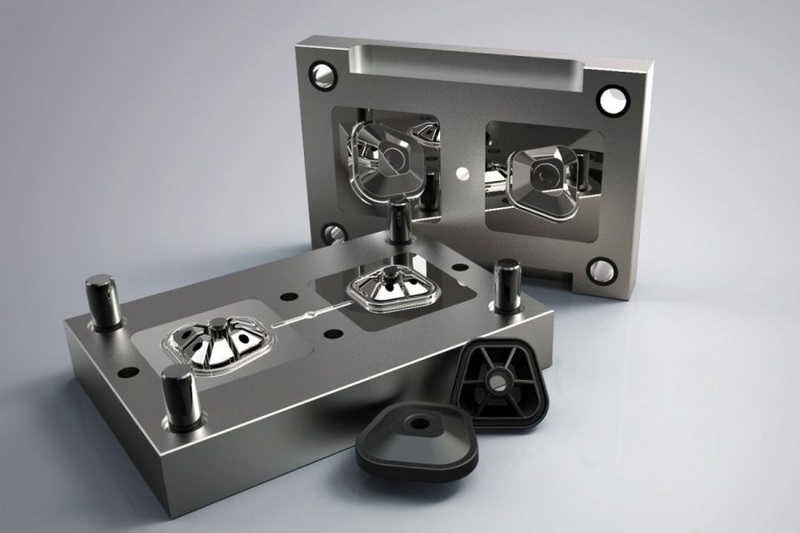
Rapid prototyping allows manufacturers to quickly validate designs, significantly reduce time-to-market, and lower development costs. It also enables multiple design iterations with minimal investment, ensuring products meet client requirements before mass production.
3D printing builds parts layer by layer directly from CAD files, supporting complex geometries and on-demand production with minimal waste. Traditional prototyping often involves subtractive processes, which are more time-consuming and material-intensive.
Yes. Advanced rapid prototyping methods like Selective Laser Sintering (SLS) and CNC machining can produce functional parts for low-volume production runs, especially in industries that value customization or complex designs.
AI automates design optimization, reduces human error, enhances predictive analysis, and optimizes production scheduling. This results in faster iterations, improved product quality, and cost reduction.
Hybrid manufacturing combines additive and subtractive techniques to produce prototypes with complex shapes and high precision. This integration maximizes design flexibility and ensures prototypes meet stringent performance requirements.

