
Views: 222 Author: Amanda Publish Time: 2025-12-24 Origin: Site


Content Menu
● What Is 3D Rapid Prototyping?
● Why Rapid Prototyping Matters for Cost Control
● Key Ways Rapid Prototyping Saves Money
>> Eliminating or Delaying Tooling Investment
>> Accelerating Iteration and Reducing Design Errors
>> Lowering Cost for Small Batches and Custom Parts
● How Rapid Prototyping Works in a Typical Development Cycle
>> Concept and Early Design Stage
>> Functional Verification Stage
>> Pre-Production and Pilot Runs
● Role of CNC Machining in Rapid Prototyping
● Benefits of Using a One-Stop Chinese Rapid Prototyping Partner
● When Rapid Prototyping May Not Be the Cheapest Option
● Best Practices for Maximizing Cost Savings with Rapid Prototyping
● FAQ
>> 1. Does 3D Rapid Prototyping always save money?
>> 2. How does CNC Rapid Prototyping support cost-effective development?
>> 3. Is overseas Rapid Prototyping in China suitable for small companies?
>> 4. How many iterations are typical in a Rapid Prototyping project?
>> 5. When should a project move from Rapid Prototyping to production tooling?
3D rapid prototyping does save money in most product development scenarios because it reduces tooling costs, accelerates design iterations, and lowers the risk of costly failures during mass production. When combined with CNC machining, sheet metal fabrication, and mold making in an integrated workflow, Rapid Prototyping becomes a powerful way for OEM brands and wholesalers to control budget and time-to-market.[1][2]
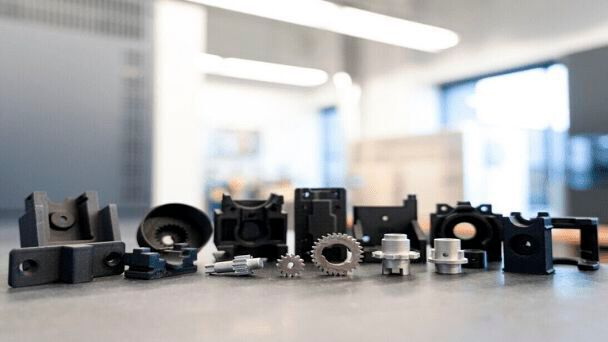
3D Rapid Prototyping is an engineering approach that uses fast, flexible manufacturing technologies to transform digital CAD models into physical parts in a very short time. These technologies include additive processes such as 3D printing and subtractive processes such as CNC machining, which together allow teams to test form, fit, and function long before committing to expensive production tooling.[2][3]
In practice, Rapid Prototyping is not limited to a single process. It often combines plastic and metal 3D printing, CNC Rapid Prototyping for high-precision components, sheet metal Rapid Prototyping for enclosures and brackets, and low-volume molding or vacuum casting for near-production parts with final-like properties.[3][2]
A professional factory in China such as Shangchen offers a full Rapid Prototyping service portfolio, covering CNC machining, CNC turning, sheet metal fabrication, 3D printing, rapid tooling, and precision batch production. This one-stop model helps foreign OEM customers move smoothly from early Rapid Prototyping to trial production and final molding without switching suppliers or re-starting the learning curve on each project.[4]
Rapid Prototyping is a strategic tool for cost control, not just a quick way to get a sample. By pushing most design learning and problem solving into the prototype phase, companies can dramatically reduce the number of surprises that show up after molds are built or after products reach the market.[5]
There are three main dimensions of cost where Rapid Prototyping has a direct impact: engineering costs, manufacturing costs, and market costs. Engineering costs include design hours, rework, and change orders; manufacturing costs cover tooling, scrap, and production downtime; market costs involve delays that cause missed opportunities or lost contracts. Rapid Prototyping influences all three, which is why it has become a standard practice for modern OEM development teams.[1][2]
Conventional manufacturing often requires expensive steel or aluminum molds, dies, and fixtures before the first usable part is produced. If the design is still evolving, investing in hard tooling too early creates a high risk of needing re-cut molds or completely new tools when design changes appear.[6][2]
Rapid Prototyping changes this risk profile by allowing teams to produce realistic parts directly from CAD without hard tooling. Engineers can run several iterations of 3D Rapid Prototyping and CNC Rapid Prototyping, verify geometry and performance, and only then freeze the design and start mold manufacturing. This approach often reduces or completely eliminates the cost of tool modifications, which can reach thousands of dollars per change.[2][3][6]
The faster a team can iterate, the faster it can converge on a robust design. Rapid Prototyping allows designers to implement changes in CAD, send files to manufacturing, and evaluate new parts in days instead of weeks.[5]
By running many small, fast validation cycles with Rapid Prototyping, hidden issues—such as assembly interference, poor ergonomics, or weak snap-fits—are discovered early. Each discovered problem is orders of magnitude cheaper to fix in the Rapid Prototyping phase than after tooling or after market launch, where rework might involve field returns or warranty claims.[1][5]
Additive manufacturing builds components layer-by-layer, using only the material required to form the part and sometimes a small amount of support structure. This contrasts with traditional subtractive processes, where a large block of material is machined away, generating substantial scrap.[7][2]
Even in CNC Rapid Prototyping, careful process planning and design optimization can minimize material removal and scrap rates. In both cases, efficient Rapid Prototyping reduces raw material consumption and lowers the cost impact of each learning cycle.[3][7]
For small volumes, the unit cost of conventional tooling is extremely high because the mold investment must be allocated across only a few parts. Rapid Prototyping sidesteps this problem by enabling economical production runs from a single part up to a few hundred or even a few thousand units, depending on geometry and material.[6][2]
This is particularly attractive for:
- Market testing of new designs in limited quantities
- Spare parts, upgrades, and product variants
- High-mix, low-volume industrial applications
In several documented cases, switching from traditional tooling to 3D Rapid Prototyping for casting patterns or custom components has yielded cost savings of up to around 75% for small batches.[6]
Time is a key driver of cost. Every week that a new product is delayed can mean lost sales and reduced competitive advantage. Rapid Prototyping shortens time-to-market by drastically reducing the time from CAD to testable part, enabling parallel work streams in design, validation, and marketing.[2][5]
With integrated Rapid Prototyping and CNC machining services under one roof, logistics delays are minimized and teams can push projects forward faster. This earlier entry into the market improves the total return on development investment, effectively turning Rapid Prototyping into a strategic business asset rather than just a technical tool.[4][1]
At the concept stage, designers focus on overall product architecture and user experience. Rapid Prototyping here often uses cost-effective 3D printing to visualize shapes, check ergonomics, and validate basic assembly concepts without worrying too much about final material properties.[2]
Physical prototypes built by 3D Rapid Prototyping help stakeholders—engineers, marketing teams, and customers—give concrete feedback. This reduces communication errors and avoids expensive changes later, because decisions are based on actual physical models rather than purely on 3D renderings.[5]
Once the general concept is validated, the focus shifts to mechanical performance, tolerance analysis, and manufacturability. CNC Rapid Prototyping and more advanced 3D printing technologies are used to produce functional parts that closely match the final material and strength.[3]
At this stage, engineers run structural tests, thermal tests, and endurance checks on Rapid Prototyping parts. This allows them to refine wall thickness, ribs, bosses, and joint designs before committing to tooling, saving money by making sure the final product meets specifications the first time.[8]
In the pre-production stage, the objective is to simulate mass production as closely as possible. Low-volume molds, vacuum casting, and precision CNC Rapid Prototyping are used to create pilot batches that mirror production geometry and finishes.[9]
These Rapid Prototyping-based pilot runs allow OEM teams to:
- Validate assembly line processes
- Check packaging and logistics
- Collect feedback from key customers or beta users
By finding and fixing issues here, companies avoid costly corrections after the product is launched at full volume.[5]
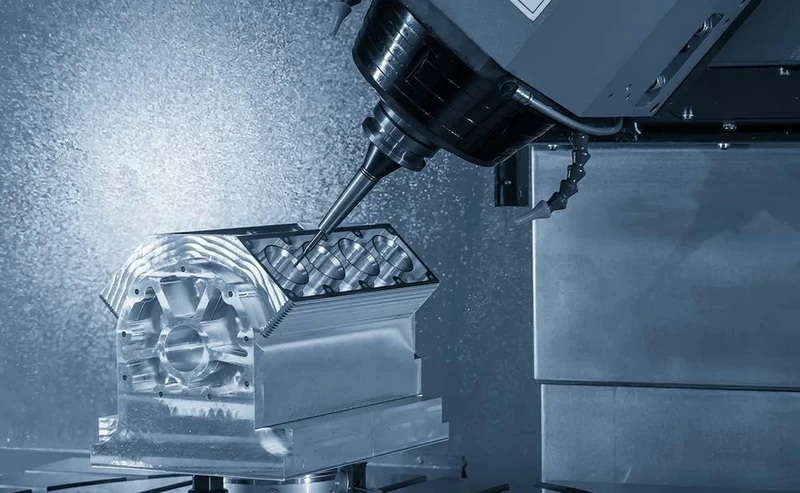
CNC machining plays a critical role in Rapid Prototyping, especially for metal parts and engineering plastics that require tight tolerances. CNC Rapid Prototyping can deliver high surface quality, accurate dimensions, and stable mechanical performance, allowing prototypes to function very close to production parts.[10][3]
CNC Rapid Prototyping is particularly valuable for:
- Structural frames and brackets
- Precision housings and enclosures
- Shafts, gears, and custom fasteners
- High-performance plastic components
Because CNC machines can quickly switch from one design to another by simply changing the program and clamping, CNC Rapid Prototyping supports frequent design iterations without new tooling. This flexibility makes it a cost-effective complement to 3D Rapid Prototyping in complex projects.[10][3]
Working with a one-stop Rapid Prototyping and manufacturing partner in China offers several economic advantages for overseas OEM brands.[4]
First, labor and operating costs in specialized Chinese manufacturing hubs remain competitive, which helps keep prototype and low-volume production prices attractive. Second, providers like Shangchen integrate Rapid Prototyping, CNC machining, turning, sheet metal, and mold manufacturing in a single workflow, reducing communication gaps and handling time between multiple vendors.[9][4]
For foreign customers, this means:
- One project management channel from CAD to mass production
- Consistent understanding of quality standards and tolerances
- Easier implementation of engineering changes across all processes
This integration further increases the cost-saving power of Rapid Prototyping by minimizing friction and uncertainty along the entire development chain.[4]
Although Rapid Prototyping is extremely cost-effective in development and low-volume production, it is not automatically the cheapest choice in every context. For very large quantities of simple parts with stable designs, traditional tooling and high-speed mass production processes will usually offer the lowest cost per unit.[6][2]
In addition, misusing Rapid Prototyping—such as over-specifying tolerances or using exotic materials for early non-critical prototypes—can waste budget without adding real value. The key is to match the type and level of Rapid Prototyping to each stage of development so that every prototype serves a clear purpose in risk reduction or validation.[1][5]
To capture the full economic potential of Rapid Prototyping, product teams should follow several practical best practices.[11]
- Define clear goals for each Rapid Prototyping iteration, such as checking ergonomics, verifying assembly, or validating performance, so unnecessary prototypes are avoided.[11]
- Apply design-for-manufacturing principles even in early Rapid Prototyping models, so that insights are directly transferable to mass production.[11]
- Choose Rapid Prototyping materials and processes that approximate final usage without exceeding current validation needs, balancing cost and realism.[1]
- Work with suppliers who can provide engineering feedback on Rapid Prototyping parts, helping refine designs for both prototype and production stages.[4]
By treating Rapid Prototyping as a structured, iterative process rather than a collection of isolated samples, teams can systematically lower development cost and risk.[5]
3D Rapid Prototyping is one of the most effective ways for modern OEM brands, wholesalers, and manufacturers to control development costs while improving product quality. By eliminating early tooling investment, enabling fast design iterations, reducing material waste, and supporting economical small-batch production, Rapid Prototyping reshapes the financial profile of new product introduction.[2][1]
When Rapid Prototyping is combined with CNC Rapid Prototyping, sheet metal fabrication, and low-volume molding in an integrated service, companies gain a flexible, end-to-end path from concept model to precision batch production. Working with a specialized Chinese partner such as Shangchen allows overseas teams to leverage this full range of Rapid Prototyping capabilities while benefiting from competitive manufacturing costs and simplified project management.[4]
Used strategically, Rapid Prototyping does not only save money within individual engineering tasks; it also accelerates time-to-market, reduces business risk, and strengthens the overall success rate of new product launches. For brands that want to stay agile and competitive, building Rapid Prototyping into the core of their development process has become not just an option, but a long-term economic advantage.[1][5]
3D Rapid Prototyping saves money in most development projects because it avoids early tooling, speeds up iterations, and reduces errors before mass production. However, once a design is stable and volumes are very high, traditional tooling and automated production can offer a lower cost per part, so Rapid Prototyping is then used mainly for updates and variants.[2][1]
CNC Rapid Prototyping delivers precise metal and plastic parts with production-like tolerances, enabling accurate functional tests. This reduces the risk of mechanical failures after tooling and makes it possible to confirm critical dimensions and fits before investing in molds or dies.[10][3]
Overseas Rapid Prototyping in China is highly suitable for start-ups and small companies because they can access advanced equipment and expertise without purchasing machines themselves. A one-stop supplier such as Shangchen can handle Rapid Prototyping, CNC machining, sheet metal, and mold production, simplifying supply chain management for smaller teams.[9][4]
The number of Rapid Prototyping iterations varies with project complexity, but many teams go through several cycles at concept level, a few cycles at functional level, and one or two pilot runs before tooling. Because each iteration in Rapid Prototyping is relatively fast and affordable, it is better to invest in more cycles early than to face expensive corrections after launch.[5][1]
A project should move from Rapid Prototyping to production tooling when core requirements for performance, fit, safety, and user experience have been validated through physical tests. At that point, the design is stable enough for molds or dies, and Rapid Prototyping continues in parallel only for minor improvements, accessories, or future upgrades.[2][5]
[1](https://www.stratasys.com/en/stratasysdirect/resources/articles/strategies-to-reduce-3d-printing-costs/)
[2](https://www.raise3d.com/blog/3d-printing-for-rapid-prototyping/)
[3](https://www.ltc-proto.com/blog/5-reasons-to-use-cnc-machining-for-rapid-prototyping/)
[4](https://www.sc-rapidmanufacturing.com/aboutus.html)
[5](https://www.paragonmedical.com/blog/saving-development-time-and-costs-with-rapid-prototyping/)
[6](https://www.voxeljet.com/additive-manufacturing/case-studies/foundry/3d-printing-saves-costs-in-sand-casting/)
[7](https://www.protolabs.com/resources/design-tips/cutting-costs-with-industrial-3d-printing/)
[8](https://nabell.com/blog/why-cnc-rapid-prototyping-matters-in-industrial-applications/)
[9](https://www.sunrise-metal.com/rapid-manufacturing/)
[10](https://www.americanmicroinc.com/resources/understanding-influence-cnc-machining-rapid-prototyping/)
[11](https://formlabs.com/blog/rapid-prototyping-tips/)

