
Views: 222 Author: Amanda Publish Time: 2025-08-12 Origin: Site


Content Menu
● Understanding 5-Axis Machining
● The Custom Mold Making Process with 5-Axis Machining
>> 4. Secondary Operations and Finishing:
>> 5. Quality Control and Testing:
● Expanded Benefits of 5-Axis Machining in Custom Mold Making
>> Enhanced Precision and Accuracy
>> Complex Geometries and Undercuts
>> Increased Efficiency and Productivity
>> Reduced Tool Wear and Optimized Tool Paths
>> Versatility of Material Compatibility
>> Design Freedom and Innovation
● Key Industrial Applications of 5-Axis Custom Mold Making
● Process Optimization and Integration with Other Technologies
● Frequently Asked Questions (FAQs)
>> 1. What makes 5-axis machining superior to 3-axis machining for mold production?
>> 2. How does 5-axis machining affect the overall lead time of custom molds?
>> 3. What materials are commonly used in 5-axis custom mold making?
>> 4. Can 5-axis machining be cost-effective for small or prototype mold orders?
>> 5. How is quality control managed during 5-axis custom mold manufacturing?
Custom mold making is a critical process in manufacturing, enabling the creation of precise, intricate molds that serve as the foundation for countless industrial products. Among the various machining techniques available, 5-axis machining stands out as a transformative technology that offers exceptional accuracy, flexibility, and efficiency. This article explores the depths of custom mold making using 5-axis machining technology, highlighting its numerous benefits, detailed process insights, and wide industrial applications. By understanding these factors, manufacturers and brand owners can leverage this technology to optimize production and quality.
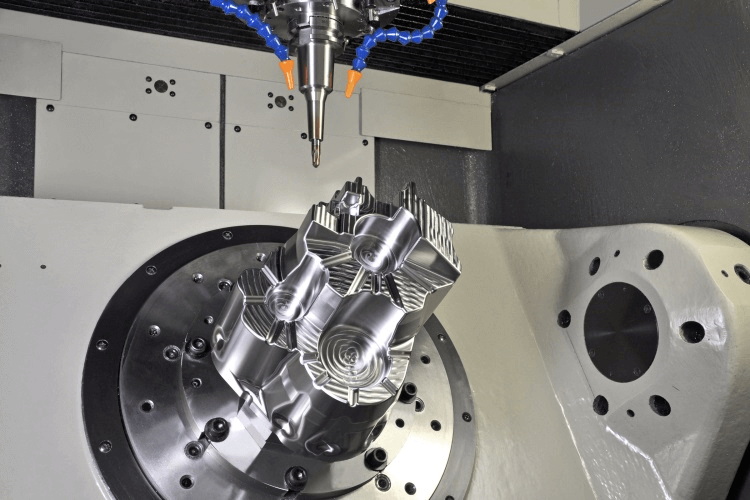
5-axis machining is an advanced CNC (Computer Numerical Control) machining method in which the cutting tool can move simultaneously along five different axes. Traditional 3-axis machines manipulate the cutting tool along the three linear axes—X, Y, and Z. In contrast, 5-axis machines incorporate two additional rotational axes—commonly referred to as A and B axes—allowing the tool to approach the workpiece from virtually any angle. This multi-directional control enhances the ability to machine complex shapes in fewer setups, greatly improving efficiency and precision.
The key advantage lies in the simultaneous movement across five axes, which reduces the need for multiple repositionings and the associated errors. The machine's ability to tilt and rotate permits access to undercuts, deep cavities, and complex surfaces that are otherwise difficult or impossible to achieve with fewer axes.
Mold making begins with detailed design using CAD (Computer-Aided Design) software to capture every intricate detail of the mold's geometry. Designers must consider factors such as shrinkage, cavity layout, gating systems, cooling channels, and tolerance requirements. Special attention is given to the mold's eventual manufacturing process to ensure compatibility.
After finalizing the design, CAM (Computer-Aided Manufacturing) software generates the precise toolpaths that guide the 5-axis CNC machine. Sophisticated programming allows for the optimization of cutting sequences, tool orientations, and speeds, which is critical to machine efficacy and surface finish quality.
The core phase involves the actual cutting of the mold material—commonly hardened steel, aluminum, or specialty alloys—using the 5-axis machine. The simultaneous movement across five axes allows the creation of complex cavities, intricate details, and undercuts in a single setup without manually repositioning the part. This precision machining ensures tight tolerances and excellent surface integrity.
Once machining is complete, the mold may undergo finishing processes such as polishing, heat treatment, surface coatings, and quality inspections. These steps ensure durability and optimal performance during the molding cycle. High-quality surface finish is especially important to reduce defects in molded products.
Dimensional inspections using CMM (Coordinate Measuring Machines) and other metrology tools verify the mold's geometric accuracy and surface conditions. Functional testing may include trial molding to check for defects and consistent performance before delivery.
The ability to machine complex features in a single setup minimizes errors caused by repositioning the workpiece. This is crucial for molds requiring tight tolerances, as even minute deviations can lead to defective parts or inconsistent production. The improved rigidity from shorter cutting tools and optimized tool orientation also sharpens precision.
5-axis machining can effortlessly produce highly complex features such as deep pockets, intricate ribs, compound curves, and undercuts. These geometric complexities often characterize high-performance molds used in aerospace, medical, and automotive industries. By machining all these features in one setup, manufacturers save substantial time and avoid alignment errors.
Traditional 3-axis machining may require multiple setups to handle all mold features, prolonging production duration. In contrast, 5-axis machining streamlines the process by enabling tool access from several directions simultaneously. This reduces machining time, tool changes, and manual handling, thus boosting overall productivity.
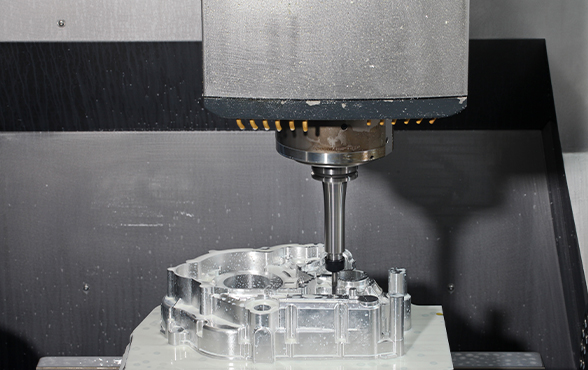
5-axis machining allows for the use of shorter cutting tools, which are less susceptible to deflection and vibration. It also facilitates tool paths that maintain an optimal angle between the tool and workpiece, extending tool life and assuring consistent finishes. These factors contribute to lower production costs.
Due to better control over tool orientation and feed conditions, 5-axis machining results in smoother surface finishes, reducing or eliminating the need for extensive secondary polishing or grinding. This is a significant advantage for mold surfaces where finish quality directly affects the molded product's appearance and performance.
5-axis CNC machines handle a diverse range of materials suited for custom molds—from hard steels and titanium alloys to softer aluminum grades and advanced plastics. This versatility makes 5-axis machining suitable for various molding applications such as injection molding, die casting, and thermoforming.
With 5-axis capabilities, designers and manufacturers are no longer constrained by machining limitations. This freedom encourages innovation in mold design, allowing for integrated cooling channels, lightweighting through complex internal geometries, and multi-functional mold components that improve molding efficiency and product quality.
- Automotive Industry:
The automotive sector benefits immensely from 5-axis mold making for producing engine blocks, transmission cases, interior trim parts, and complex body panels. The ability to deliver precise molds accelerates production and supports lightweighting initiatives.
- Aerospace Industry:
Aerospace molds for turbine blades, structural components, and lightweight assemblies require extreme precision and robust materials. 5-axis machining enables the manufacture of these complex molds, often with integrated cooling or internal channels.
- Medical Devices:
Molds for implantable devices, surgical tools, and prosthetics demand micron-level accuracy and biocompatible surface finishes. 5-axis CNC machines meet these strict standards by allowing complex shapes and precise surface treatments in fewer setups.
- Consumer Electronics:
The production of intricate molds for connectors, micro-components, and device housings relies on 5-axis machinery to realize the fine details and tight tolerances associated with lightweight, compact designs.
- Industrial Equipment:
Heavy machinery and tooling components also use 5-axis molds for improved durability and functional integration, enhancing product lifespan and service efficiency.
Though 5-axis machining excels as a standalone technology, integrating it with additive manufacturing (3D printing) and EDM (Electrical Discharge Machining) unlocks even greater potential for mold making. Additive techniques can produce complex cores and inserts that 5-axis machines finish with high precision. EDM complements the machining by creating fine details and polishing features difficult to mill.
Further, the adoption of digital twins and simulation tools optimizes the entire machining environment. Virtual machining simulations reduce trial-and-error in tool path programming and detect potential collisions, thereby ensuring smoother operations and reducing scrap rates.
Custom mold making empowered by 5-axis machining technology represents a major leap forward in precision manufacturing. The key advantages include machining complex geometries in fewer setups, superior surface finishes, reduced production times, and enhanced design freedom. These benefits extend across diverse industries—from automotive and aerospace to medical devices and consumer electronics—allowing manufacturers to meet rigorous quality standards while optimizing cost and productivity. Integrating 5-axis machining with modern digital tools and complementary manufacturing processes further enhances efficiency and innovation. For manufacturers seeking to stay competitive in the global market, adopting 5-axis machining for custom mold production is an indispensable strategy.
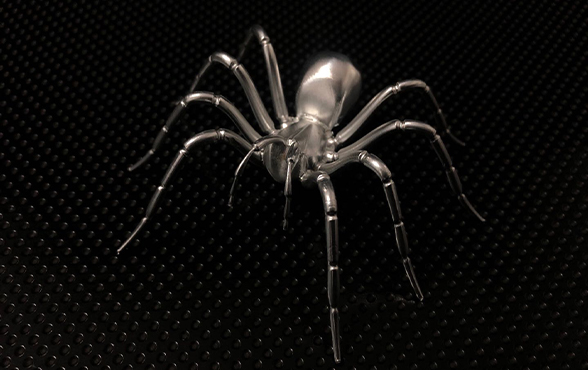
5-axis machining provides enhanced flexibility by allowing the cutting tool to access the workpiece from multiple angles simultaneously. This reduces the need for multiple setups, saves time, improves surface finishes, and enables machining of complex geometries and undercuts impossible on 3-axis machines.
Though dependent on mold complexity and size, 5-axis machining typically reduces total cycle time by consolidating machining steps into a single setup. This leads to faster prototype development and quicker production runs compared to multi-setup methods.
5-axis machining accommodates a broad spectrum of materials, including hardened tool steels, aluminum alloys, stainless steels, titanium, plastics, and composites, making it versatile for various molding applications.
Yes. Despite higher machine costs, the reduction in setup times and labor, combined with improved accuracy and finish quality, makes 5-axis machining feasible and economical even for low-volume or prototype production.
Quality control involves advanced metrology techniques such as coordinate measuring machines (CMM), laser scanning, and surface roughness testing to ensure molds meet precise dimensional and surface specifications before shipment.
[1] https://www.methodsmachine.com/blog/benefits-of-5-axis-machining/
[2] https://premieraluminum.com/how-custom-mold-creation-works/
[3] https://sybridge.com/3-axis-vs-5-axis-cnc-machining/
[4] https://jlccnc.com/blog/5-advantages-of-5-axis-cnc-machining-in-precision-parts-manufacturing
[5] https://www.xavier-parts.com/applications-of-five-axis-cnc-machine-tools/
[6] https://www.rapiddirect.com/blog/32-vs-5-axis-machining/
[7] https://firstmold.com/mold-making-service/
[8] https://amfg.ai/2024/03/19/3-axis-vs-5-axis-cnc-machines-a-comprehensive-guide/
[9] https://jlccnc.com/help/article/5-axis-cnc-machining
[10] https://astromachineworks.com/what-is-5-axis-machining/
[11] https://www.3erp.com/blog/5-axis-cnc-machining-advantages/
[12] https://formlabs.com/blog/how-to-make-a-mold/
[13] https://www.xometry.com/resources/machining/3-axis-vs-5-axis-cnc/
[14] https://www.techniwaterjet.com/5-axis-machining/
[15] https://www.improprecision.com/applications-5-axis-cnc-machine/
[16] https://www.dmgmori.co.jp/sp/5axis/en/
[17] https://www.smooth-on.com/tutorials/
[18] https://www.youtube.com/watch?v=oFvBe7cqxOE
[19] https://www.aikoku.co.jp/en/ap/index.html
[20] https://aerospeceng.com.au/common-industries-that-can-take-advantage-of-5-axis-machining/

