
Views: 222 Author: Amanda Publish Time: 2025-11-13 Origin: Site


Content Menu
● Introduction to Turning Lathe Selection
● An Overview of Turning Lathe Types
● Key Technical Specifications to Consider
● The True Cost of Owning a Turning Lathe
● Quality Considerations for Turning Lathes
● Cost vs Quality: Making an Informed Decision
● Optimizing Investment: Strategic Buying Advice
● Expanded Industry Applications
>> Vertical Turning Lathes (VTLs)
● Safety and Maintenance Strategies
● FAQ
>> 1. Which technical specification is most crucial for turning lathe performance?
>> 2. How can quality be assured in turning lathe procurement?
>> 3. Are entry-level CNC turning lathes recommended for small OEMs?
>> 4. What maintenance routines improve lathe longevity?
>> 5. How do vertical turning lathes (VTLs) differ from horizontal models?
Selecting the right turning lathe is a pivotal decision for manufacturers, OEM suppliers, and workshop owners determined to achieve the best balance of cost, quality, and efficiency. This comprehensive article guides buyers through every major aspect of lathe selection—covering budget impact, technical features, manufacturing quality, and strategic advice for maximizing long-term value in modern machining environments.[1][11][12]
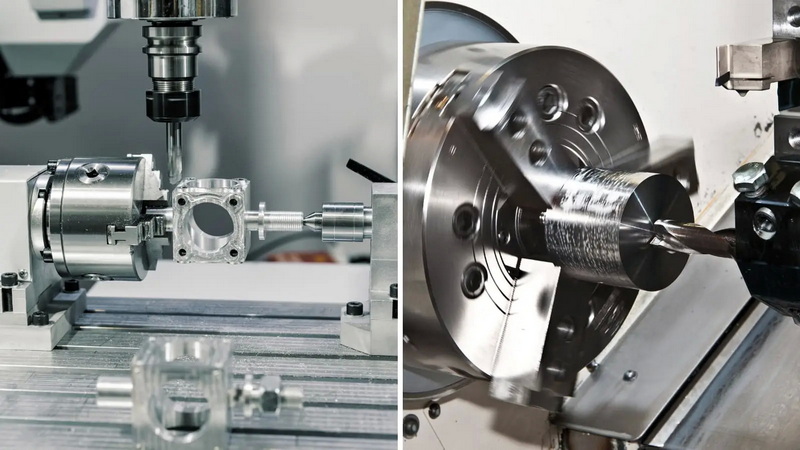
Turning lathes play a vital role in precision metalworking. Whether for rapid prototyping, batch production, or complex part manufacturing, choosing suitable equipment directly affects job quality and profitability. An informed decision relies not just on price, but on technical specifications, output consistency, and after-sales support from suppliers.[13][14]
Manual lathes are favored for their simplicity and flexibility in custom and repair jobs. These machines depend heavily on operator skill to achieve the desired dimensions and finishes, making them best suited for low-volume manufacturing and small workshops.[4][15]
CNC (Computer Numerical Control) lathes, including advanced turning centers, deliver automated precision, repeatability, and process consistency ideal for OEM production, mass manufacturing, and complex geometries. These machines support programmable multi-axis operations, automated tool changers, and detailed process monitoring systems.[12][16][17]
Understanding lathe specifications forms the backbone of a smart buying strategy.[2][5][6]
- Swing Diameter: Maximum diameter a workpiece can rotate above the lathe bed; typically ranges from 200 mm for small lathes up to 10,000 mm for large vertical turning machines.[5][7]
- Turning Length: Dictates the maximum supported length of a workpiece; crucial for shaft and cylinder production.[5]
- Spindle Speed and Power: High-power spindles and wide speed ranges allow cutting of tough alloys and finer finishes.[6][5]
- Bed Construction: Heavy-duty cast iron beds offer superior stability and vibration dampening, supporting higher accuracy over time.[9][2]
- Tailstock and Quill: Key for threading, knurling, and supporting long parts during turning operations.[5]
- Control Systems: Modern CNC lathes feature user-friendly control panels, programmable feeds, and robust automation capabilities for enhanced throughput.[6]
- Tool Turret: Determines how many different tools can be mounted and switched during machining, impacting efficiency on multi-step jobs.[5]
- Attachments: Milling, grinding, and taper-turning attachments expand machine versatility, although high-precision finishing tasks may still favor dedicated machines.[5]
Lathe investments stretch beyond the price tag. A comprehensive cost assessment includes:
- Initial Purchase Costs: New CNC lathes range from $15,000 to $700,000+ depending on size, accuracy, and feature set; manual lathes and refurbished machines often cost much less.[18][19]
- Tooling and Accessories: Tooling typically accounts for 20% of the total initial investment and affects productivity and finish quality.
- Operation and Maintenance: Annual service costs can be $1,000–$5,000. Automation modules, software upgrades, and coolant systems add to the total spend but may bring substantial efficiency gains.[16][17]
- Training: Modern CNC turning lathes require skilled setup and programming, making staff training an essential hidden cost.[6]
- Depreciation: While higher-cost machines offer extended lifespan and precision, resale value and longevity should factor into calculations, particularly when considering used or refurbished equipment.[17][20]
Quality in turning lathes means more than tight tolerances:
- Frame and Stability: Machines with rigid frames and precision-milled beds minimize vibration and ensure consistent dimensions, especially in high-volume production or heavy-duty settings.[2][9]
- Repeatability and Precision: CNC systems should repeat operations within ±0.0002" for demanding parts; manual machines achieve ±0.005" depending on build quality and operator skill.[21][12]
- Special Features: Variable speed drives, backlash compensation, and advanced thermal stability controls are essential for complex jobs requiring flawless finishes or special materials.[6]
- Brand and Support: Reputation for durability, technical assistance, and quick access to parts distinguishes top suppliers for global OEMs.[14][13]
The decision-making process should weigh present and future needs, not just immediate savings:
- Production Volume and Material: High-volume shops working difficult metals should invest in robust CNC turning lathes with advanced cooling, power, and automation. Entry-level and manual options suffice for custom or limited-run work.[22][16]
- Customization: Work closely with your supplier to develop machine specifications that match your application, from rapid prototyping to full-scale batch production. Custom molds, fixturing, and automation can accelerate processes and minimize labor dependency.[7][14]
- Accessory Integration: Evaluate the impact of attachments (milling, grinding, taper turning) on your workflow, considering both versatility and long-term accuracy.[5]
1. Define Requirements: Catalog essential features, expected throughput, part sizes, and permissible tolerances.
2. Budget Holistically: Include tooling, software, staff training, and support costs when establishing your budget.[18]
3. Evaluate After-Sales Service: Select suppliers known for responsive networks and comprehensive warranties.
4. Leverage Bundling: Negotiate for bundled packages—machines, tooling, support—that can reduce acquisition costs by up to 25%.[18]
5. Test Before Purchase: Request live demos or prototype runs to ensure specs match actual performance and accuracy.
Modern CNC turning lathes are integral to advanced manufacturing—including aerospace, automotive, electronics, and heavy machinery. They enable:
- Rapid Prototyping: Quick, repeatable production of new component designs enables faster market adaptation.[12][14]
- Batch Production: Reliable accuracy and automated changeovers minimize waste and maximize yield.[13]
- Integration: Combination with 3D printing, sheet metal, and mold production fosters customizable, scalable solutions for global brand clients.
For extremely large or heavy components, vertical turning lathes provide enhanced stability and easier material handling. Features include:
- Swing diameters up to 10,000 mm.
- Table load capacities exceeding 350,000 kg.
- Multi-axis movement (Y-axis, U-axis) for complex geometries and flexible loading.[7][6]
- Robot-based tool changers supporting up to 400 positions for maximum efficiency.
- Integrated measurement cycles and automatic error correction for superior quality control.
Safety is paramount in any turning lathe operation. Follow these precautions:[3]
- Training: Ensure operators complete certified instruction, especially for CNC models and multi-axis turning centers.
- Routine Maintenance: Perform machine cleaning, periodic lubrication, and regular calibration to maintain accuracy and reduce breakage.
- Hazard Mitigation: Use interlocks, shielding, and correct PPE to prevent injuries from flying chips, rotating components, and moving parts.
Effective maintenance and safety protocols directly contribute to machine longevity and operator wellbeing.
China-based rapid prototyping and precision manufacturing factories like Shangchen deliver fully integrated OEM solutions:
- CNC machining: Fast turnaround, precision batch production, and custom part adaptation.
- Sheet metal and mold manufacturing: Tailored to specific industry requirements, supporting small and large order volumes.
- 3D printing: Enhances design flexibility, supports iteration, and accelerates new product launches.
Selecting a supplier with broad capabilities and reliable service accelerates business growth and adapts readily to new market trends.[14][13]
Selecting the right turning lathe is a strategic investment—balancing up-front cost, technical capability, and build quality leads to greater efficiency and profitability over the long term. By assessing your true machining requirements, technical specifications, support network, and supplier reputation, manufacturers can ensure lasting success in high-demand international markets. With evolving technology and rising manufacturing standards, the optimal turning lathe delivers precision, reliability, and flexibility tailored to your unique business objectives.[1][17][12]

Swing diameter and spindle power are fundamental—these determine the maximum workpiece size and suitable material types. High-end CNC systems also require robust control panels and support for programmable multi-axis feeds.[6][5]
Choose machines with heavy-duty cast iron beds, precision control features, and supplier-backed warranties. Assess real-world feedback from current users before finalizing deals.[2][14]
Yes, entry-level CNC turning lathes handle most tasks for small businesses, provided that minimum technical specifications—accuracy, spindle speed, and tool changer capacity—align with your production demands.[12][18]
Maintain a strict regimen: clean chips regularly, lubricate moving parts, calibrate axes and spindle speeds, and replace wear components systematically. Follow supplier and industry safety standards to prevent breakdowns and ensure operator protection.[3]
VTLs position work vertically for easier handling of large parts and use advanced features, including multi-axis movement and robotic tool changers, to enhance throughput and machining precision for complex components.[7][6]
[1](https://summitmt.com/buying-a-metal-lathe/)
[2](https://cncwmt.com/qa/how-do-you-read-a-lathe-specification-sheet-with-confidence/)
[3](https://blog.ansi.org/ansi/ansi-b11-6-2022-lathes-safety/)
[4](https://revelationmachinery.com/blog/cnc/ultimate-guide-everything-you-need-to-know-about-engine-lathes/)
[5](https://www.scribd.com/document/475869456/compilation)
[6](https://www.sahilcnc.com/guides/conventional-vertical-turning-lathe-machine-1/)
[7](https://headland.au/static/e5242825ceb226b61081f683c436db4a/BOST-Catalogue.pdf)
[8](https://www.goldenmachinery.com/blogs/specification-of-lathe-machine)
[9](https://www.cncmasters.com/lathe-machine/)
[10](https://www.bintso.org.tr/Portals/304/Haber_Foto/CNC-Lathe-Machine-Specification.pdf)
[11](https://cncwmt.com/qa/turning-center-vs-lathe-choosing-the-right-machine/)
[12](https://www.cncprotolabs.com/blog/cnc-turning-center-or-cnc-lathe-how-to-choose-the-right-machine)
[13](https://www.east-cnc.com/news/industry-news/a-buyer-s-guide-to-choosing-the-right-custom-cnc-metal-lathe.html)
[14](https://www.hyproto.com/top-9-lathe-manufacturers-list-and-guide/)
[15](https://www.instructables.com/Turning-for-beginners-Part-1/)
[16](https://hwacheonasia.com/cnc-machine-price-a-guide-to-cost-comparison/)
[17](https://haishucnclathe.com/cnc-lathe-machine-price-guide/)
[18](https://www.guanglijin.com/affordable-cnc-lathe-machines-for-sale-price-comparison/)
[19](https://www.elephant-cnc.com/blog/cnc-lathe-machine-cost/)
[20](https://insights.made-in-china.com/Used-Lathe-Vs-New-Lathe-Which-Is-the-Better-Choice-for-Your-Machining-Needs_qAragTzjVQIb.html)
[21](https://machinetoolspecialties.com/blog/1553-cnc-lathe-cost-analysis-comparing-costs-with-manual-options)
[22](https://cncwmt.com/qa/how-much-is-a-cnc-lathe/)

