
Views: 222 Author: Amanda Publish Time: 2025-11-14 Origin: Site


Content Menu
● Understanding the Turning Lathe
● Key Differences: CNC Turning Lathe vs Manual Lathe
>> 1. Machining Principle and Structure
>> 2. Precision and Repeatability
>> 3. Production Volume and Efficiency
>> 5. Labor Skill and Training
>> 6. Setup Time and Changeovers
>> 7. Flexibility and Real-Time Adaptation
● Industrial Applications of Turning Lathes
● Case Study: Choosing the Right Turning Lathe for Your Project
● Modern Trends: Automation, Skill Gaps, and Hybrid Workflows
● FAQs
>> Q1: What is the most significant difference between a CNC turning lathe and a manual lathe?
>> Q2: Which turning lathe is most suitable for high-volume production?
>> Q3: Is it easier to achieve tight tolerances on a CNC or manual turning lathe?
>> Q4: Are manual lathes outdated compared to CNC machines?
>> Q5: What factors should influence the choice between a CNC turning lathe and a manual lathe?
The discussion surrounding CNC turning lathes versus manual lathes sits at the heart of contemporary manufacturing, prototyping, and precision engineering. Each category of turning lathe offers unique operational principles, capabilities, and practical limitations, making the right choice critical for fabrication shops, OEMs, and product designers. This article provides a comprehensive analysis of the distinctions between CNC turning lathes and manual lathes, emphasizing their respective advantages, disadvantages, and real-world applications for anyone considering investment or process improvements in turning lathe technology.[1][6][7]

Turning lathes are machine tools used extensively to shape metal, plastic, and other materials by rotating a workpiece and removing material through a stationary cutting tool. There are two principal types:
- CNC Turning Lathe: Automated by computer numerical control, these lathes are renowned for precision, efficiency, and mass production capabilities. They require digital programming and minimize manual intervention while maximizing repeatability and quality.[7]
- Manual Lathe: Operated by skilled machinists, manual lathes prioritize adaptability and require hands-on control for feeding, cutting, and tool positioning—flexible but inherently dependent on the operator's expertise.[5][6]
Both types of turning lathe are used to perform various operations:
- Turning (outside and inside diameter)
- Facing
- Threading
- Grooving
- Taper Cutting
The main structural difference is how each manages axis control: CNC turning lathes automate this process through servo motors and programming, whereas manual lathes depend entirely on physical inputs from machinists.[4][7]
A manual lathe is composed of a feed box and slide box, engaging the lead screw to move the tool and the workpiece. All movements are made by hand, requiring skill for precise, repeatable work.[5]
By contrast, a CNC turning lathe utilizes a numerical control system, feed mechanisms, and servo or hydraulic motors. Technicians input a programmed set of instructions (often G-code), automating axes and tool management for complex, high-precision tasks.[7]
CNC turning lathes are engineered for micron-level tolerances and maintain consistency for hundreds or thousands of identical parts, making them the preferred solution in industries where precision is non-negotiable. Manual lathes, while capable in the hands of experienced operators, are more susceptible to variation because accuracy is tied to the machinist's control and attention to detail, especially during lengthy sessions or batch production.[6][1][5][7]
- CNC Turning Lathe: Best suited for high-volume production, as automation enables rapid cycle times after initial setup and programming. Parts can be produced continuously with minimal variation and reduced labor input.[6][7]
- Manual Lathe: Ideal for small-volume runs, prototypes, custom repairs, or unique parts. Machinists can make real-time adjustments, especially helpful for one-off designs, but scaling up volume is time-consuming and labor-intensive.[8][1]
CNC turning lathes easily produce complex geometries, undercuts, and consistent intricate features that cannot be reliably replicated on a manual lathe. Programming multi-axis operations expands design possibilities without requiring physical tool changes by hand. Manual lathes are limited to simpler geometries but allow nuanced, hands-on manipulation for creative problem solving.[10][6][7]
Manual lathes depend almost exclusively on the skill and experience of the machinist, making precision turning a craft honed over years. In contrast, CNC turning lathes require technical training in programming and operation but less day-to-day manual craftsmanship—though a foundational understanding of machining remains invaluable for both types.[1][5]
- CNC: Although initial programming and tool setup may be lengthy, repeated runs are swift and efficient, with minimal intervention. Reusing stored programs accelerates changeovers for often-made parts.[6][7]
- Manual: Setup is fast for simple projects but grows increasingly time-consuming for complex jobs, as all adjustments are manual. Every part may require new positioning, risk of error, and trial-and-error tweaks.[1][5]
Manual lathes excel in flexibility, allowing machinists to tweak designs, speeds, and feeds on the fly—a significant advantage during early prototyping or when dealing with unpredictable materials. CNC turning lathes, while highly flexible for complex forms, require reprogramming and setup to make mid-process changes, limiting their adaptability during a run.[7][1][6]
- CNC Lathes: Feature high upfront costs for machinery, programming, and maintenance, but the per-part cost diminishes sharply with scale and complexity, especially for repeat orders. Labor costs are generally reduced over time.[1]
- Manual Lathes: Lower purchase and maintenance costs, and often better for small-batch or custom work, but unit costs grow with volume due to increased labor inputs. Skilled machinists are at a premium and their time limits throughput.[5][1]

- CNC Turning Lathes: Aerospace, automotive, medical device, and electronics manufacturing depend on CNC turning lathes for high-precision parts and scalable production. Items such as engine components, connectors, surgical instruments, shafts, and housings routinely undergo CNC turning to meet tight specifications.[11][7][1]
- Manual Lathes: Continue to prove essential for tool rooms, R&D departments, maintenance shops, custom fabrication, restoration projects, and educational laboratories. Machinists often turn to manual lathes for urgent repairs, single-part runs, and creative solutions when digital programming is impractical.[12]
Imagine a project requiring 10,000 precision medical implants, each demanding a consistent 0.005 mm tolerance and complex external features. A CNC turning lathe can be programmed once and operated for repeat runs, ensuring every implant is identical, with only automated checks and minimal manual intervention. In comparison, a manual lathe, regardless of the machinist's expertise, risks variation between batches and is not cost-effective at this scale.
Conversely, a restoration shop asked to recreate a discontinued machine part for vintage equipment will benefit from the manual lathe's flexibility. Adjustments can be made in real time, based on fit and operational feedback, without programming or digital setup delays.
With the continuing evolution of manufacturing, hybrid workshops emerge as the new industry standard:
- CNC turning lathes serve as the backbone for all mass production, complex or not.
- Manual lathes fill the gap for prototyping, troubleshooting, and custom requests, keeping invaluable human insight and skill alive.[13][11][1]
Technological improvements in CNC interfaces, simulation software, and toolpath optimization continue to lower entry barriers for operators, enhancing machine versatility and enabling broader adoption across global markets. However, the artisan touch of a talented manual machinist remains irreplaceable in certain applications, particularly where creativity and adaptability are assets.[7]
Selecting between a CNC turning lathe and a manual lathe is one of the most important decisions for any manufacturer, machinist, or designer involved in fabrication and precision engineering. CNC turning lathes stand unmatched in their ability to provide rapid, consistent output for complex and tightly toleranced parts, supporting scalability and cost efficiency for mass production. In contrast, manual lathes remain the tool of choice for prototyping, individual customization, and cultivating true craftsmanship in machining. Understanding the key differences in accuracy, flexibility, scalability, operational cost, and skill requirements between these turning lathe types is fundamental to optimizing any manufacturing process.[5][6][1][7]
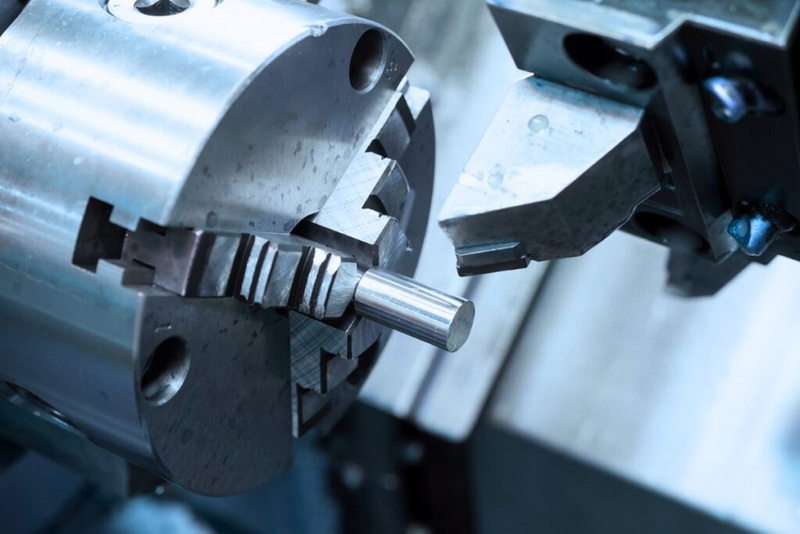
A manual lathe is controlled entirely by the machinist, requiring hands-on operation for all adjustment, while a CNC turning lathe is programmed to perform routine or complex operations automatically and with high repeatability.[2][6][7]
The CNC turning lathe is best for high-volume production due to its speed, efficiency, and ability to maintain exacting standards across large batches with minimal labor input.[6][1]
Tight tolerances are far easier and more reliable to achieve with a CNC turning lathe because the process is automated and repeatable, minimizing human error.[1][6][7]
Manual lathes are not outdated; they remain crucial for prototyping, education, and highly customized work. Both types have their place in modern workshops.[5][6]
Key considerations include part complexity, production volume, tolerance requirements, available labor skills, budget, and the need for either flexibility or automation in the workflow.[6][7][1][5]
[1](https://www.violintec.com/precision-machining/factors-to-consider-when-choosing-between-cnc-turning-and-manual-turning/)
[2](https://www.rapiddirect.com/blog/cnc-machining-vs-manual-machining/)
[3](https://www.reddit.com/r/Machinists/comments/8wbw4s/manual_vs_cnc/)
[4](https://www.cncmasters.com/turning-centers-vs-lathes-the-differences-explained/)
[5](https://www.lzcncmachine.com/news/86-86.html)
[6](https://cncwmt.com/qa/lathe-vs-cnc-key-differences-and-selection-guide/)
[7](https://durexinc.com/cnc-turning-vs-traditional-turning/)
[8](https://www.hobby-machinist.com/threads/cnc-vs-manual.73130/)
[9](https://www.practicalmachinist.com/forum/threads/just-a-thought-cnc-vs-manual.406754/)
[10](https://turntechprecision.com/clueless-machinist/2020/8/25/10-machining-operations-performed-on-a-lathe)
[11](https://www.sogaworks.com/blogs/cnc-machining-vs-manual-machining/)
[12](https://www.youtube.com/watch?v=onF9RUT7vuI)
[13](https://jetcrafted.com/difference-between-cnc-lathe-and-conventional-lathe/)

