
Views: 222 Author: Amanda Publish Time: 2025-11-01 Origin: Site


Content Menu
● The value proposition of CNC milling for custom parts
● Core capabilities that empower outcomes
>> Surface finishes and post-processing
● Design for manufacturability and design decisions
>> Simplify geometry where possible
>> Plan for fixturing and accessibility
>> Align design with material properties
>> Incorporate post-processing early
● The end-to-end CNC milling workflow
>> Initial consultation and manufacturability review
>> Quoting and lead-time planning
>> Program optimization and tooling
>> Prototyping and validation cycle
>> Manufacturing and quality assurance
>> Documentation and traceability
● QA, standards, and compliance
>> Material and supplier qualifications
● Practical guidance for OEM partners
>> Clear delivery and packaging requirements
>> Iterative development approach
>> Collaboration and communication
● Case opportunities across industries
>> Consumer electronics enclosures and internal components
>> Medical devices and laboratory equipment
>> Industrial machinery and tooling
>> Aerospace and defense considerations
● The Shangchen advantage for international OEMs
● Data-driven decision making and optimization
>> Process analytics and continuous improvement
>> Cost of ownership and total value
● FAQ
>> 1. What is the difference between 3-axis, 4-axis, and 5-axis CNC milling?
>> 2. What materials are best for CNC milling in prototypes and production parts?
>> 3. How should data be prepared for a CNC milling quote?
>> 4. What post-processing steps are commonly required after milling?
>> 5. How can designers ensure manufacturability for CNC milling?
CNC milling stands as a cornerstone of modern contract manufacturing, delivering precision, repeatability, and agile lead times for brands that demand reliable performance from components and assemblies. Shangchen, a China-based partner specializing in rapid prototyping, precision CNC machining, sheet metal fabrication, 3D printing, and mold production, offers a holistic suite of capabilities to overseas brands, wholesalers, and manufacturers. This article explores how to achieve optimal outcomes when engaging CNC Milling Services for custom parts, with practical guidance drawn from broad industry practice and tailored to the strengths of an end-to-end OEM partner.
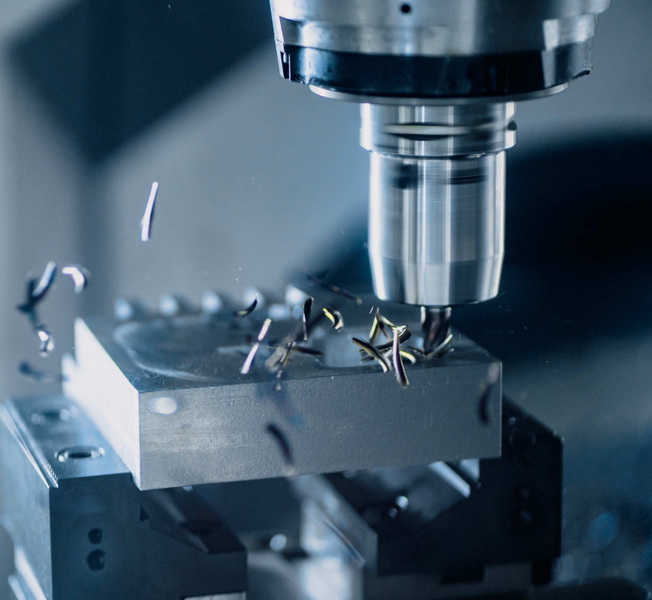
CNC milling provides fine-tuned control over material removal, enabling intricate features, tight tolerances, and repeatable results across a wide range of materials, including metals and engineering plastics. For customers pursuing rapid prototyping alongside eventual production, milling offers a seamless transition from concept validation to high-volume manufacturing. The approach combines multi-axis capability, robust process control, and scalable workflows that reduce iterations and accelerate time-to-market. In practice, a well-planned CNC milling project can deliver functional prototypes for fit and form testing, followed by precision production parts with traceable quality documentation.
- 3-axis milling handles simpler geometries, pockets, slots, and faces where features align with primary axes. It is ideal for early-stage prototypes, fixtures, and straightforward structural components where high surface finish and dimensional accuracy matter.
- The addition of a rotary axis expands access to features such as angled surfaces and undercuts without multiple setups. This configuration reduces handling time and improves positional accuracy for moderately complex parts.
- The most versatile option for highly complex parts, enabling simultaneous multi-axis movements to produce sculpted contours and deep pockets in a single setup. 5-axis milling minimizes assembly steps and improves surface finish on curved surfaces.
- Metals: aluminum, stainless steel, alloy steels, copper, and specialty alloys suitable for lightweight enclosures, structural components, and load-bearing parts.
- Plastics and composites: ABS, PC, nylon, PEEK, and other engineering plastics for lightweight, corrosion-resistant, and cost-effective components.
- Tolerances are specified per feature, with GD&T callouts to capture form, orientation, location, and runout requirements. Typical production tolerances are governed by material behavior and feature complexity, with tighter tolerances pursued for critical mating surfaces.
- Finishes range from deburring and bead blasting to satin/matte polishing, anodizing, laser marking, or precision grinding for critical surfaces. Post-processing considerations are integrated early to avoid rework.
- Favor features that align with standard tool paths and avoid unnecessary undercuts or intricate internal radii that complicate setup.
- Clearly distinguish critical dimensions from secondary features to target cost-effective manufacturing without compromising function.
- Consider how parts will be held securely during milling, as well as access for cutting tools to reach all required features.
- Material choice affects machinability, surface finish, and thermal behavior. Early material selection helps optimize cycle times and tool life.
- If coating, heat treatment, or precision finishing is required, these steps should be accounted for in the design and process plan to prevent bottlenecks.
- Early technical evaluation helps identify potential challenges, optimize features for machinability, and establish critical tolerances and inspection criteria.
- A precise quote considers material costs, tooling, capacity, and required post-processing. Transparent lead-time estimates enable synchronized project milestones.
- CAM programming selects appropriate tools, speeds, feeds, and strategies to maximize material removal while preserving part integrity. Proper fixturing reduces vibration and improves consistency.
- Functional prototypes validate fit, form, and function. Rapid iterations can be achieved by adjusting CAD models and re-running the CAM program for quick production-ready parts.
- Part production follows a controlled process with calibrated metrology, in-process checks, and final CMM verification or equivalent gauging to confirm conformance to specifications.
- Documentation packets including material certificates, process sheets, and inspection reports support qualification, audits, and compliance for OEM partners.
- Regular calibration of coordinate measuring machines and measurement equipment ensures traceable quality data and repeatable results across batches.
- Statistical process control and documented work instructions help maintain consistency and enable root-cause analysis for any deviations.
- Material traceability and supplier qualifications are essential for regulated or safety-critical applications, providing confidence to overseas brands and distributors.
- A complete CAD model with GD&T, material selection, surface finish requirements, and any post-processing steps accelerates quoting and reduces misinterpretation.
- Define packaging standards and labeling for traceability, reducing damage risk during transit and simplifying inbound inspection.
- Leverage rapid prototyping and test-fit cycles to refine designs before committing to tooling or high-volume production, ensuring risk is minimized.
- Open, proactive communication supports quick issue resolution and alignment on quality targets, regulatory considerations, and cost optimization.
- Precision milling supports ergonomic, thermally efficient housings and space-conscious internal parts for compact devices.
- High precision, cleanability, and biocompatibility considerations drive stringent tolerances and traceability.
- Complex brackets, housings, and fixtures benefit from multi-axis milling, enabling integrated geometries and weight optimization.
- Durable housings, clamps, and alignment components require robust materials and repeatable accuracy under demanding environments.
- For parts demanding traceability, certified processes, and high-precision metrics, CNC milling provides a dependable path to compliant production.
- In addition to CNC milling, the integrated portfolio includes rapid prototyping, sheet metal fabrication, 3D printing, and mold production, enabling a cohesive development-to-production journey.
- Experience collaborating with overseas brands and distributors helps align design, quality, and delivery with international expectations and regulatory frameworks.
- Flexible production models—from prototyping to pilot runs to full-scale production—allow OEMs to respond to demand shifts without retooling delays.
- Rely on data from inspection results, tool life monitoring, and cycle time analyses to identify optimization opportunities and drive cost reductions over time.
- Consider not only unit price but also lead times, post-processing, tooling amortization, and quality-related risk when evaluating supplier options.
CNC milling is a foundational capability for delivering precise, repeatable, and scalable custom parts across a broad range of industries. Shangchen's holistic approach—encompassing 3-, 4-, and 5-axis milling, rapid prototyping, sheet metal fabrication, 3D printing, and mold production—enables a seamless path from initial concept to validated hardware and mass production. By emphasizing manufacturability in design, rigorous tolerancing and inspection, and collaborative project management, OEM partners can achieve reliable performance, shorter development cycles, and favorable total cost of ownership.
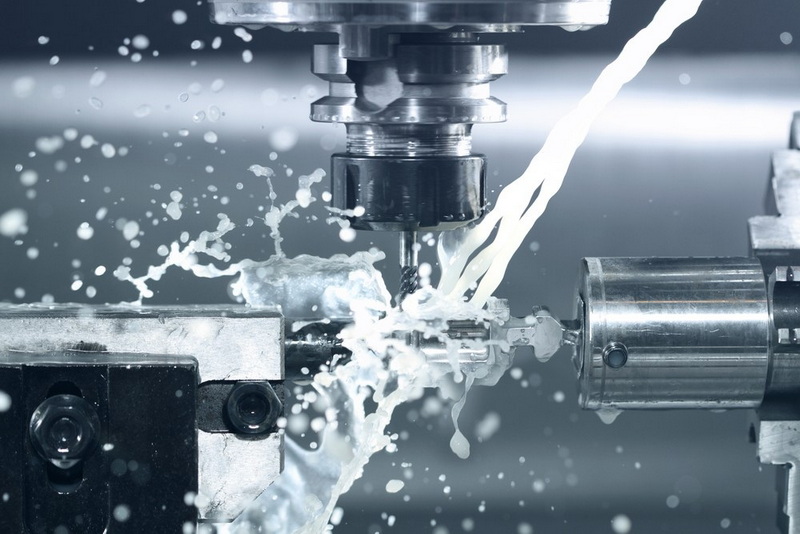
- 3-axis milling moves the cutter along three linear axes (X Y Z) to create basic features; 4-axis adds a rotary axis to access additional faces; 5-axis enables simultaneous multi-axis motion for complex contours and undercuts, often in a single setup.
- Aluminum and certain plastics are common for rapid prototyping due to ease of machining and cost. For production, a broader range of metals (stainless steel, aluminum alloys) and engineering plastics may be selected based on strength, wear resistance, environmental exposure, and regulatory needs.
- Provide a complete CAD model with clear GD&T annotations, material specification, required surface finish, post-processing steps, quantity, and delivery timeline. A clean data package minimizes back-and-forth and speeds up quoting.
- Deburring, surface finishing (bead blasting, polishing), coating or anodizing, heat treatment if needed, and secondary operations such as drilling or tapping for threaded features.
- Prioritize features that align with standard tooling, specify tolerances for critical surfaces, plan for fixturing and access, and collaborate early with the manufacturer to iterate designs using rapid prototyping and feedback loops.
[1](https://us.arrk.com/what-makes-custom-cnc-milling-parts-shine-in-the-market/)
[2](https://geomiq.com/blog/cnc-milling-guide/)
[3](https://jlccnc.com/blog/what-are-cnc-parts-and-how-are-they-made)
[4](https://www.newayprecision.com/blogs/typical-cnc-machining-methods-for-custom-parts-manufacturing)
[5](https://www.hubs.com/knowledge-base/how-design-parts-cnc-machining/)
[6](https://richconn.com/understanding-cnc-milling/)
[7](https://www.xavier-parts.com/the-ultimate-guide-to-cnc-turned-parts/)
[8](https://www.xometry.com/resources/machining/custom-metal-parts-manufacturing/)
[9](https://meviy.misumi-ec.com/en_gb-gb/)
[10](https://mdaltd.ca/custom-cnc-milling/)

