
Views: 222 Author: Amanda Publish Time: 2025-07-09 Origin: Site


Content Menu
>> Key Features of CNC Machining
>> Key Features of Rapid Prototyping
● Key Differences Between CNC Machining and Rapid Prototyping
● Pros and Cons of CNC Machining
>> Pros
>> Cons
● Pros and Cons of Rapid Prototyping
>> Pros
>> Cons
● Applications in Modern Manufacturing
>> Rapid Prototyping Applications
● How to Choose Between CNC Machining and Rapid Prototyping
>> When to Use Rapid Prototyping
● Advanced Considerations: Hybrid Approaches and Emerging Trends
>> Emerging Materials and Technologies
● FAQ
>> 1. What is the main difference between CNC Machining and Rapid Prototyping?
>> 2. Can Rapid Prototyping produce functional end-use parts?
>> 3. Which process is more cost-effective for low-volume production?
>> 4. What materials can be used in Rapid Prototyping?
>> 5. How do I decide which process to use for my project?
In the fast-evolving world of manufacturing, businesses are constantly searching for efficient, cost-effective, and high-quality solutions to bring their ideas to life. Two of the most prominent technologies in this space are CNC Machining and Rapid Prototyping. Both methods serve unique purposes, yet they often overlap in applications, especially in industries that demand precision, speed, and flexibility. This article explores the differences, advantages, and disadvantages of CNC Machining and Rapid Prototyping, helping you determine which process is best suited for your next project.
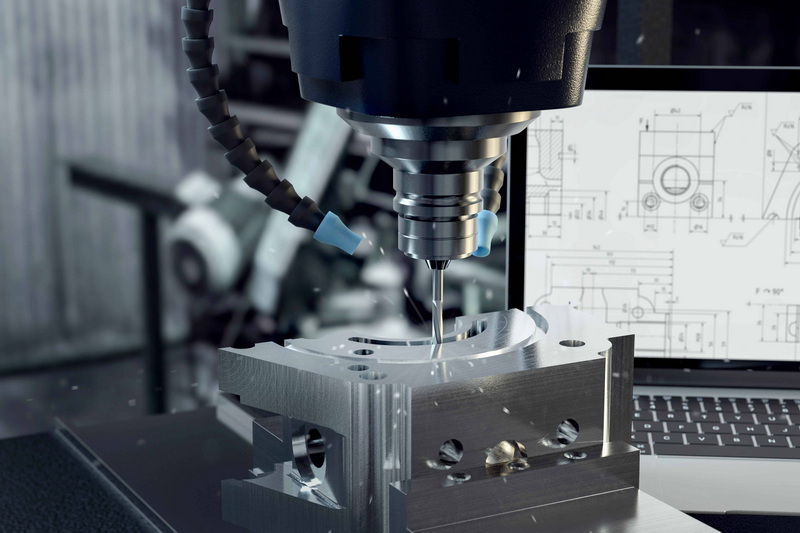
CNC (Computer Numerical Control) Machining is a subtractive manufacturing process that utilizes computer-controlled tools to remove material from a solid block (workpiece) to create precise parts. This technology is widely used for producing both prototypes and end-use parts from metals, plastics, and other materials.
- High Precision: CNC machines can achieve tight tolerances, making them ideal for applications requiring accuracy.
- Material Versatility: Suitable for a wide range of materials, including metals, plastics, and composites.
- Repeatability: Perfect for both one-off prototypes and high-volume production runs.
- Surface Finish: CNC machining often delivers a superior surface finish that may require minimal post-processing.
CNC machining involves several processes such as milling, turning, drilling, and grinding. The process begins with a CAD (Computer-Aided Design) model, which is converted into a CNC program that directs the machine's movements. The machine then removes excess material to form the desired shape. Due to its subtractive nature, CNC machining can be time-consuming and may generate material waste, but it excels in producing durable, functional parts with excellent dimensional accuracy.
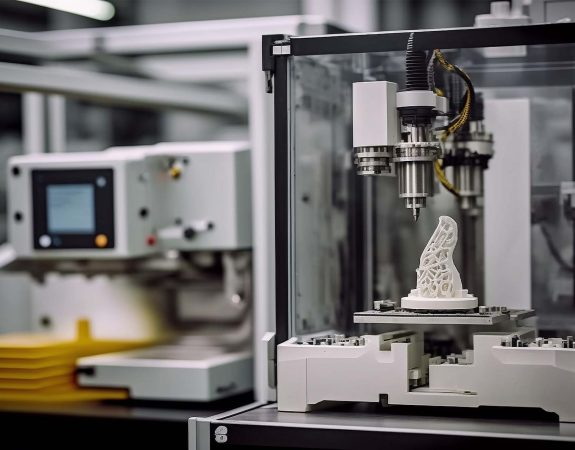
Rapid Prototyping refers to a group of techniques used to quickly fabricate a scale model or functional prototype of a part or assembly using three-dimensional computer-aided design (CAD) data. Methods include 3D printing, stereolithography (SLA), selective laser sintering (SLS), fused deposition modeling (FDM), and more.
- Speed: Enables quick turnaround from concept to physical model, sometimes within hours.
- Design Flexibility: Allows for complex geometries and intricate designs that might be impossible with traditional methods.
- Cost-Effective for Prototypes: Reduces the cost and time associated with tooling and setup.
- Minimal Waste: Additive manufacturing builds parts layer by layer, producing little material waste.
- Customization: Easily adapts to design changes without expensive tooling modifications.
Rapid prototyping is especially valuable in the early stages of product development, where multiple design iterations are common. It allows engineers and designers to test form, fit, and function quickly, helping to identify design flaws and make improvements before committing to expensive tooling or mass production.
The fundamental difference between CNC machining and rapid prototyping lies in their manufacturing approach. CNC machining is a subtractive process, where material is removed from a solid block to create the final part. Rapid prototyping is primarily additive, building parts layer by layer from raw materials.
This difference impacts several aspects:
- Material Options: CNC machining supports a wider variety of materials, including metals like aluminum, steel, and titanium, as well as engineering plastics. Rapid prototyping traditionally focuses on plastics and resins, though metal 3D printing is advancing.
- Precision and Tolerances: CNC machining generally achieves tighter tolerances and better surface finishes.
- Speed: Rapid prototyping can produce parts faster, especially for complex geometries.
- Cost: Rapid prototyping reduces costs for low-volume and prototype parts by eliminating tooling costs.
- Complexity: Rapid prototyping excels at producing complex internal structures and geometries that CNC machining cannot easily achieve.
- Exceptional Precision: CNC machining offers extremely tight tolerances, making it suitable for applications where accuracy is critical.
- Material Strength: Parts produced are robust and suitable for functional testing or end-use.
- Repeatability: Ideal for both small and large production runs with consistent results.
- Surface Finish: Delivers superior surface quality compared to most rapid prototyping methods.
- Wide Material Compatibility: Can machine metals, plastics, and composites, allowing for functional and durable parts.
- Scalability: Easily scales from prototyping to mass production without changing processes.
- Longer Lead Times for Complex Parts: Setup and programming can be time-consuming, especially for intricate designs.
- Higher Costs for Prototyping: Tooling and material waste increase costs for single or low-volume parts.
- Limited Design Flexibility: Some complex geometries, such as internal cavities or lattice structures, are difficult or impossible to machine.
- Material Waste: Subtractive process generates scrap material, which may increase costs and environmental impact.
- Speed: Rapid prototyping can produce models in hours or days, accelerating product development cycles.
- Design Freedom: Enables the creation of intricate shapes, internal channels, and complex assemblies that CNC machining cannot easily replicate.
- Cost-Effective for Iteration: Ideal for testing multiple design variations quickly and affordably without expensive tooling.
- Material Efficiency: Minimal waste compared to subtractive processes.
- Customization: Easily adapts to design changes, allowing rapid iteration and refinement.
- Accessibility: Many rapid prototyping technologies are becoming more affordable and accessible for small businesses and startups.
- Material Limitations: Many rapid prototyping methods are restricted to plastics or resins, although metal 3D printing is emerging but still costly.
- Lower Strength: Parts may not be suitable for functional testing or end-use applications due to weaker mechanical properties.
- Surface Finish: Often requires post-processing such as sanding, polishing, or coating to achieve smooth surfaces.
- Dimensional Accuracy: May not match the precision of CNC machining for critical parts.
- Size Constraints: Some rapid prototyping machines have limited build volumes, restricting the size of parts.
CNC machining is widely used in industries where precision and material strength are paramount:
- Aerospace Components: High-strength metal parts requiring tight tolerances.
- Automotive Parts: Engine components, transmission parts, and custom tooling.
- Medical Devices: Surgical instruments, implants, and prosthetics.
- Industrial Equipment: Precision gears, shafts, and housings.
- Precision Tooling: Molds, dies, and fixtures for manufacturing.
Rapid prototyping is invaluable in early-stage development and complex designs:
- Product Design Validation: Quickly producing prototypes for form, fit, and function testing.
- Architectural Models: Detailed scale models for visualization.
- Custom Medical Implants: Patient-specific models and implants.
- Consumer Electronics Prototyping: Rapid iteration of housings and components.
- Educational Models: Teaching aids and demonstration parts.
Selecting the right manufacturing process depends on several factors, including the stage of product development, required material properties, precision, production volume, and budget.
- When high precision and material strength are essential.
- For parts that require tight tolerances and superior surface finish.
- When producing functional prototypes or end-use components.
- For medium to large production runs.
- When working with metals or engineering plastics that require durability.
- During early design stages for quick iteration and validation.
- When complex geometries or internal features are required.
- For low-volume production or one-off models.
- When speed and cost are prioritized over material properties.
- When testing aesthetic or ergonomic aspects of a design.
In recent years, manufacturers have increasingly combined CNC machining and rapid prototyping to leverage the strengths of both. For example, a rapid prototype might be 3D printed to validate design concepts quickly, followed by CNC machining to produce a functional prototype or final part with required strength and precision.
Hybrid manufacturing integrates additive and subtractive processes within a single machine or workflow. This approach allows the creation of complex parts with fine details and excellent mechanical properties. For instance, a part may be 3D printed with internal lattice structures and then CNC machined to achieve precise external dimensions and surface finishes.
Advancements in materials science and additive manufacturing are expanding the capabilities of rapid prototyping. Metal 3D printing technologies such as Direct Metal Laser Sintering (DMLS) and Electron Beam Melting (EBM) enable the production of metal parts with properties approaching those of CNC-machined components, albeit at higher costs.
Additionally, new composite materials and multi-material printing techniques allow rapid prototyping to produce parts with tailored properties, such as flexibility combined with rigidity, or embedded electronics.
Both CNC machining and rapid prototyping have environmental considerations. CNC machining generates material waste, but many shops recycle scrap metal. Rapid prototyping reduces waste by building parts layer by layer but may use materials that are less recyclable or require energy-intensive processes. Choosing sustainable materials and optimizing designs can help minimize environmental footprints.
Both CNC Machining and Rapid Prototyping have revolutionized the manufacturing industry, offering unique advantages for different stages of product development. CNC Machining stands out for its precision, material versatility, and suitability for both prototyping and mass production. Rapid Prototyping, on the other hand, excels in speed, design flexibility, and cost-effectiveness for early-stage development and complex geometries.
Understanding the strengths and limitations of each method allows businesses to make informed decisions, optimize their production processes, and bring innovative products to market faster. Whether you need a highly accurate end-use part or a quick prototype for design validation, choosing the right technology is crucial for success in today's competitive landscape.

The primary difference lies in the manufacturing approach: CNC Machining is subtractive, removing material from a solid block, while Rapid Prototyping is mostly additive, building parts layer by layer from digital models.
While rapid prototyping excels in speed and design flexibility, most methods use materials that may not match the strength and durability of CNC-machined parts. However, some advanced techniques and materials can produce functional prototypes suitable for limited use.
Rapid Prototyping is generally more cost-effective for low-volume production due to minimal setup costs and faster turnaround times. CNC Machining becomes more economical as production volumes increase.
Rapid prototyping commonly uses plastics, resins, and some metals (with advanced methods). Material options are expanding, but CNC Machining still offers a broader range of materials, especially for metals.
Consider factors such as required precision, material properties, production volume, design complexity, and budget. Rapid Prototyping is ideal for early-stage design and complex shapes, while CNC Machining is better for functional parts and higher volumes.

