
Views: 222 Author: Amanda Publish Time: 2025-08-15 Origin: Site


Content Menu
>> Key Characteristics of CNC Machining
>> Key Characteristics of 3D Printing
● Comparing CNC Machining and 3D Printing: Key Considerations
>> Material Range and Strength
>> Surface Finish and Post-Processing
>> Production Volume and Cost Efficiency
● Applications of CNC Machining
● When to Choose CNC Machining?
>> 1. What are the main differences between CNC machining and 3D printing?
>> 2. Which method is more cost-effective?
>> 3. Can CNC machining produce complex parts?
>> 4. What materials can be used in CNC machining and 3D printing?
>> 5. How do the production speeds compare?
In the evolving landscape of manufacturing, businesses and innovators often face a key decision: whether to use CNC machining or 3D printing for their projects. Both technologies have distinct advantages and applications, making them suitable for different types of product development and production needs. This article explores the characteristics of CNC machining and 3D printing, compares their benefits and limitations, and helps you determine which manufacturing method best suits your project requirements.

CNC (Computer Numerical Control) machining is a subtractive manufacturing process that uses computer-controlled machines to precisely cut and shape materials from solid blocks such as metals, plastics, or composites. Specialized tools such as grinders, lathes, and mills follow programmed instructions to produce components that meet exact specifications.
- Subtractive Process: Material is removed to achieve the final shape.
- High Precision: Capable of precision up to 0.005 mm.
- Material Versatility: Works with a wide variety of metals and plastics.
- Surface Finish: Can achieve smooth, high-quality finishes.
- Suitable for Both Prototyping and Production: Ideal for medium to high volume production runs.
- Operator Skill Requirement: Requires specialized training for machine setup and programming.
CNC machining's precision and stability make it the backbone of many industrial manufacturing processes worldwide. Its ability to work with dense and hard materials, such as aerospace-grade titanium and hardened steel, allows manufacturers to produce strong, durable components essential for high-stress applications. Furthermore, the high repeatability ensures consistent quality across large production runs, a critical factor for OEMs and brand owners needing uniformity.
3D printing, also known as additive manufacturing, builds parts layer by layer directly from digital 3D models. It adds material only where needed, using plastics, some metals, or composites, making it fundamentally different from traditional machining.
- Additive Process: Material is added incrementally to form the object.
- Design Flexibility: Capable of producing complex geometries and internal structures that are difficult or impossible to machine.
- Rapid Prototyping: Less setup time, enabling quick iteration of designs.
- Material Limitations: More effective with plastics and certain metals; material choices are more limited compared to CNC.
- Surface Finish: Often requires post-processing to improve texture and strength.
- Lower Operator Skill: Generally less technical setup than CNC machining.
3D printing's strength lies in its versatility and speed in producing prototype parts or small batch production with intricate designs. For example, lattice structures and internal cooling channels, vital in thermal management components, can be manufactured only via additive methods. Beyond prototyping, some industries like healthcare leverage 3D printing for customized implants and prosthetics tailored to individual patient anatomies, a feat difficult to achieve through traditional machining.
CNC machining excels in delivering parts with very high dimensional accuracy, often achieving tolerances within ±0.005 mm. This is crucial for parts that must fit precisely or endure mechanical stress. 3D printing typically offers layer resolutions around 0.1 to 0.2 mm, though some advanced systems provide finer detail. However, the in-layer precision can vary, and dimensional warping can occur, especially with larger or complex parts.
CNC machining supports a broader material spectrum, from aluminum and stainless steel to brass, titanium, and engineering plastics. The parts maintain the inherent mechanical strength and heat resistance of raw materials, making CNC ideal for structural components. Additive manufacturing traditionally favors polymers and select metal powders (such as stainless steel, titanium alloys, and aluminum alloys), which may undergo sintering or fusion methods. While strength is improving, 3D printed parts generally exhibit anisotropic properties and may be weaker than machined counterparts unless post-processed or heat-treated.
Parts produced by CNC machining usually have smooth surfaces requiring minimal finishing, although polishing, anodizing, or coating might be applied for aesthetics or enhanced performance. On the other hand, 3D printed parts often show visible layer lines and uneven textures, especially in FDM (Fused Deposition Modeling) or SLA (Stereolithography) prints. This necessitates post-processing such as sanding, chemical smoothing, or resin coating to achieve comparable surface quality. Metal 3D prints, especially those produced by DMLS (Direct Metal Laser Sintering), may require heat treatment and machining for critical surfaces.
CNC machining typically becomes more cost-efficient as production volumes increase since the initial programming and tooling setup costs are amortized over the batch. Once set, parts can be machined quickly and repeatedly with consistent quality. In contrast, 3D printing offers lower upfront costs and rapid turnaround, making it ideal for one-off prototypes or small runs. However, its cost per unit remains relatively high at scale due to slower build speeds and material expenses.
The subtractive nature of CNC machining limits its ability to fabricate highly complex internal features or intricate geometries that lack external tool access. Complex undercuts, internal voids, or lattice structures often require multiple setups or assembly. 3D printing, with its layer-by-layer approach, can create complex internal channels, porous structures, and shapes otherwise impossible to machine, opening new design possibilities across industries.
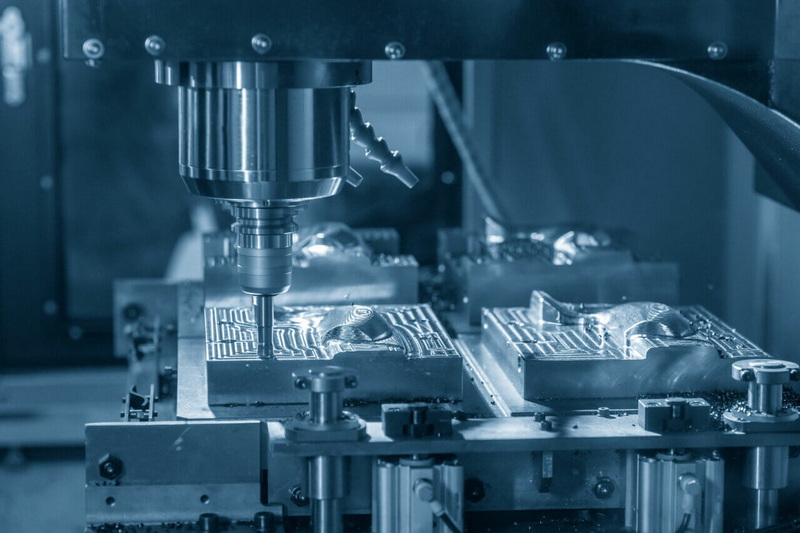
CNC machining is widely used across industries demanding precision, durability, and high-quality finish:
- Aerospace: For turbine blades, engine components, and airframe parts requiring tight tolerances and material integrity.
- Automotive: Engine blocks, gearboxes, cylinder heads, custom ev parts demanding strength and precision.
- Medical Devices: Implantable devices and surgical instruments using biocompatible materials with strict compliance.
- Consumer Electronics: Durable housings and components that require precise fitting and finish.
- Industrial Equipment: Pumps, valves, and rotating machinery components where material properties are critical.
In each sector, CNC machining enables efficient manufacturing of parts that meet rigorous international quality standards, ensuring safety and reliability.
3D printing shines in rapid prototyping and creating parts with complex geometries:
- Rapid Prototyping: Quickly converting design ideas into physical models to test form, fit, and function.
- Complex Geometry Production: Manufacturing lattice structures, internal cooling channels, and lightweight designs unachievable by machining.
- Custom Medical Devices: Tailored dental implants, prosthetics, and surgical guides adapted to individual patient anatomy.
- Tooling and Fixtures: Jigs and molds produced quickly to accelerate assembly line setup or injection molding processes.
- Small Batch & On-Demand: Localized, flexible production that reduces inventory and lead times in industries like aerospace or bespoke consumer products.
3D printing enables faster innovation cycles due to its ability to produce functional prototypes and complex parts without tooling costs.
CNC machining is often the preferred method when your project requires:
- High precision and tight tolerances.
- Structural parts needing full material strength and durability.
- Superior surface finish to minimize additional processing.
- Medium to high production volumes for cost-effectiveness.
- Broad material options, especially metals and composites.
- Repeatable quality essential for final products.
For example, in industries like aerospace or automotive, where safety-critical components demand exact geometries and robust mechanical properties, CNC machining is indispensable.
3D printing is ideal when your project involves:
- Rapid prototyping with fast turnaround and design iteration.
- Complex internal structures or lightweight lattice frameworks.
- Low volume or custom, unique parts.
- Reduced tooling and setup costs.
- Flexibility to modify designs quickly without costly reprogramming.
- Applications like medical implants or custom tooling where personalization or design complexity outweighs volume needs.
For startups or designers needing to validate concepts or produce custom parts without large investment, 3D printing offers unmatched agility.
CNC machining and 3D printing each have distinct advantages tailored for different manufacturing needs. CNC machining offers unmatched precision, material variety, and part strength ideal for medium to high volume production of functional, durable components. Conversely, 3D printing excels in rapid prototyping, design complexity, custom manufacturing, and low-volume production, allowing manufacturers to innovate and iterate quickly.
Choosing the right method depends on your specific project requirements—including part complexity, production volume, material, budget, and lead time. Many manufacturers leverage a hybrid approach, using 3D printing for early-stage prototypes and CNC machining to produce final parts with the required mechanical properties and finish quality.
In today's manufacturing ecosystem, understanding these technologies' capabilities helps businesses optimize product development and supply chain efficiency, ultimately bringing better products to market faster and at competitive costs.
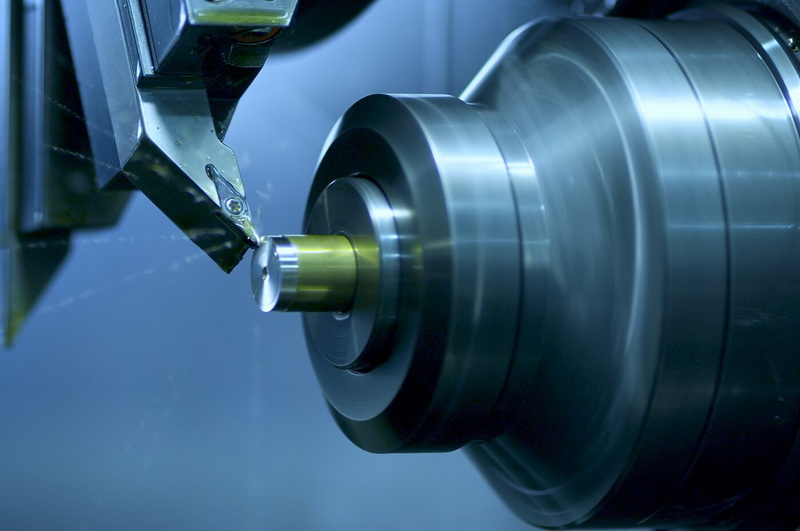
CNC machining is a subtractive process that removes material from solid blocks with high precision, ideal for durable parts with excellent finish. 3D printing is additive, building parts layer by layer, enabling complex designs but often with lower strength and surface finish quality.
3D printing has lower upfront costs and suits prototypes or small batches. CNC machining becomes more cost-efficient for medium and large production volumes due to faster cycle times and consistent quality.
Yes, but it is limited by tool accessibility, making internal channels or undercuts challenging. 3D printing can create highly complex internal geometries and lattice structures without tooling constraints.
CNC machining works with a wide range of metals (aluminum, steel, titanium), plastics, and composites. 3D printing mainly uses plastics and some metal powders, with ongoing advances expanding material options.
3D printing has minimal setup but builds parts layer by layer, which can be slow, especially for large parts. CNC machining requires longer programming but offers high-speed machining once set, making it faster for repeat production.
[1] https://www.xometry.com/resources/3d-printing/3d-printing-vs-cnc-machining/
[2] https://www.americanbusinessmag.com/applications-that-benefit-from-cnc-machining/
[3] https://vajiramandravi.com/upsc-exam/3d-printing/
[4] https://ultimaker.com/learn/3d-printing-vs-cnc-comparing-additive-and-subtractive-manufacturing/
[5] https://precisionautomationinc.com/applications-and-advantages-of-cnc-machining/
[6] https://formlabs.com/3d-printers/
[7] https://www.hubs.com/knowledge-base/3d-printing-vs-cnc-machining/
[8] https://rigpl.com/blog/general/a-comprehensive-guide-to-cnc-machining-principles-applications-and-benefits
[9] https://protoandgo.com/en/benefits-and-applications-of-3d-printing/
[10] https://www.reddit.com/r/hobbycnc/comments/vabew6/3d_printing_vs_cnc_machine/
[11] https://www.rapiddirect.com/blog/applications-of-cnc-machining/
[12] https://www.raise3d.com/blog/3d-printing-applications/
[13] https://www.stratasys.co.jp/contentassets/c7d18093035d4b4cb9151b7052bfaef4/wp_fdm_3dpvscnc_0621a.pdf?v=4966da
[14] https://www.xometry.com/resources/machining/cnc-machining-benefits/
[15] https://www.xometry.com/resources/3d-printing/applications-of-3d-printing/
[16] https://jlc3dp.com/blog/3d-printing-vs-cnc-machining
[17] https://www.linkedin.com/pulse/all-cnc-machining-process-benefits-applications-lez9e
[18] https://www.twi-global.com/technical-knowledge/faqs/what-is-3d-printing/pros-and-cons
[19] https://www.americanmicroinc.com/resources/cnc-machining-3d-printing/
[20] https://karkhana.io/cnc-and-its-applications/

