
Views: 222 Author: Amanda Publish Time: 2025-09-04 Origin: Site


Content Menu
● Importance of CNC Lathe Turning in Electronics
● Techniques in CNC Lathe Turning for Electronics
● Applications in Electronics Manufacturing
● Materials Used in CNC Lathe Turning for Electronics
● Surface Finishing Techniques for Electronics Components
● Challenges in Miniaturized CNC Lathe Turning and Solutions
● Emerging Trends and Future Prospects
● Frequently Asked Questions (FAQ)
>> 1. What tolerance levels can CNC lathe turning achieve in electronics manufacturing?
>> 2. How does Swiss CNC turning differ from regular CNC lathe turning?
>> 3. What materials are commonly used in CNC lathe turning for electronic components?
>> 4. Why is CNC lathe turning preferred over 3D printing for some electronic components?
>> 5. What are the main challenges in miniature CNC lathe turning and how are they addressed?
CNC lathe turning is a fundamental process in the electronics manufacturing industry, essential for producing highly precise miniature components critical to modern electronic devices. This advanced machining process enables remarkable accuracy and miniaturization, ensuring that intricate parts comply with stringent specifications for optimum functionality and reliability. This article delves deeply into the importance, techniques, applications, materials, finishing methods, challenges, and future innovations in CNC lathe turning within electronics manufacturing.
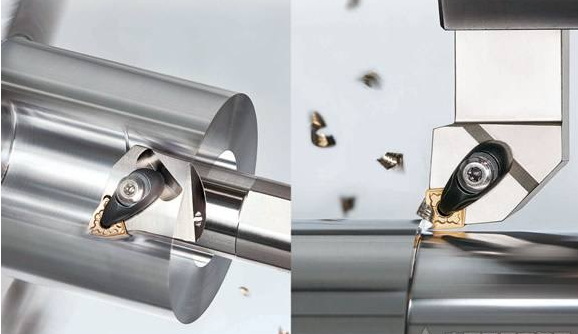
In the electronics industry, components such as connectors, pins, heat sinks, and enclosures demand intricate shapes fabricated within extremely tight tolerances. CNC lathe turning excels at precision by removing material from a rotating workpiece with exceptional control over dimensions and surface finish quality. The ability to consistently achieve such precision is vital since even minute deviations can affect the assembly and performance of compact and densely packed electronic devices.
CNC lathe turning also drives miniaturization, a critical trend as devices become smaller and more multifunctional. Using specialized machining processes like Swiss-style turning, components with diameters as tiny as 0.008 inches can be fabricated with reliable accuracy. This capability underpins the development of compact electronics such as smartphones, wearables, medical devices, and advanced communication equipment, where every millimeter shaves off weight and size without compromising function.
Standard CNC lathe turning involves rotating a cylindrical workpiece that is held by a chuck while multi-axis cutting tools shape the piece to exact specifications. Modern CNC lathes often feature multi-axis capabilities—up to nine axes—enabling complex shapes and contours to be crafted without manual adjustments. High spindle speeds combined with precise tool paths contribute to superior surface finishes and remarkable repeatability, which is critical when producing large batches of electronic parts.
Swiss CNC turning is a specialized technique designed for micromachining. Unlike conventional turning where the tool rotates around the workpiece, Swiss turning advances the workpiece longitudinally through a guide bushing against stationary cutting tools. This setup reduces vibration and material stress, allowing for the creation of extremely fine features. Swiss lathe turning is especially well-suited for producing small, delicate, and complex components such as microelectronic connectors, pins, and fasteners with consistently tight tolerances.
Micromachining in CNC turning utilizes ultra-small cutting tools down to 0.015 inches in diameter to create tiny features with unparalleled precision. This is crucial in manufacturing communication devices, medical instruments, and consumer electronics where components must meet specifications at the micron level. Advanced CAD programming and precise CNC controls ensure that toolpaths accommodate miniature features and deliver the degree-level accuracies required.
CNC lathe turning serves a broad range of applications in the electronics sector:
- Connectors and Sockets: CNC turning produces connectors and sockets with precise dimensions and excellent electrical conductivity, typically using copper alloys.
- Heat Sinks: CNC turning manufactures intricately shaped heat sinks with complex fin structures to efficiently dissipate heat in devices, usually made from aluminum or copper.
- Printed Circuit Board (PCB) Components: Although PCBs themselves are often milled, CNC lathe turning fabricates cylindrical, pin, and connector components attached to the boards.
- Consumer Electronics Parts: Small, precise components for laptops, smartphones, smartwatches, and gaming peripherals are crafted using CNC turning.
- Casings and Enclosures: Protective shells for electronic devices are produced to meet stringent standards for strength, aesthetics, and functionality.
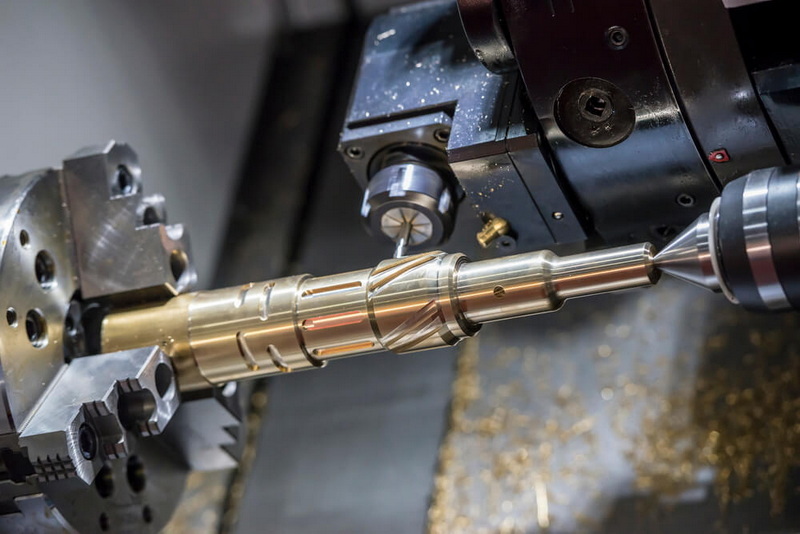
Material choice is critical as it impacts machinability, electrical performance, thermal properties, and durability:
- Aluminum: Valued for lightweight, corrosion resistance, and excellent thermal conductivity, ideal for heat sinks and casing parts.
- Copper and Copper Alloys: Frequently selected for their superior electrical conductivity in connectors and contacts.
- Brass: Combines corrosion resistance with conductivity, commonly used in switches and connectors.
- Stainless Steel: Provides mechanical strength and corrosion resistance for enclosures and durable components.
- Engineering Plastics & Composites: Selected for insulation properties and lightweight applications, important for housings and non-conductive parts.
Surface finishing enhances both the functionality and appearance of CNC-turned parts:
- Bead Blasting: Produces uniform matte finishes by smoothing surface imperfections.
- Electroless Nickel Plating: Offers corrosion resistance with maintained conductivity.
- Anodizing: Provides an oxide layer that protects metal surfaces and adds color options; commonly applied to aluminum parts.
- Powder Coating: Applies decorative and protective coatings.
- Passivation: Removes surface contaminants and protects against corrosion in stainless steel parts.
- Polishing: Improves surface smoothness and reduces friction, essential for electrical contacts and connectors.
Achieving miniaturization and accuracy introduces distinct challenges:
- Tooling and Setup: Fabrication of ultra-small tooling and stable workholding for miniature parts requires high precision and advanced machinery.
- Material Handling: Small parts' delicacy demands low cutting forces and specialized chucks to avoid deformation.
- Quality Control: Maintaining tight tolerances mandates sophisticated measuring instruments and in-process inspection methods.
- Programming Complexity: Detailed CAD/CAM programming to produce complex miniature geometries is computationally intensive.
These challenges are managed through the use of Swiss-type lathes, optimized cutting tool geometries, precise machining parameters, and sophisticated software integration for real-time monitoring and error correction.
The future of CNC lathe turning in electronics manufacturing involves several exciting trends:
- Hybrid Manufacturing: Integration of CNC turning with additive manufacturing technologies to combine the benefits of both.
- Automation and AI: Increasing adoption of AI-driven toolpath programming, predictive maintenance, and smart monitoring enhances efficiency and reduces downtime.
- Further Miniaturization: Continued efforts to produce even smaller components for evolving electronic devices.
- Advanced Materials: Use of novel alloys, composites, and coatings tailored for better performance in electronic applications.
CNC lathe turning is indispensable for the electronics industry, enabling the miniaturization and precision required to manufacture complex components for cutting-edge devices. Its ability to deliver high repeatability, precise dimensions, and fine surface finishes positions it as a cornerstone process in producing connectors, heat sinks, casings, and other critical electronic parts. As technology advances, CNC lathe turning will continue to evolve, meeting the increasing demands for smaller, faster, and more reliable electronic products.

CNC lathe turning routinely achieves tolerances as tight as ±0.005 to ±0.001 millimeters, essential for precise assembly and reliable operation of electronic components.
Swiss turning advances the workpiece through a bushing against stationary cutting tools, reducing stress and vibration, which makes it well-suited for producing very small, intricate parts with exceptional accuracy.
Aluminum, copper, brass, stainless steel, and engineering plastics are typical materials, selected based on electrical conductivity, thermal properties, strength, and insulation needs.
It offers superior precision, tighter tolerances, better surface finishes, and broader material compatibility, especially for metals required in high-performance electronic parts.
Challenges include tooling precision, delicate material handling, stringent quality control, and complex programming. These are addressed using specialized Swiss-type machines, optimized cutting tools, advanced inspection technologies, and sophisticated CAD/CAM software.
[1](https://proleantech.com/cnc-electronics-machining/)
[2](https://swmachinetech.com/cnc-turning-process-applications/)
[3](https://www.alco.com/blog/the-advantages-of-cnc-turned-parts-in-precision-manufacturing/)
[4](https://www.taegutec.co.jp/SFEEDTEC/pages/JP/industries/miniature/Miniature.pdf)
[5](https://waykenrm.com/blogs/cnc-machining-for-electronics-industry/)
[6](https://www.manufacturingtomorrow.com/news/2025/03/31/how-cnc-turning-is-revolutionizing-precision-manufacturing/24613)
[7](https://www.sciencedirect.com/science/article/abs/pii/S0890695598000923)
[8](https://radmot.com/blog/cnc-turning)
[9](https://www.faithmfg.com/cnc-lathe-machining-the-future-of-precision-manufacturing/)
[10](https://www.sciencedirect.com/science/article/abs/pii/S0890695504002597)
[11](https://www.fanuc.eu/eu-en/application/cnc-turning)
[12](https://www.wevolver.com/article/what-is-cnc-turning)
[13](https://www.sansmachining.com/micro-cnc-machining-pushing-the-boundaries-of-precision-manufacturing/)
[14](https://marvo.eu/en/uncategorized-en/cnc-turning-applications/)
[15](https://phillipscorp.com/india/top-5-industries-benefiting-from-cnc-turning-machines/)
[16](https://www.acemicromatic.net/cnc-machines-in-electronics-manufacturing/)
[17](https://rwdtool.com/industrial-applications-of-a-cnc-lathe-machine/blog.html)
[18](https://thorrez.com/the-benefits-of-cnc-machining-for-precision-manufacturing/)
[19](https://www.worthyhardware.com/news/cnc-machining-in-electronics-industry/)
[20](https://www.rapiddirect.com/blog/applications-of-cnc-machining/)

