
Views: 222 Author: Amanda Publish Time: 2026-01-23 Origin: Site


Content Menu
● What CNC Machining Actually Is
● Is Self‑Study CNC Machining Realistic?
>> Measurement and Quality Control
● Safety First in CNC Machining
● Step‑by‑Step Learning Roadmap
>> Step 2: CAD and CAM Fundamentals
>> Step 3: G‑Code and Simulation
>> Step 4: Hands‑On Practice on a Real Machine
>> Step 5: Move Toward Production‑Level Skills
● Best Online Resources for Self‑Learners
● The Role of Hands‑On Practice
● Common Challenges in Self‑Taught CNC Machining
● Self‑Study vs Formal Training
● Turning Self‑Study into a CNC Career
● When to Work with a Professional CNC Shop
● FAQ
>> 1. What basic knowledge do I need before learning CNC Machining?
>> 2. How long does it take to learn CNC Machining on your own?
>> 3. Do I need an expensive machine to start with CNC Machining?
>> 4. Is certification necessary for a CNC Machining career?
>> 5. What is the safest way for beginners to practice CNC Machining?
CNC Machining has become one of the most important manufacturing technologies for modern industry, from rapid prototyping to high‑volume, high‑precision production. For many engineers, makers, and entrepreneurs, an important question naturally arises: can you really learn CNC Machining on your own, without going through a traditional technical school? The short answer is yes, you can—but it requires structured learning, real practice, and a serious respect for safety and process.
Whether you are a designer who wants to understand how parts are made, a startup founder preparing for OEM production, or a hobbyist who wants to cut metal in a garage workshop, self‑study in CNC Machining can take you from zero to practical competence. With the right roadmap, online resources, and progressive hands‑on projects, self‑taught learners can build skills that are valuable in real industrial environments and in cooperation with professional manufacturing partners.
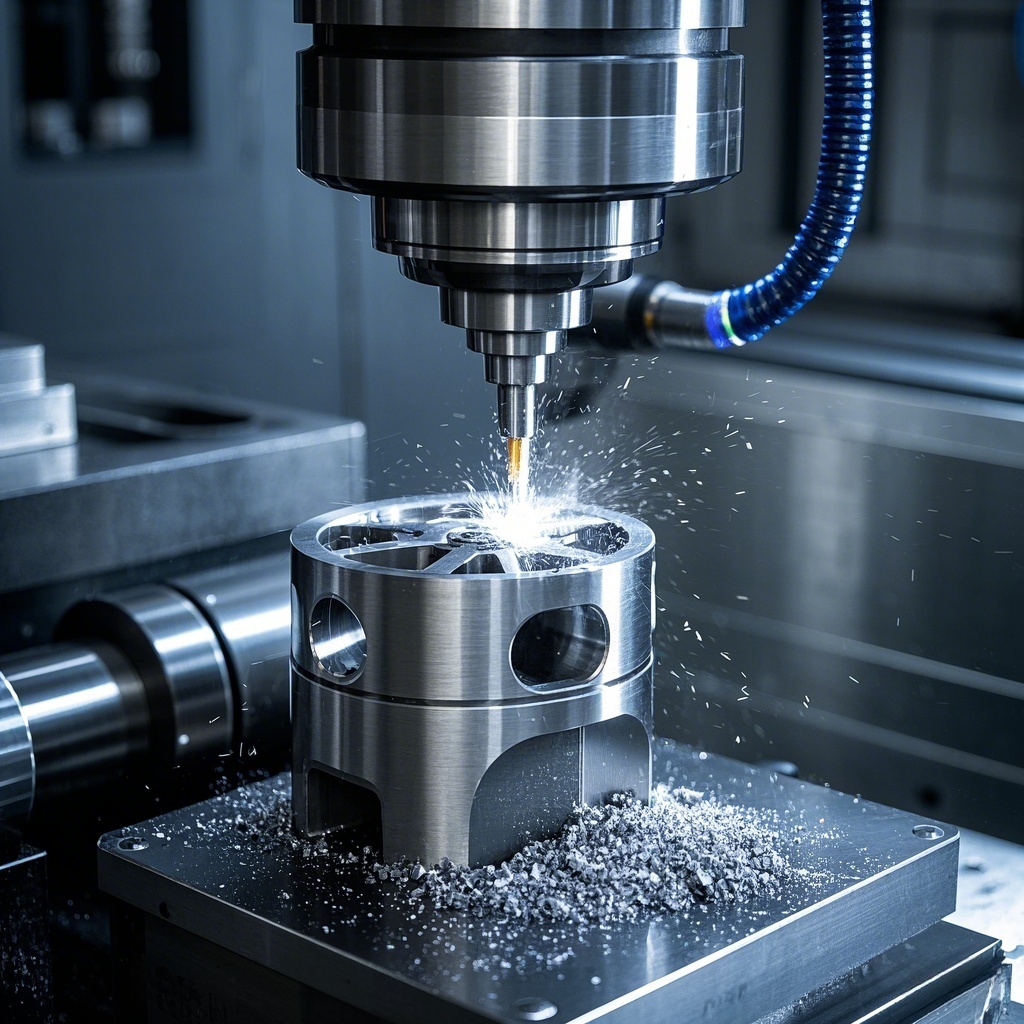
CNC Machining (Computer Numerical Control machining) is a subtractive manufacturing process where a computer controls the movement of cutting tools and workpieces to produce precise components from solid materials. Instead of manually turning handwheels and levers, the operator programs a machine controller that moves the axes of the machine automatically along programmed paths.
In practical terms, CNC Machining converts digital designs into physical parts by removing material from stock using tools such as end mills, drills, and turning inserts. These parts can be made from aluminum, steel, stainless steel, titanium, copper alloys, and many varieties of plastics. The process is widely used in industries like automotive, aerospace, industrial equipment, medical devices, robotics, and consumer products where precision, repeatability, and surface finish are critical.
There are several main categories of CNC Machining:
- CNC milling for prismatic and 3D shapes using rotating tools moving around a stationary or lightly moving part.
- CNC turning (lathe) for shafts, bushings, and rotationally symmetric parts where the workpiece spins and tools move linearly.
- CNC drilling and tapping for holes, threads, and simple hole patterns.
- Multi‑axis and mill‑turn machines that combine turning and milling for complex parts in fewer setups.
Each category of CNC Machining has its own best practices, tooling strategies, and setup challenges. As a self‑learner, understanding how these processes differ and how they complement each other is an important early step.
Self‑study in CNC Machining is realistic, but it is not effortless. It demands a combination of theoretical learning, hands‑on experimentation, and problem‑solving. Many machinists, programmers, and shop owners started with very limited formal training and built their knowledge step by step, often using small machines, online communities, and practice projects.
What makes self‑study possible today is the abundance of learning resources: structured online courses, step‑by‑step machining tutorials, G‑code training materials, CAD/CAM documentation, and countless video demonstrations. With patience, a beginner can understand how toolpaths are generated, how cutting parameters are chosen, and how CNC Machining setups are created for consistent and safe operation.
However, CNC Machining is inherently physical. You cannot become competent by watching videos alone. You must see chips, feel vibration, hear spindle noise change, and learn how different materials behave under the cutter. The most successful self‑taught learners combine:
- Online learning and books.
- Simulation and virtual toolpath verification.
- Real machining on hobby or professional equipment.
- Interaction with experienced machinists or manufacturing partners.
If you treat CNC Machining as a long‑term skill rather than a quick trick, self‑study can absolutely bring you to a level where you can design parts intelligently, communicate effectively with factories, or even run small production batches.
To learn CNC Machining effectively on your own, focus on building a strong foundation in a few core areas. These skills reinforce one another and create a solid base for more advanced techniques.
You will need a working understanding of:
- Machine structure: axes, spindle, tool changer, drive systems, and controller.
- Coordinate systems: machine coordinates, work offsets, tool length compensation.
- Motion types: rapid moves, linear moves, circular interpolation.
- Cutting parameters: spindle speed, feed rate, depth of cut, step‑over, and how they affect tool life and surface finish.
These concepts apply to almost every type of CNC Machining machine, whether it is a small desktop router or a multi‑axis machining center.
Blueprint reading and GD&T (Geometric Dimensioning and Tolerancing) are essential. In CNC Machining, parts must not only look correct—they must meet defined tolerances and functional requirements. You need to understand:
- Views, sections, and detail callouts.
- Dimensions and tolerances.
- Surface finish symbols.
- Datums and geometric controls (flatness, position, concentricity, etc.).
Good blueprint skills help you plan setups, choose the right operations, and verify whether your CNC Machining process is producing acceptable parts.
Materials and cutting tools are at the heart of CNC Machining. As a self‑taught machinist, you must learn:
- How common alloys (such as aluminum 6061, steel 1045, stainless 304/316, and engineering plastics) behave under cutting.
- How to choose tool materials (carbide, HSS, coated tools) and tool geometries (number of flutes, helix angle, corner radii).
- How chip formation, heat, and tool wear impact productivity and surface finish.
Tooling and workholding decisions often determine whether a CNC Machining process is stable or problematic. Even a perfect program will fail if the part is not clamped correctly or if the tool choice is inappropriate for the material and operation.
Metrology is another key skill. To prove that CNC Machining has produced good parts, you will rely on:
- Calipers and micrometers.
- Depth gauges and height gauges.
- Bore gauges and plug gauges.
- Surface finish comparison tools and, in advanced settings, CMMs.
Understanding basic measurement techniques allows you to adjust tool offsets, refine programs, and systematically improve your CNC Machining process.
Safety must never be an afterthought, especially when you are learning CNC Machining on your own. Machines are powerful and unforgiving. Spindles spin at thousands of revolutions per minute, tools are sharp and brittle, and chips are hot and sometimes sharp enough to cut skin or damage eyes.
Key safety principles include:
- Wearing safety glasses whenever the machine is running.
- Avoiding loose clothing, long jewelry, and exposed long hair.
- Keeping machine doors closed during cutting.
- Understanding emergency stop buttons, interlocks, and proper startup/shutdown procedures.
- Ensuring workholding and tools are correctly tightened before any CNC Machining cycle.
Self‑taught machinists should be conservative with cutting parameters at first, avoid deep cuts in hard materials until experienced, and always double‑check setups before pressing the cycle start button. Good habits formed early will protect you, your machine, and your work.
Rather than trying to learn everything at once, you can follow a staged roadmap that gradually builds practical CNC Machining skills.
Start by understanding what CNC Machining is and how it differs from manual machining and other manufacturing processes. Study the basic anatomy of mills and lathes, learn terminology, and become familiar with the idea of CAM‑generated toolpaths.
At this stage, focus on:
- Terminology: G‑code, M‑code, toolpaths, offsets, fixtures.
- Machine types: vertical mills, horizontal mills, lathes, routers.
- The overall workflow from CAD model to finished part.
Once you understand the basics, move into CAD (Computer‑Aided Design) and CAM (Computer‑Aided Manufacturing) software. Modern CNC Machining workflows rely heavily on these tools.
Your goals here are:
- Learn how to model simple parts (plates, brackets, simple housings).
- Assign materials and define stock for CNC Machining.
- Create simple 2D and 2.5D toolpaths such as facing, pocketing, contouring, drilling, and chamfering.
- Understand how post‑processors convert toolpaths into usable G‑code programs.
CAD/CAM skills allow you to visualize the entire CNC Machining process before cutting any material.
Next, build familiarity with G‑code. Even if you rely on CAM, understanding how the machine interprets code makes troubleshooting much easier.
Focus on:
- Basic motion codes (G0, G1, G2, G3).
- Coordinate systems and work offset commands.
- Tool change codes and spindle control codes.
- Canned cycles for drilling and tapping.
Use simulators to run programs virtually and detect potential collisions or errors. This is a safe environment to test your understanding of CNC Machining programs and controller behavior.
The most important stage in learning CNC Machining is real cutting. If you can access a small desktop CNC router or mill, start there. Otherwise, look for makerspaces, labs, or internship opportunities where machines are available.
Begin with:
- Soft materials like plastics or aluminum.
- Simple parts that require one or two setups.
- Conservative speeds and feeds that minimize risk.
As you gain confidence, gradually move toward more complex operations such as multi‑sided machining, higher material removal rates, and tighter tolerances.
Once the basics are comfortable, you can start thinking like a production machinist or OEM supplier. Advanced CNC Machining skills include:
- Efficient fixturing and modular workholding.
- Tool libraries and standardized cutting parameter databases.
- Setup reduction and single‑minute exchange of dies (SMED) strategies.
- Use of probing systems for automated work and tool offset setting.
- Process capability analysis and continuous improvement.
These skills are especially important if you plan to manufacture parts repeatedly, supply other companies, or work with professional factories to scale your designs.
The internet is filled with learning materials that can accelerate your self‑study in CNC Machining. While specific platforms change over time, a balanced mix of resource types is very effective:
- Structured online courses that introduce CNC basics, G‑code, and CAM workflows in a logical sequence.
- Video series from experienced machinists showing real‑world setups, tool changes, problem‑solving, and optimization.
- Technical blogs and reference sites covering feeds and speeds, tooling selection, and troubleshooting.
- Community forums, groups, and Q&A sites where you can ask questions about CNC Machining, share problems, and learn from others' mistakes.
By combining different resource formats, you can see the same CNC Machining concept from multiple angles: theory, practice, and discussion. This helps information stick and keeps your learning process engaging.
No matter how many guides you read, you will not truly understand CNC Machining until you make parts yourself. When the spindle starts, the machine becomes a teacher: it will show you immediately if your setup is weak, if your parameters are aggressive, or if your tooling is incorrect.
Hands‑on practice teaches vital lessons:
- How vibration feels and sounds when the tool is unhappy.
- How small changes in feed, speed, or depth of cut affect surface finish.
- How different materials respond to the same CNC Machining program.
- How to systematically debug a process when parts are undersized, oversized, or out of tolerance.
Document every project: record setups, coordinate origins, tooling lists, cutting data, and inspection results. Over time, these notes become your personal CNC Machining reference library, saving you from repeating the same mistakes.
Self‑taught learners in CNC Machining typically face several recurring challenges. Being aware of them helps you prepare and respond more effectively.
- Information overload: With so many opinions and tutorial styles available, it can be hard to know who to trust and which practices are appropriate for your specific machine.
- Lack of feedback: Without a mentor standing next to you, you may wonder whether a particular sound, vibration, or tool wear pattern is acceptable.
- Fear of crashes: Because machines and tooling are expensive, beginners often hesitate to experiment. This fear can slow down learning and make you overly conservative.
- Inconsistent practice: CNC Machining skills fade if not used. Long gaps between projects make it harder to build intuition and confidence.
To overcome these issues, plan small, regular projects, keep a logbook, and participate actively in communities where others can comment on your setups, programs, and results.
Both self‑study and formal programs can lead to a successful path in CNC Machining, and each has advantages and disadvantages.
- Self‑study is flexible and low‑cost. You can learn at your own pace, adapt content to your goals, and focus on topics most relevant to your projects. The downside is that you must be highly disciplined and prepared to correct your own mistakes.
- Trade schools and technical institutes offer structured curricula, supervised lab time, and direct access to industrial equipment. You get faster feedback and more systematic coverage of theory and practice, but at the cost of tuition and fixed schedules.
- On‑the‑job training exposes you to real parts, real deadlines, and real customer expectations. This is where CNC Machining knowledge meets economic reality. However, employers may expect that you already understand basic safety, terminology, and simple operations.
In many cases, the best approach is hybrid: use self‑study to build a foundation in CNC Machining, then supplement with short courses, workshops, or industry roles that accelerate your learning under guidance.
If your goal goes beyond personal projects and you want a career related to CNC Machining, self‑study can be your starting point. Employers and clients are often more interested in what you can do than in where you studied.
Ways to turn self‑learning into professional opportunities include:
- Building a portfolio: Create a set of parts that demonstrate different CNC Machining challenges—tight tolerances, complex contours, surface finishes, and multi‑setup jobs.
- Documenting processes: Show that you understand not only how to run a program, but also how to choose tooling, plan setups, and verify quality.
- Seeking entry‑level roles: Positions such as operator, setup assistant, or junior programmer allow you to apply and expand your self‑taught CNC Machining skills.
- Earning targeted certificates: Short, focused certifications or online credentials can complement your practical skills and make your profile more appealing.
Over time, experience with different materials, machines, and production environments will strengthen your CNC Machining expertise and open doors to more advanced roles in programming, process engineering, or shop management.
Even if you are committed to learning CNC Machining on your own, there are situations where partnering with a professional shop is the most efficient choice. This is especially true if you are a brand owner, wholesaler, or product manufacturer that needs consistent quality and reliable delivery at scale.
Professional factories with strong CNC Machining capabilities can offer:
- Rapid prototyping to validate designs quickly.
- Precision small‑batch production for pilot runs and niche products.
- High‑volume CNC Machining for mature products with stable demand.
- Integrated services such as CNC milling, CNC turning, sheet metal fabrication, 3D printing, and mold making.
- Quality systems, traceability, and inspection procedures suitable for demanding industries.
By collaborating with an experienced CNC Machining partner, you can focus on design, marketing, and customer relationships while the factory handles process optimization, tooling, and production stability. For overseas brands and OEM customers, working with a full‑service factory that understands international requirements and communication standards can greatly reduce risk and time‑to‑market.
Learning CNC Machining on your own is not only possible, it is increasingly practical thanks to modern software, educational content, and affordable machines. With a clear roadmap, a commitment to safety, and consistent hands‑on practice, you can progress from basic toolpaths to advanced setups and production‑oriented thinking.
Self‑study gives you flexibility: you can learn evenings and weekends, tailor your projects to your interests, and build a portfolio at your own pace. When combined with real machine time, feedback from experienced professionals, and, when needed, cooperation with specialized factories, self‑taught CNC Machining skills can become a powerful asset for your career, your business, or your product line.
If you are ready to start, define your goals, choose your first learning resources, plan a series of small projects, and respect every lesson the machine gives you. Over time, your understanding of CNC Machining will move from curiosity to confident capability.
Contact us to get more information!
Before diving into CNC Machining, you should be comfortable with basic arithmetic and geometry, especially measurements, units, and coordinate concepts. A general understanding of how mechanical parts fit together—bolted joints, shafts, bearings, and simple mechanisms—will also make it much easier to interpret drawings and design functional components.
The time required depends on your goals and how intensively you study. Many motivated learners can achieve basic CNC Machining proficiency for simple 2D and 2.5D parts within a few months of regular practice. Reaching a level where you can confidently handle tight tolerances, complex geometries, and production planning often takes one to several years of continuous learning, experimentation, and exposure to real manufacturing scenarios.
You do not need a high‑end industrial machining center to begin learning CNC Machining. A small desktop router or entry‑level mill is sufficient to practice core skills such as workholding, coordinate setting, toolpath verification, and basic feeds and speeds. Once you understand these fundamentals, the knowledge transfers well to larger, more powerful industrial machines that you might encounter in a professional environment or at a partner factory.
Certification is helpful but not strictly required for a career in CNC Machining. Many employers focus more on practical ability, attitude, and reliability. However, targeted certificates or course completions can be valuable, especially if you are self‑taught. They signal that you have covered certain topics systematically and that your skills meet minimum industry expectations, complementing your portfolio and real project experience.
For beginners, the safest way to practice CNC Machining is to start slowly and methodically. Always simulate programs before running them on a real machine, use conservative cutting parameters, and begin with soft materials like plastics or aluminum. Make sure workpieces and tools are clamped securely, stand clear of moving parts, keep the machine enclosure closed while cutting, and never bypass safety systems. As you gain confidence, you can gradually increase complexity and material hardness while maintaining good safety habits.
1. https://academy.titansofcnc.com
2. https://www.cnccookbook.com/learn-cnc-basics-tutorial/
3. https://www.reddit.com/r/CNC/comments/aewk75/as_a_novice_what_is_the_best_way_to_learn_cnc_my/
4. https://academy.learnyourcnc.com
5. https://cncmachines.com/8-best-free-cnc-machining-classes
6. https://www.xometry.com/resources/machining/cnc-machinist-skills/
7. https://www.cadcamteacher.com/en/blog/CNC-programming-training-online-free
8. https://www.scan2cad.com/blog/cnc/cnc-machine-safety/
9. https://astforgetech.com/what-is-a-cnc-machinist-and-how-to-become-one-full-guide/
10. https://www.practicalmachinist.com/forum/threads/cnc-programming-self-study-where-to-start.404304/
11. https://ntmamcc.org/mastering-the-basics-essential-fundamentals-for-cnc-machinists-in-the-manufacturing-industry/
12. https://careertraining.everettcc.edu/training-programs/cnc-machinist/
13. https://www.uti.edu/blog/cnc/machining-safety
14. https://www.datron.com/resources/blog/how-to-become-a-cnc-machinist/
15. https://www.americanrotary.com/blog/cnc-machining-for-beginners/

