
Views: 222 Author: Amanda Publish Time: 2025-12-30 Origin: Site


Content Menu
● Key Differences Between CNC Machining and 3D Printing
● Where CNC Machining Still Dominates
● Where 3D Printing Offers Unique Advantages
● Cost Considerations: CNC Machining vs 3D Printing
● Will 3D Printing Really Replace CNC Machining?
● How OEMs Combine CNC Machining and 3D Printing
● Practical Selection Guidelines for Engineers and Buyers
● FAQ
>> 1. Is 3D printing cheaper than CNC Machining?
>> 2. Can 3D printing match CNC Machining tolerances?
>> 3. When should I choose CNC Machining over 3D printing?
>> 4. Can CNC Machining and 3D printing be used together?
>> 5. Will metal 3D printing eventually replace CNC Machining?
Manufacturing engineers, product designers, and purchasing managers often wonder whether 3D printing will eventually replace CNC Machining in rapid prototyping and production. 3D printing has grown rapidly in recent years, yet CNC Machining remains a backbone of high-precision manufacturing across aerospace, automotive, medical, and industrial sectors. Both processes are powerful, but they solve different problems and are usually most effective when combined strategically in the same development and production workflow.[1]
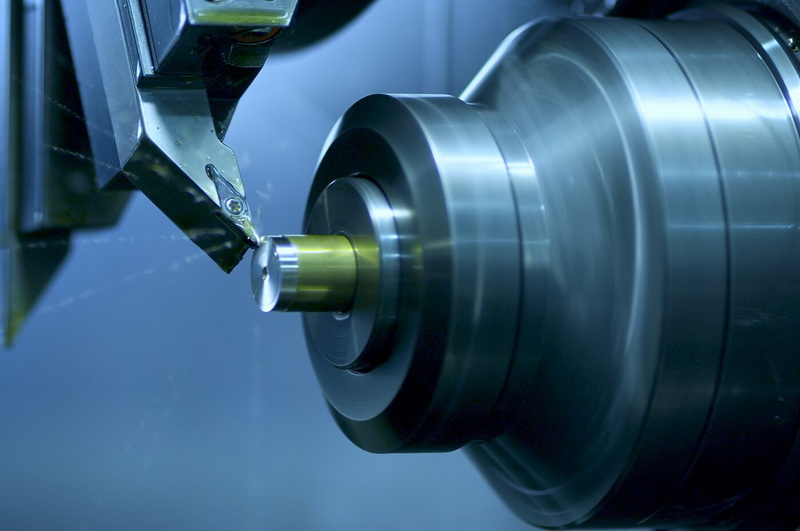
CNC Machining is a subtractive manufacturing process in which computer-controlled cutting tools remove material from solid blocks (metal or plastic) to produce precise parts. It is widely used to create prototypes, fixtures, and end-use components with tight tolerances, smooth surfaces, and consistent quality. CNC Machining can handle a wide range of engineering materials—from aluminum, stainless steel, and titanium to engineering plastics such as POM, ABS, and PEEK—which makes it highly versatile for demanding applications.[1]
Because CNC Machining starts from a solid billet or plate, the final part retains nearly the full mechanical properties of the base material. That is why CNC Machining is still the preferred choice for structural parts, safety-critical components, and high-load applications where strength, fatigue resistance, and reliability matter. In many industries, CNC Machining is also the reference process for dimensional precision, often achieving micrometer-level tolerances and excellent repeatability across batches.[2]
3D printing, also known as additive manufacturing, is a process that builds parts layer by layer from digital 3D models. Instead of cutting material away like CNC Machining, 3D printing adds material only where needed, enabling complex internal channels, lattice structures, and organic shapes that are difficult or impossible to produce with traditional subtractive methods. Technologies such as FDM, SLA, SLS, and metal powder bed fusion all fall under the 3D printing umbrella, each with its own material range and performance profile.[3]
Because 3D printing requires no dedicated molds or cutting tools, it is highly attractive for rapid prototyping and low-volume production. Design changes are as simple as updating the CAD file and starting a new build, with no need to reprogram CNC Machining paths or prepare new fixtures. However, printed parts usually have more limited material options than CNC Machining and may show anisotropic mechanical properties, especially in plastics, which must be considered in functional applications.[4]
One of the most important differences is process type: CNC Machining is subtractive, and 3D printing is additive. In CNC Machining, cutting tools remove material from stock to create the final shape; in 3D printing, the shape is built up layer by layer from powder, filament, resin, or wire. This fundamental distinction drives differences in design rules, achievable geometries, and production economics.[1]
Another major difference is dimensional accuracy and surface finish. CNC Machining delivers very tight tolerances and fine finishes with relative ease, especially on critical surfaces such as bearing bores, sealing faces, and precision mating features. Many 3D printing processes, by contrast, produce visible layer lines and slightly rough surfaces that may require post-processing, particularly when parts must assemble with CNC-machined components.[2]
Material behavior is also distinct between the two technologies. CNC Machining uses wrought or cast materials with well-known properties and strong, isotropic behavior, which is essential for structural parts. 3D printing, especially in polymers, can sometimes introduce anisotropy between layers and may not match the strength of machined materials, though metal additive processes continue to improve. As a result, engineering teams often verify critical load-bearing parts via CNC Machining even when early prototypes were printed.[5]
CNC Machining dominates in applications that demand high precision, strong materials, and impeccable surface quality. In aerospace, flight-critical brackets, housings, and structural connectors rely on CNC Machining to achieve consistent mechanical performance and pass stringent certification tests. Similar requirements exist in automotive engine components, drivetrain parts, and chassis structures, where CNC Machining remains the most reliable solution for both prototypes and low-to-mid volume production.[2]
Medical devices are another area where CNC Machining excels. Implants, surgical instruments, and precision medical housings often require biocompatible metals, ultra-clean finishes, and traceable processes. CNC Machining supports these requirements with robust process controls, validated materials, and stable tolerances—all essential for regulatory approval and long-term clinical use. Even when 3D printing is used for custom implants or guides, CNC Machining frequently finishes critical interfaces.[6]
In industrial equipment and heavy machinery, CNC Machining offers the rigidity and repeatability necessary for large, heavy parts and high-load assemblies. Gearbox housings, machine bases, and robust fixtures are typically manufactured by CNC Machining because they must withstand years of service with minimal deformation. For these reasons, CNC Machining is not simply a legacy technology; it is a mature, evolving process that continues to set the standard for high-precision, high-strength components.[7]
3D printing shines in areas where design complexity and agility matter more than pure material strength or surface perfection. Designers can create internal channels for cooling, lightweight lattices, and organic shapes optimized by topology algorithms without worrying about traditional tool access, something that is extremely difficult to achieve with CNC Machining alone. This freedom accelerates innovation in high-performance heat exchangers, custom medical devices, and lightweight aerospace components.[4]
Rapid iteration is another major advantage of additive manufacturing. Teams can print multiple design variations overnight, test them quickly, and refine the geometry based on results, dramatically compressing the development cycle. For early ergonomic samples, visual models, and basic functional tests, 3D printing often provides enough accuracy and strength at a lower cost and faster speed than full CNC Machining. This allows engineers to reserve CNC Machining for later stages, when designs are more mature and requirements are fully defined.[3]
Customization and low-volume production also play to the strengths of 3D printing. When every part is different—such as patient-specific medical devices, custom jigs, or tailored consumer products—traditional tooling can be costly or impractical. Additive processes can generate these unique parts without additional setup, while CNC Machining might require new fixturing, reprogramming, or more complex operations for each variant. In these use cases, additive and CNC Machining complement each other rather than compete directly.[8]
Cost trade-offs between CNC Machining and 3D printing depend heavily on volume, geometry, and material. For very low quantities of intricate shapes, 3D printing can be more economical because it avoids the programming and setup time of CNC Machining and does not require custom fixtures or tooling. As soon as volumes increase and part geometry becomes more machining-friendly, CNC Machining often delivers a lower cost per unit and better overall throughput.[9]
Machine time and material waste are important factors. CNC Machining may generate significant chips when machining parts from large billets, but its cutting speeds can be very high, and multi-axis machines can process complex parts in a single setup. 3D printing uses material more efficiently but can be slower per part, particularly for dense, solid geometries that would be quick to machine. For production runs that grow over time, many companies start with 3D-printed prototypes and later transition to CNC Machining to reduce cost.[10]
Another cost dimension is quality and rework. If a prototype must be evaluated under full load or checked for very tight tolerance fits, skipping CNC Machining and relying solely on 3D printing may lead to misleading results. In such cases, a slightly higher upfront cost for CNC Machining can save money in the long run by providing accurate performance data and reducing the risk of design errors showing up later. This is especially relevant when developing parts that will eventually be produced through CNC Machining or molding plus CNC Machining.[11]
Experts across machining and additive manufacturing largely agree that 3D printing will not completely replace CNC Machining, especially in metals and high-precision applications. Instead, 3D printing is gradually taking over specific niches where its capabilities are uniquely valuable, such as highly complex internal geometries or mass customization. Even in those niches, CNC Machining frequently remains part of the process chain as a finishing step.[12]
In fact, many 3D-printed metal parts are intentionally designed to be “near-net shape,” with external stock left on critical surfaces that will later be finished by CNC Machining. This combination leverages 3D printing for geometry freedom and CNC Machining for dimensional accuracy and surface quality. As additive adoption grows, the total global demand for CNC Machining is more likely to increase than decrease, because every printed component with critical interfaces still needs machining.[2]
Even the 3D printers themselves depend on CNC Machining. Machine frames, motion components, print heads, and precision fixtures that ensure repeatable builds are mostly produced by CNC Machining and related processes. Without high-precision CNC Machining, it would be impossible to achieve the mechanical stability and accuracy required by advanced industrial additive systems. This interdependence underscores why replacement is unlikely and why integration is the more realistic path forward.[13]
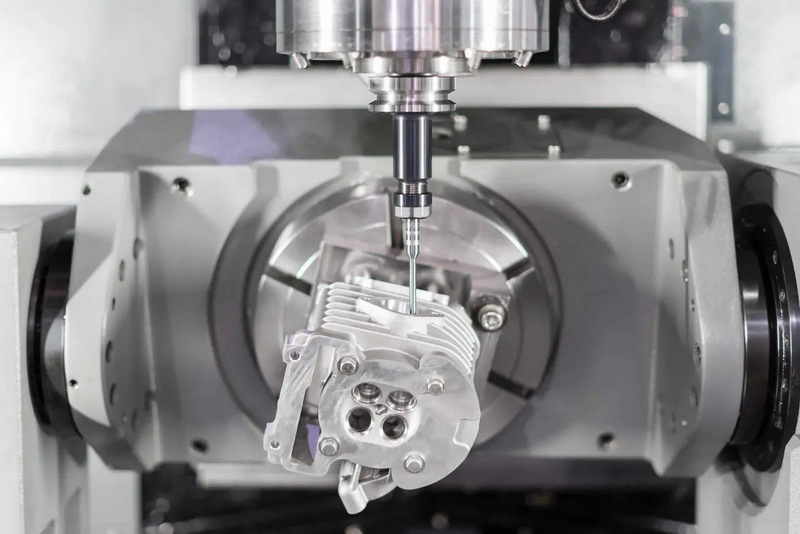
Leading OEMs increasingly rely on a hybrid manufacturing strategy that uses both 3D printing and CNC Machining at different stages of the product lifecycle. Early in development, designers print conceptual models, assembly mockups, and basic functional parts to validate ergonomics and fit. Once a design stabilizes, they commission CNC Machining of critical components to confirm real-world performance, tolerance stack-ups, and long-term durability.[14]
For certain metal parts, OEMs may choose to print complex internal structures—such as conformal cooling channels or weight-reduction cavities—while leaving external surfaces to be finished by CNC Machining. This approach is especially common in aerospace and high-end tooling, where performance gains justify the added process complexity. At the same time, simpler components in the same assembly remain fully CNC-machined for cost and reliability reasons.[9]
A manufacturing partner that offers both CNC Machining and 3D printing can help OEMs select the best process for each part and each project stage. Such a partner can use 3D printing to accelerate initial feedback, then switch to CNC Machining for pre-production runs and final batches, ensuring consistent quality and stable supply. This integrated service model is particularly attractive to international brands, wholesalers, and manufacturers who need flexible OEM solutions from prototype to mass production.
For engineers and buyers faced with choosing between CNC Machining and 3D printing, a few practical guidelines can reduce uncertainty. When a part demands high mechanical strength, tight tolerances, and excellent surface finishes—especially if it is made of aluminum, steel, or other structural metals—CNC Machining should be the default choice. If the part will be subjected to fatigue loads, high temperatures, or strict safety regulations, CNC Machining's predictable material behavior and dimensional control are hard to beat.[2]
On the other hand, when speed of iteration and design freedom are top priorities, 3D printing is often the better starting point. Early prototypes, complex internal features, customized geometries, and components with many design changes benefit from additive's low setup cost. In such cases, many teams choose to print first and machine later, moving to CNC Machining once the geometry stabilizes or when functional testing requires production-grade material properties and surfaces.[4]
A balanced strategy is to consider both technologies from the outset. Designers can plan parts that are initially printed but later machined, ensuring that critical surfaces are accessible to cutting tools and that wall thicknesses are realistic for CNC Machining. This approach avoids redesigns and shortens the path from prototype to production. It also ensures that quotations from CNC Machining suppliers and 3D printing service providers remain aligned with long-term manufacturing goals.[10]
3D printing has transformed product development by making it easier and faster to create complex, customized prototypes, but it has not rendered CNC Machining obsolete. CNC Machining remains indispensable wherever tight tolerances, superior surface finishes, and robust material properties are non-negotiable, especially in safety-critical and high-load applications. Rather than choosing one technology over the other, successful manufacturers learn how to exploit the strengths of both.[1]
Instead of asking whether 3D printing will replace CNC Machining, the more productive question is how to integrate them effectively. By using 3D printing for early prototypes and complex internal structures, and CNC Machining for precision surfaces and scalable production, OEMs can shorten development cycles, improve product performance, and control costs. A professional partner that offers both CNC Machining and additive manufacturing can guide this transition from concept to mass production, providing a complete OEM solution for global customers.[14]
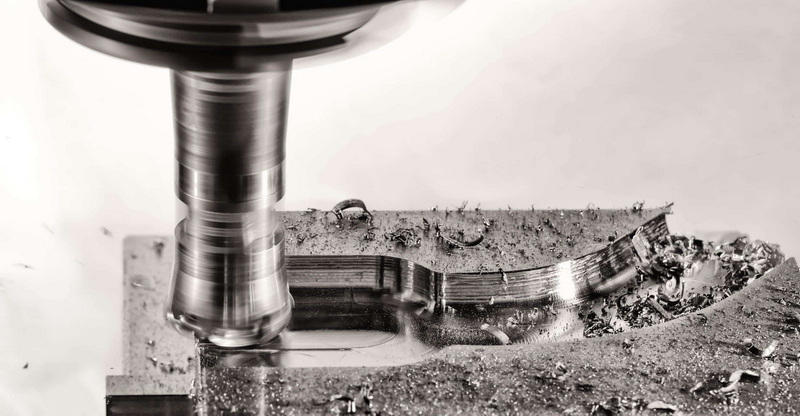
For very low volumes and highly complex shapes, 3D printing can be cheaper because it avoids the programming and setup required by CNC Machining and does not need dedicated tooling. However, for simpler geometries and especially for metal parts, CNC Machining often becomes more cost-effective as quantities increase and cycle times are optimized.[9]
Most 3D printing processes cannot yet match the tightest tolerances and surface finishes achieved by CNC Machining, particularly on precision mating features. Many critical 3D-printed parts are therefore post-processed with CNC Machining to bring key surfaces, bores, and threads into specification for demanding assemblies.[2]
Choose CNC Machining when your part must withstand significant loads, needs excellent surface quality, or must meet strict tolerance requirements, especially in metals. CNC Machining is also the better choice for small-to-medium production volumes when unit cost, repeatability, and long-term reliability are more important than extreme shape complexity.[3]
Yes, many manufacturers use 3D printing for rapid prototyping and then rely on CNC Machining for functional prototypes and production parts. In metal additive manufacturing, a common workflow is to print a near-net-shape component and then use CNC Machining to finish dimensions and surfaces that must meet tight tolerances or interact with other precision parts.[14]
Metal 3D printing will likely replace CNC Machining in specific niches where extreme design freedom and weight reduction outweigh material and process costs, but not across the entire market. Simple or moderately complex metal components, such as brackets, plates, and housings, will continue to be produced efficiently and accurately with CNC Machining for many years to come.[12]
[1](https://www.hubs.com/knowledge-base/3d-printing-vs-cnc-machining/)
[2](https://www.materialise.com/en/inspiration/articles/metal-3d-printing-vs-cnc-machining)
[3](https://ultimaker.com/learn/3d-printing-vs-cnc-comparing-additive-and-subtractive-manufacturing/)
[4](https://www.hubs.com/knowledge-base/advantages-3d-printing/)
[5](https://www.xometry.com/resources/3d-printing/3d-printing-vs-cnc-machining/)
[6](https://www.protolabs.com/en-gb/resources/blog/how-to-select-the-best-manufacturing-process-for-your-part/)
[7](https://www.datron.com/resources/blog/3d-printing-vs-cnc-milling-which-do-you-need-when-setting-up-a-prototyping-lab/)
[8](https://www.stratasys.com/contentassets/91363b113cf848d693f512b328f4bc79/wp_fdm_3dpvscnc_0517a-web.pdf?v=4a0533)
[9](https://uptivemfg.com/cnc-machining-vs-3d-printing-a-comprehensive-guide/)
[10](https://xometry.pro/en/articles/cnc-machining-vs-3d-printing/)
[11](https://www.zintilon.com/blog/will-3d-printing-replace-cnc-machining-in-rapid-prototyping/)
[12](https://www.reddit.com/r/AskEngineers/comments/rpru0r/will_metal_3d_printing_ever_replace/)
[13](https://www.youtube.com/watch?v=uYwMyXt7gsw)
[14](https://www.fictiv.com/articles/cnc-vs-3d-printing-for-prototyping)

