
Views: 222 Author: Amanda Publish Time: 2025-09-19 Origin: Site


Content Menu
● Introduction to Vacuum Casting
● Detailed Vacuum Casting Process
>> Resin Preparation and Casting Under Vacuum
● Best Vacuum Casting Techniques
● Advantages of Vacuum Casting
● Common Materials in Vacuum Casting
● Applications Across Industries
>> Automotive
>> Aerospace
● Tips for Optimal Vacuum Casting Outcomes
● Frequently Asked Questions (FAQ)
>> 1. What is vacuum casting used for in manufacturing?
>> 2. How long does the vacuum casting process take?
>> 3. How many parts can a single silicone mold produce?
>> 4. What materials are commonly used in vacuum casting?
>> 5. Can vacuum casting reproduce complex geometries?
Vacuum casting is a versatile and efficient manufacturing technique widely used for rapid prototyping and small batch production. It enables the production of high-quality plastic parts with excellent surface finish and dimensional accuracy without the high tooling costs associated with traditional injection molding. This article delves deep into the best vacuum casting techniques, its detailed process, material choices, applications, and practical tips to achieve optimal results.
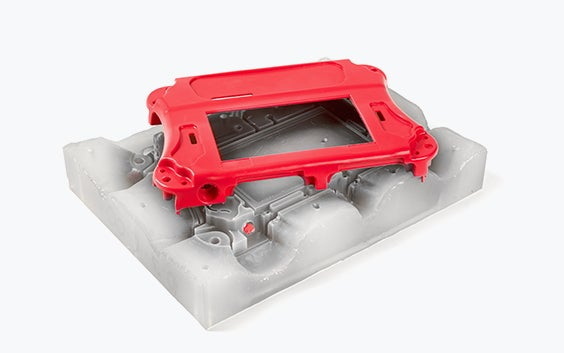
Vacuum casting is a soft tooling process that uses silicone molds to replicate master models with fine detail, combined with a vacuum chamber to minimize air bubbles during resin casting. Originating in the 1960s, vacuum casting has become a preferred solution for industries requiring precise, high-fidelity prototypes or functional small batch parts, such as automotive, consumer electronics, medical devices, and aerospace. It offers a rapid, cost-effective pathway from design to physical parts, particularly when volumes are too low to justify metal tooling.
This technology bridges the gap between fast 3D-printed prototypes and mass-produced parts by providing production-quality components quickly and economically while maintaining flexibility across materials and designs.
The vacuum casting process starts with the creation of a master model, which serves as the template for making a silicone mold. This master must be highly detailed, accurate, and free of surface imperfections to ensure the final parts mirror the intended design.
Common manufacturing methods for master models include:
- Stereolithography (SLA) 3D printing for smooth surfaces and intricate details.
- CNC machining for precision parts with tight tolerances.
- Selective Laser Sintering (SLS) or other additive methods depending on complexity and size.
Before mold-making, the master model undergoes surface preparation including sanding and polishing to eliminate any defects that could affect mold quality.
Once the master model is prepared, it is suspended inside a mold box, often supported by a frame, to enable even silicone flow around it. Gates (channels for resin entry) and risers (air escape pathways) are carefully positioned to optimize resin flow and minimize bubbles.
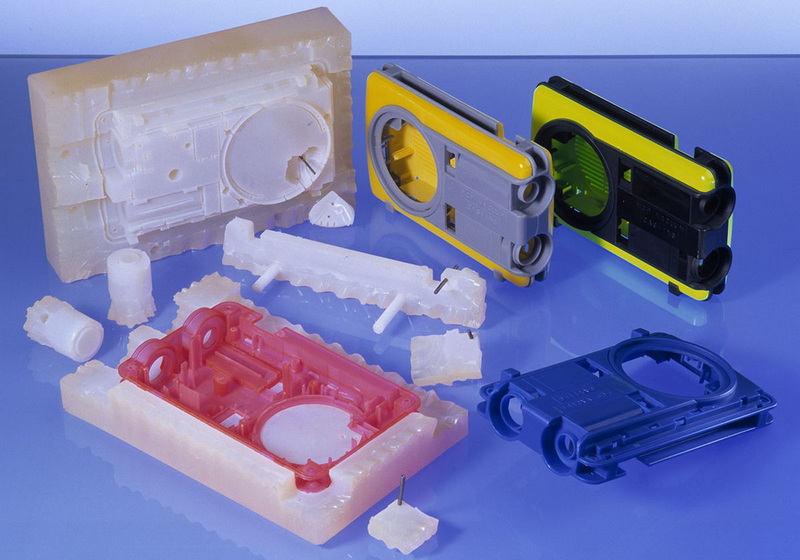
Liquid silicone rubber is then poured into the mold box under vacuum to reduce air entrapment. The silicone cures over a period typically ranging from 8 to 16 hours in controlled heat (around 40°C), after which the mold is carefully cut open to remove the master, leaving a highly detailed negative cavity.
Silicone molds are flexible and durable, able to produce between 20 to 50 parts before requiring replacement, depending on part complexity and process conditions.
The selected casting resin, most commonly a two-part polyurethane, is preheated to about 40°C to improve flow and mixing. The resin components are mixed in precise ratios and degassed within a vacuum chamber to remove entrapped air.
The silicone mold is placed inside the vacuum chamber, where the resin is poured and drawn evenly into the mold cavities by vacuum pressure. This process helps eliminate bubbles and ensures complete filling of even intricate features.
After filling, the mold is sealed and often transferred to an oven for curing, which typically takes about one hour at controlled temperatures ranging between 60°C to 70°C, depending on resin formulation.
Once cured, the cast parts are carefully demolded. Excess resin flash is trimmed, and further post-processing such as sanding, painting, or polishing can be performed to meet final product requirements.
The entire cycle from master to finished parts can be as fast as 10–20 days, allowing for rapid iteration and market-ready samples.
Vacuum bagging is a straightforward technique where the mold and resin are enclosed in a vacuum-sealed plastic bag. The vacuum pulls the resin tightly around the mold, displacing air and yielding parts with a smooth surface finish. This method is favored for simple geometries and smaller parts due to its simplicity and cost-effectiveness.
Vacuum infusion casting is a more advanced method ideal for complex or larger parts. Resin is drawn from an external reservoir through hoses into the mold under vacuum pressure, ensuring thorough resin saturation and consistent filling. This technique reduces material waste and offers improved mechanical properties by eliminating trapped air and resin-rich areas.
High vacuum casting applies even greater vacuum levels during casting to further reduce defects and bubbles. It produces parts of superior surface quality and mechanical integrity, suitable for prototype parts requiring cosmetic excellence, such as automotive interior components or medical device housings.
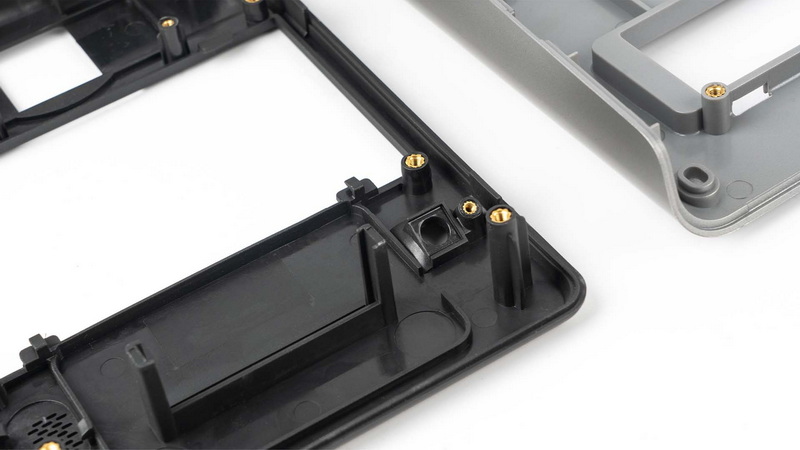
- Cost-Effectiveness: Eliminates expensive metal tooling, significantly lowering costs for prototypes and small production runs.
- Rapid Production: Mold preparation and casting can be accomplished within days or weeks, far faster than injection molding lead times.
- High Precision: Vacuum pressure reduces bubbles and voids, delivering parts with fine detail and close dimensional accuracy.
- Material Flexibility: Compatible with a wide range of resins mimicking various plastics' hardness, flexibility, and appearance.
- Small Batch Suitability: Economical for volumes between 1 and 50 units, ideal for product validation and market testing.
- Surface Finish Variety: Parts can have glossy, matte, or textured finishes depending on mold treatment and resin choice.
Polyurethane resins dominate vacuum casting due to their excellent mechanical properties and surface finishes. Options include rigid, flexible, or rubber-like urethanes, enabling simulation of production plastics in prototype or limited runs.
Other materials include:
- Epoxy resins for high strength and chemical resistance.
- Silicone-based elastomers for flexible or rubbery parts.
- Pigmented or filled resins for color matching or enhanced functional properties.
Material choice is aligned with end-use function, durability needs, and visual requirements.
Vacuum casting creates prototype or limited production parts like instrument panels, bezels, and connector housings. It enables manufacturers to test fit, form, and functionality with material performance close to production specifications.
The process facilitates manufacturing of precise, biocompatible housings, surgical tools, and implants with complex geometries and stringent surface finish demands.
Rapid prototyping and small batch casing or button production for electronics benefit from vacuum casting's ability to reproduce fine details and surface textures quickly.
Lightweight and complex-shaped components such as air ductings and structural elements are efficiently produced using vacuum casting, with tight quality control.
Vacuum casting is frequently used for detailed toy parts, decorative items, and specialty sporting goods where small volume, high quality, and fast turnaround are critical.
- Use high-quality, well-prepared master models to ensure mold fidelity.
- Properly design gate and riser placements to facilitate air escape and smooth resin flow.
- Select silicone mold materials rated for durability to maximize part output per mold.
- Ensure thorough resin mixing and degassing to minimize defects.
- Control curing environment temperature and time carefully for consistent mechanical properties.
- Post-process parts with trimming, sanding, or coating to enhance aesthetics and functionality.
Vacuum casting stands out as an exceptionally effective manufacturing technique for rapid prototyping and small batch production. It combines fast turnaround times, lower costs, and excellent quality compared to traditional prototype or low-volume production methods. By utilizing silicone molds, vacuum-assisted resin casting, and carefully selected materials, businesses can quickly move from prototype to market with production-grade parts. This process is applicable across numerous industries — from automotive and medical to consumer electronics and aerospace — providing unmatched flexibility and value for limited-run manufacturing.
Vacuum casting is used primarily to produce high-quality prototypes and small batches of plastic parts with fine detail and surface finish, often as an alternative to costly injection molding for limited quantities.
From master model creation through mold making to final parts, the vacuum casting process typically takes between 10 to 20 days, enabling rapid product development cycles.
A silicone mold generally produces between 20 and 50 castings before its accuracy and durability start to degrade, depending on the part complexity and material.
Polyurethane resins are most common, available in rigid, flexible, and elastomeric formulations. Epoxy and silicone-based resins may also be used depending on application requirements.
Yes, vacuum casting efficiently fills intricate molds with thin walls and fine features due to vacuum pressure eliminating air bubbles and ensuring consistent resin flow.
[1](https://www.immould.com/vacuum-casting/)
[2](https://xdmining.in/2024/10/02/elementor-11005/)
[3](https://objectify.co.in/a-comprehensive-guide-to-vacuum-casting-everything-you-need-to-know/uncategorized/)
[4](https://formlabs.com/blog/vacuum-casting-urethane-casting-polyurethane-casting/)
[5](https://leadrp.net/blog/overview-of-vacuum-casting/)
[6](https://www.rocheindustry.com/guide-to-vacuum-casting/)
[7](https://www.zintilon.com/blog/vacuum-casting/)
[8](https://blog.isa.org/what-are-vacuum-casting-factories-a-comprehensive-guide-to-the-manufacturing-process)
[9](https://www.rapiddirect.com/blog/vacuum-casting-design-guide/)
[10](https://www.renishaw.com/media/pdf/en/9a351e67784c4e27992e5e3632434b1f.pdf)

