
Views: 222 Author: Amanda Publish Time: 2025-09-26 Origin: Site


Content Menu
● Understanding Vacuum Casting Technology
● Advantages of Vacuum Casting Compared to Other Techniques
● Comprehensive Services Offered by Leading Vacuum Casting Manufacturers
>> Design Support and Project Consulting
>> Prototype and Master Pattern Fabrication
>> Secondary Operations and Finishing
>> Quality Control and Inspection
● Selecting a Trusted Vacuum Casting Partner
● Why Shangchen Excels in Vacuum Casting
● Detailed Vacuum Casting Process at Shangchen
● Industrial Applications of Vacuum Casting
● Best Practices for Collaborating with Vacuum Casting Manufacturers
● FAQ
>> 1. What is vacuum casting used for?
>> 2. How long does the vacuum casting process take?
>> 3. What materials can be used in vacuum casting?
>> 4. Can vacuum casting molds have multiple cavities?
>> 5. How does vacuum casting differ from injection molding?
Vacuum casting has become a critical manufacturing process for producing high-quality prototypes and small-batch parts with exceptional precision and efficiency. For brands, wholesalers, and manufacturers seeking reliable OEM partners, selecting the best vacuum casting manufacturers ensures smooth end-to-end service from initial design to final product delivery. Shangchen specializes in delivering comprehensive vacuum casting solutions combined with rapid prototyping, CNC machining, precision mass production, turning, sheet metal fabrication, 3D printing, and mold manufacturing. This article delves deep into the benefits of vacuum casting, outlines the complete service capabilities offered by top manufacturers, and provides guidance on choosing the perfect partner for your projects.
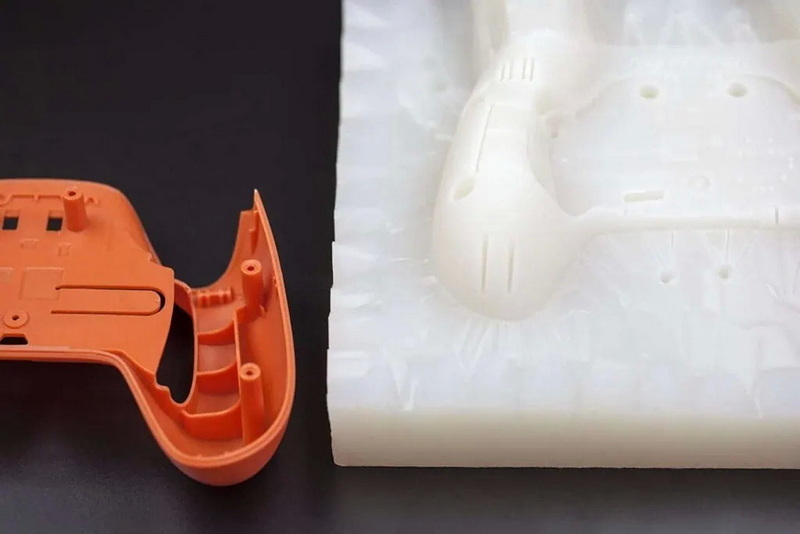
Vacuum casting is a manufacturing process that produces high-fidelity parts by injecting liquid polyurethane or other resins into silicone molds under vacuum conditions. This technique minimizes air entrapment and defects, yielding parts with excellent surface finish, intricate details, and close dimensional accuracy. Vacuum casting is widely embraced for creating prototypes, functional components, tooling aids, and end-use parts that simulate the look and feel of injection molded plastics.
By drawing out trapped air bubbles through vacuum, the process significantly improves the structural integrity and visual quality of each part. Additionally, it allows the use of a wide range of resins with tailored mechanical and thermal properties suitable for testing or end application.
- Superior surface quality and detail reproduction: Vacuum casting surpasses many rapid prototyping methods in surface finish and can replicate complex geometries flawlessly.
- Cost-efficiency for low-to-medium volume production: Since it uses silicone molds instead of expensive steel tooling, vacuum casting offers a low-cost entry point for producing tens to a few thousand parts.
- Rapid turnaround times: Silicone molds can be fabricated within days, allowing projects to move swiftly from concept to finished parts.
- Material versatility: Compatible with rigid, flexible, transparent, and rubber-like polyurethane resins to mimic diverse plastics such as ABS, PP, PE, and more.
- Functional performance: The cast parts have mechanical strength, heat resistance, and elasticity appropriate for functional testing and limited lifecycle products.
- Reduced lead time for design iterations: Fast tooling adjustments and mold manufacturing empower frequent design refinements without heavy expense.
Modern vacuum casting manufacturers provide end-to-end capabilities designed to streamline the product development and production cycle. These services typically include:
Leading suppliers offer expert consultation to optimize part design for vacuum casting feasibility, including wall thickness adjustments, draft angles, and identifying potential undercuts. They advise on the most suitable resin selection based on functional requirements, durability expectations, and budget.
Rapid prototyping methods such as CNC machining and 3D printing are used to create accurate master patterns. These serve as the basis for the silicone mold production and allow clients to review form, fit, and function before mold investment.
High-precision silicone molds are produced from the master patterns. These molds can have single or multiple cavities depending on production volume needs. Silicone's flexibility enables easy demolding and long mold life for short to medium series production.
Using state-of-the-art vacuum casting equipment, resins are injected into the molds within a tightly controlled vacuum environment. This results in minimal porosity and outstanding surface finish consistency. Production batches are monitored throughout to maintain quality standards.
After casting, parts typically undergo finishing processes such as trimming, sanding, painting, plating, and assembly. These value-added services ensure that parts meet aesthetics, functional, and packaging requirements for shipment.
Manufacturers maintain rigorous quality assurance processes including dimensional checks, mechanical testing, and surface inspection. Advanced measurement instruments and industry certifications guarantee reliable and repeatable results that satisfy client specifications.

When aiming to identify the best vacuum casting manufacturer, consider these critical evaluation criteria:
- Experience: A manufacturer with a diverse portfolio across industries and project scales demonstrates reliable process mastery.
- Advanced Technology: Availability of cutting-edge vacuum casting machines, fast prototype tooling, and multi-material capabilities.
- Customization: Flexibility to adapt to unique product specifications, batch sizes, and secondary operation requirements.
- Quality Certifications: ISO9001 or similar standards ensure systematic quality management and compliance.
- Responsive Support: Transparent communication throughout the project lifecycle, technical help, and timely delivery.
- Integrated Service Offering: One-stop solutions from design, prototype, mold-making, casting, finishing to packaging minimize complexity and accelerate timelines.
Shangchen stands at the forefront of vacuum casting manufacturing by merging years of industrial expertise with comprehensive OEM service offerings tailored for international clients. Our engineering team collaborates to improve product designs for manufacturability and cost efficiency, ensuring superior end results.
Our facilities feature industry-leading vacuum casting machines and precision mold-making equipment to produce parts that meet or exceed demanding client expectations. In addition to vacuum casting, our wide array of value-added services includes CNC machining, 3D printing, turning, sheet metal fabrication, finishing, and assembly. This full spectrum enables Shangchen to deliver turnkey manufacturing solutions with optimized lead times and reliable quality.
We pride ourselves on close client partnerships, transparent project updates, and dedicated after-sales support—all essential elements to support successful go-to-market strategies.
1. Initial Consultation: Our team works closely with clients to understand project goals, target applications, material preferences, and quantity requirements.
2. 3D Model Review and Optimization: We analyze CAD files for potential manufacturing improvements such as wall thickness uniformity and draft angles.
3. Master Pattern Creation: Quick fabrication through CNC machining or selective 3D printing serves as the mold master.
4. Custom Silicone Mold Fabrication: Multi-cavity molds are prepared to accommodate production scale and complexity.
5. Vacuum Casting Production: Resin injection under vacuum produces crisp, high-accuracy parts in compliance with specifications.
6. Finishing Services: Includes deburring, surface polishing, spray painting, silk screening, and assembly.
7. Quality Inspection and Testing: Final parts undergo comprehensive dimensional and performance tests to guarantee standards.
8. Packaging and Shipping: Secure packaging tailored to protect delicate parts during global distribution.
Vacuum casting has broad applications across many sectors, ideal for industries requiring superior prototype and limited-series production parts:
- Consumer Electronics: Housings, buttons, connectors, and other precision components.
- Automotive and Transportation: Interior trims, dashboard parts, and functional prototypes.
- Medical Devices: Durable prototypes and limited-use tooling aids.
- Industrial Equipment: Complex mechanical parts requiring accurate geometry and durability.
- Cosmetics Packaging: High-quality containers and caps with attractive finishes.
- Aerospace: Lightweight components manufactured in short runs for fittings and tests.
Each industry benefits from vacuum casting's unique balance of speed, accuracy, and cost-effectiveness for rigorous development schedules.
- Provide highly detailed CAD models with tolerances clearly defined.
- Early communication about material preferences and expected part performance.
- Request prototype samples to validate form and function before full production.
- Clarify acceptable lead times and ensure alignment on delivery expectations.
- Discuss finishing options and packaging requirements upfront.
- Evaluate manufacturer certifications and quality processes carefully.
Vacuum casting stands as an indispensable solution for producing detailed, high-quality prototypes and small batch parts in a cost and time-efficient manner. With the increasing demand for rapid market entry and flexible manufacturing options, partnering with top vacuum casting manufacturers offering end-to-end services becomes critical. Shangchen's expertise, integrated manufacturing capabilities, and commitment to quality position it as an ideal OEM partner for global brands seeking precision, reliability, and comprehensive support throughout the production journey. Leveraging vacuum casting technology with a trusted manufacturer ensures your project achieves exceptional results while meeting tight deadlines and stringent specifications.

Vacuum casting is used primarily for manufacturing prototypes, functional parts, and small batch production components. It produces parts with excellent surface finish, dimensional accuracy, and mechanical properties similar to injection-molded plastics, ideal for testing and limited end-use.
Typically, the entire process from design consultation, mold making, resin casting, to finished parts delivery takes between 2 to 4 weeks, depending on the complexity and order volume.
Vacuum casting commonly employs polyurethane resins, available in rigid, flexible, transparent, and rubber-like variants. These materials simulate plastics such as ABS, PP, PE, offering tailored mechanical and thermal properties.
Yes. Silicone molds used in vacuum casting can incorporate multiple cavities to increase production efficiency for medium-sized batches, allowing simultaneous part casting.
Vacuum casting uses silicone molds and liquid resin under vacuum for quick, low-cost small batch production, ideal for prototypes and limited series. Injection molding uses steel molds for high-volume manufacturing but involves higher upfront tooling costs and longer lead times.

