
Views: 222 Author: Amanda Publish Time: 2025-11-09 Origin: Site


Content Menu
● Evolution and Types of Turning Lathes
>> Multi-Tasking and Hybrid Lathes
● 2025 Specifications and Performance Benchmarks
● Automation and Digital Integration
>> Smart Controls and Monitoring
>> Automated Material Handling
● Material Versatility and Finishing Options
● Multi-Axis and Counter-Spindle Capabilities
● Advanced Programming and Collision Avoidance
● Quality and Traceability in OEM Supply
● Real-World Industrial Applications in 2025
>> Medical Device Manufacturing
>> Electronics and Precision Instruments
● Process Optimization for Rapid Prototyping
● Sustainable and Resilient Manufacturing
● Customization and OEM Integration
● Maintenance and Reliability Protocols
● Engaging Shangchen for Turning Lathe Projects
● FAQ
>> 1. How does a turning lathe achieve tight tolerances in 2025?
>> 2. Which materials can be processed with modern turning lathes?
>> 3. What are the benefits of automated turning lathe cells?
>> 4. How does Shangchen support international OEM projects using turning lathes?
>> 5. What secondary finishing and quality controls are available?
Precision manufacturing is driven by the relentless advancement of machine tool technology, and no machine embodies this progression more than the turning lathe. As we enter 2025, turning lathe innovation has surged, providing OEMs and global production facilities with new ways to achieve high accuracy, repeatability, and flexible manufacturing capabilities. For a dynamic OEM supply partner like Shangchen, specializing in rapid prototyping, CNC machining, precision batch production, sheet metal manufacturing, 3D printing, and mold production, the choice and deployment of turning lathes become central to satisfying stringent customer requirements while maintaining cost competitiveness. This comprehensive guide explores the latest turning lathe developments, features to consider, real-world applications, and strategies for maximizing output in the evolving landscape of 2025.[11][12]
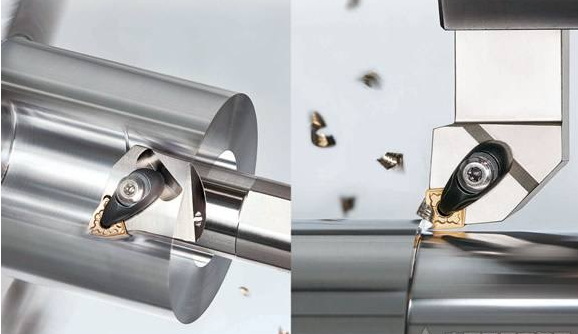
A turning lathe is a versatile machine tool designed to rotate a workpiece about an axis of rotation to perform a variety of operations, including cutting, sanding, knurling, drilling, facing, and turning, all with the goal of creating objects with excellent symmetry and precision. Traditional turning lathes remove material using single-point cutting tools and are foundational for shaping components ranging from simple shafts to complex aerospace parts. In 2025, the turning lathe has become smarter and more automated, offering multi-axis control, live tooling, real-time monitoring, and powerful digital connectivity. These enhancements ensure ideal finishes and geometric consistency for parts used in high-risk industries such as automotive, medical, and aviation.[2][3]
Originally, the turning lathe was manual, with operators controlling every aspect of spindle speed, cutting tool motion, and material feed. Today, manual lathes are still used for training, prototyping, and low-volume custom parts, favored for their tactile feedback and simplicity.[9]
Computer Numerical Control (CNC) turning lathes dominate modern industry. Featuring programmable logic controllers, these machines offer repeatability, integration with automated systems, and can execute incredibly complex part geometries. CNC turning lathes are available in vertical, horizontal, and slant-bed configurations, each suited to specific outputs and part dimensions. Modern CNC turning lathes now feature automated bar feeders, multi-tool turrets, and smart sensors for predictive maintenance.[7][8]
Advanced multi-tasking turning lathes, which can mill, drill, tap, and groove using live tooling setups, remove the need for secondary operations. Hybrid lathes even combine subtractive and additive operations, allowing for the rapid prototyping and customization of complex geometries, further reducing manufacturing lead time.
Today's high-performing turning lathes are defined by critical technical specifications that directly impact productivity and finished part quality:
- Spindle Speed: Adjustable ranges (e.g., 600–10,000 rpm) accommodate various materials and finish requirements. Higher spindle speeds are ideal for fine finishes on non-ferrous metals.[3][8][2]
- Max Turning Diameter: Larger diameters boost capacity for automotive and aerospace parts, reaching 350–850 mm on some advanced billet lathes.[4]
- Max Part Length: Lathes support variable part lengths from 200 mm up to 1500 mm or more.[4]
- Tool Turret Capacity: Up to 12 tools per turret allows multi-operation setups, reducing cycle times.
- Automation Features: Integrated bar feeding, robotic loading/unloading, and in-cycle metrology ensure consistent throughput.[7]
- Feed Rates and Power: Rapid X/Y/Z speeds (15–24 m/min), spindle drive power (up to 5.5 kW or more), and high feed forces secure deep cuts with minimal chatter.[1][2]
For Shangchen's projects, these benchmarks translate into flexible prototyping, small-batch production, and seamless scalability for OEM contracts, allowing rapid shifts in parts, materials, and design iterations without sacrificing quality.
Cutting-edge digital features now define the advanced turning lathe. IoT sensors and AI-enabled software monitor vibration, spindle health, tool wear, and perform real-time corrections, alerting operators or maintenance crews before issues lead to downtime. Cloud connectivity enables remote diagnostics and data visualization for managers and clients alike.[7]
Lights-out manufacturing is increasingly feasible thanks to robot arms and bar feeders, which eliminate the need for human supervision during loading and unloading. Shangchen can leverage this for long batch runs, maintaining 24/7 production and optimizing costs for international wholesale orders.
The best turning lathes not only work quickly but also support a vast array of materials:
- Metals: Aluminum, titanium, copper, stainless steel, tool steels, and superalloys can all be machined with programmable spindle speeds and advanced coolant strategies.[2]
- Plastics/Composites: Engineering plastics and composite rods are increasingly specified for lightweight, durable components in consumer electronics and automotive interiors.
- Custom Alloys: Aerospace and medical projects benefit from lathes that hold accuracy on Inconel, Hastelloy, and special grades requiring unique cutting parameters.
Secondary finishing operations such as grinding, polishing, anodizing, and heat treatment are often integrated into the production cell, ensuring OEMs get fully finished parts ready for assembly.
Complex part geometries demand multi-axis (typically X, Z, and Y) control, enabling off-center drilling, threading, knurling, and expanding the part range. Counter-spindles allow simultaneous machining on both sides of a component, doubling throughput while preserving perfect concentricity—ideal for intricate automotive and electronics connectors.
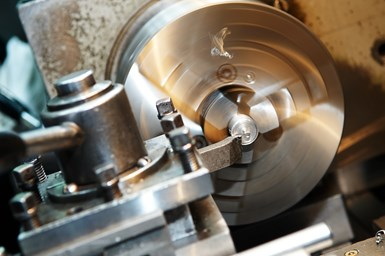
Today's turning lathe programming interfaces simplify complex geometries with intuitive, graphical programming. Collision avoidance algorithms prevent tool crashes, protecting valuable equipment and workpieces. Shangchen's operators benefit from fast setup, changeover, and seamless transitions between prototype and production cycles.
Meeting global standards requires robust quality assurance embedded into every step of the turning lathe process:
- In-Process Metrology: Touch probes and laser scanning inspect dimensions mid-cycle, ensuring each part meets spec.
- Data Logging: All critical process variables are recorded, building powerful SPC datasets for compliance audits.
- Digital Traceability: Unique part and batch IDs help international OEM clients verify material sources, process parameters, and quality certifications.
Turning lathes create bushings, axles, engine pins, custom fasteners, and transmission shafts with repeated accuracy. Shangchen's facility turns components for high-end vehicles and economy models alike, optimizing each spindle speed and toolpath for price, speed, and durability.
Medical housings, implant screws, and surgical instruments demand micron-level accuracy and perfect finishes. With integrated SPC and ISO documentation, Shangchen's turning lathe cell aligns with strict regulatory standards, supporting partners from initial prototype to global roll-out.
Exotic superalloys and lightweight titanium are the lifeblood of aerospace fasteners, landing gear rods, and critical airframe pins. Precision turning lathes with advanced cooling and high-speed spindles guarantee longevity and flight-certification standards.
From miniature connectors to high-tolerance sensor enclosures, multi-tasking lathes enable simultaneous internal and external operations, reducing assembly times and increasing reliability for multinational electronics OEMs.
In rapid prototyping, speed and accuracy must coexist. Advanced lathe setups combine programmable features, live tooling, and fast tool changeover. Shangchen advises clients on design-for-manufacturability (DFM) and manufacturability analysis, ensuring CAD designs translate flawlessly into machined realities.
Sustainability is now integral to modern OEM partnerships. Today's turning lathe designs feature energy-efficient motors, optimized coolant recovery, regenerative braking, and minimal material wastage. Process data enables partners to report carbon footprints and meet international environmental standards.
For OEMs collaborating with Shangchen, customization is critical. Turning lathe configurations, turret selection, programming preferences, and post-processing options are all tailored to project goals. International clients benefit from agile changeover, batch flexibility, and order tracking—all supported by digital workflow documentation.
Avoiding downtime is essential for OEM supply chains. Automated alerts, tool-life monitoring, and routine spindle calibration allow proactive maintenance. Shangchen's trained staff follow global standards for preventive care, part replacement, and operator education, ensuring that lines run smoothly and parts ship on schedule.
Effective collaboration begins with clarity. Partners provide drawings, material specs, tolerance targets, and volume projections. Shangchen's engineering team reviews manufacturability, suggests improvements, and plans every aspect—from tool setup to quality audit—keeping overseas clients informed and confident at every stage.
Precision machining with modern turning lathes in 2025 offers unmatched repeatability, flexibility, and efficiency for OEM production globally. Shangchen's focus on rapid prototyping, CNC automation, multi-material processing, and stringent quality control enables premium service for international brands, wholesalers, and manufacturers. By investing in cutting-edge turning lathe technology and seamless digital integration, the factory guarantees scalable capacity and turn-key solutions that meet evolving market demands.[12][13][11][7]
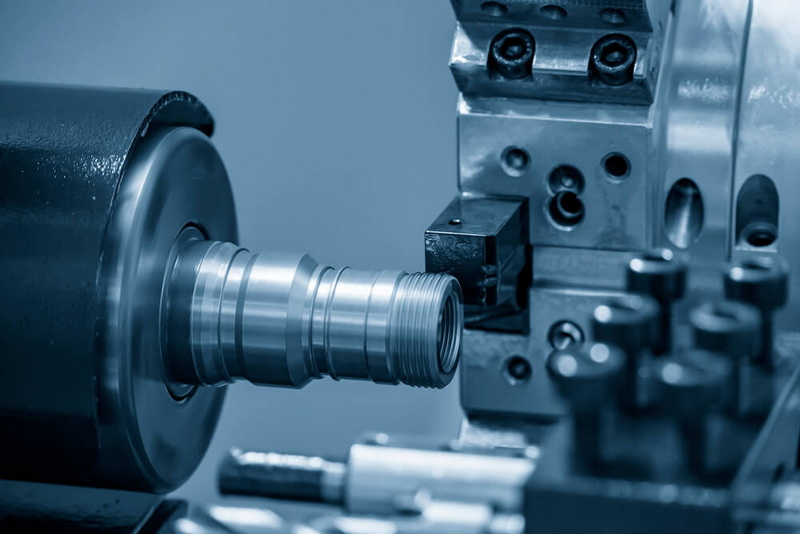
Turning lathes use high-speed, stabilized spindles, multi-axis control, and in-process metrology to maintain strict tolerances and geometric consistency. Advanced software corrects errors in real-time, ensuring every part meets global standards.[3][2]
Current turning lathes handle a range of materials, including steel, aluminum, titanium, copper alloys, plastics, and engineered composites. Tool types and cooling solutions are adapted to each material for optimal results.[5][4]
Automated cells allow for lights-out production, faster cycle times, reduced labor costs, and higher yield rates. Integration with bar feeders and robotics ensures consistent part loading, while IoT monitoring minimizes downtime from unexpected failures.[8][7]
Shangchen offers complete project management—from manufacturability analysis and prototyping, to batch production, documentation, and global logistics. Customization, flexible automation, and digital traceability match both high-mix and high-volume OEM demands.[14][15]
Finishes include grinding, polishing, anodizing, and heat treating, with full in-process SPC, digital documentation, and lot-level traceability for parts destined for regulated industries. Quality teams manage audits to ensure compliance.[16][17]
[1](https://www.emco-world.com/en/products/industrial-training/machines/turning/concept-turn/concept-turn-260.html)
[2](https://www.mylascnc.com/high-speed-precision-auto-lathe-cam-auto-lathe-m1525-1-m2025-1)
[3](https://tkmachinetool.com/product/a-2025/)
[4](https://mkp.gem.gov.in/catalog_data/catalog_support_document/buyer_documents/18368144/54/78/703/CatalogAttrs/SpecificationDocument/2025/1/7/billet_turning_lathe_tech_specs_2025-01-07-09-31-38_9d418e761aef151bd785501143e9d679.pdf)
[5](https://bfweurope.com/wp-content/uploads/2025/08/RAM-Type.Brochure-2023.pdf)
[6](https://wuganlathe.en.made-in-china.com/product-group/IqwtzHvbnLWY/CNC-Turning-catalog-1.html)
[7](https://cncwmt.com/latest-news/what-is-the-newly-defined-lathe-in-2025/)
[8](https://ae.syil.com/l3)
[9](https://www.scribd.com/document/819609973/13-01-2025-Lathe-Medium-Duty-4-5-with-sb-80-mm)
[10](https://cofmow.indianrailways.gov.in/ticker/1752057618317TechnicalSpec_TUFWL_27062025.pdf)
[11](https://www.supercncmachine.com/top-7-cnc-lathe-machine-manufacturers-in-2025-expert-picks/)
[12](https://www.leadcnc.com/top-cnc-turning-center-latch-manufacturers/)
[13](https://kentusa.com/machining-trends-2025/)
[14](https://www.sc-rapidmanufacturing.com/aboutus.html)
[15](https://www.tsprototypes.com/cn/our-solutions/cnc-machining/)
[16](https://www.lsrpf.com/zh-Hans/cnc-machining)
[17](https://www.east-cnc.com/news/industry-news/why-your-factory-needs-a-new-cnc-vertical-lathe-in-2025.html)

