
Views: 222 Author: Amanda Publish Time: 2025-10-19 Origin: Site


Content Menu
● What is Vacuum Mold Casting?
● Detailed Vacuum Mold Casting Process
● Best Design Practices for Vacuum Mold Casting
● Materials Used in Vacuum Mold Casting
● Optimization Techniques for Quality Production
● Applications of Vacuum Mold Casting
● Frequently Asked Questions (FAQ)
>> 1. How accurate are parts produced by vacuum mold casting?
>> 2. What types of materials can be used for vacuum casting?
>> 3. What is the typical lifespan of a silicone mold?
>> 4. Can vacuum mold casting produce complex geometries?
>> 5. How does vacuum mold casting compare to injection molding?
Vacuum mold casting is an advanced manufacturing process that allows the production of highly detailed, durable plastic and rubber parts. This process is vital for rapid prototyping and low- production where traditional injection molding is not efficient or cost-effective. This comprehensive article covers the best practices from leading companies around the world in Vacuum Mold Casting, detailing the manufacturing process, design considerations, material options, and optimization strategies to help manufacturers achieve high quality and precise parts. A FAQ section is included to address common questions.
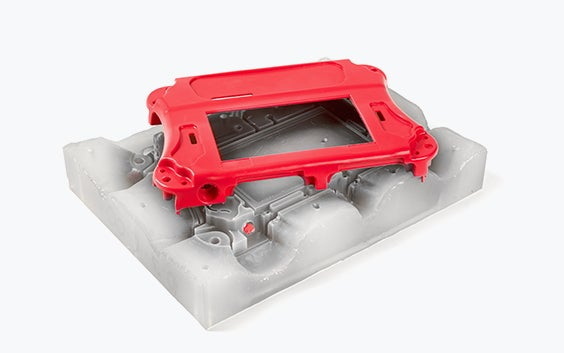
Vacuum Mold Casting involves replicating parts by pouring liquid casting materials, typically polyurethane resin, into a silicone mold under vacuum pressure. The vacuum removes air trapped inside the mold, preventing bubbles and ensuring a smooth finish with fine surface details. The process starts with a master model that is usually created by CNC machining or 3D printing. This master is used to make a flexible silicone mold, which can be reused multiple times to produce up to 30 identical parts. Vacuum mold casting is ideal for creating prototypes, functional parts, or small batch production with high fidelity.
The vacuum mold casting process can be broken down into several essential steps:
The foundation of high-quality vacuum casting is the master model. It needs to be highly accurate and well-finished because the entire process depends on it. The master model can be:
- CNC machined from materials such as wax, plastic, or metal
- 3D printed using SLA or other high-detail printing technologies
Designing the master model involves ensuring proper dimensions, smooth surface finish, and correct geometry to facilitate mold making and casting.
Once the master model is ready, it is placed in a casting box, and liquid silicone rubber is poured around it. The silicone captures every fine detail of the master. The silicone is then cured in an oven for 8–16 hours, depending on the size of the mold. After curing, the mold is carefully cut to remove the master and prepare the cavity for casting. Mold release agents are applied to ensure easy demolding.
The casting material, most commonly a two-component polyurethane resin, is mixed with pigments if color is needed. This mixture is then degassed in a vacuum chamber to remove trapped air bubbles. The resin is poured into the silicone mold still under vacuum, ensuring complete filling of fine details and complex geometries without air pockets.
The mold filled with resin is cured in an oven, typically at around 70°C, for about an hour or longer depending on the material and part size. Once cured, the part is removed carefully from the mold. Excess material (flash) is trimmed, and the part may undergo sanding or polishing to improve surface finish.
A silicone mold can typically be used for 20 to 30 casting cycles before it starts to degrade, leading to loss in dimensional accuracy. Manufacturers must monitor mold condition to maintain quality.
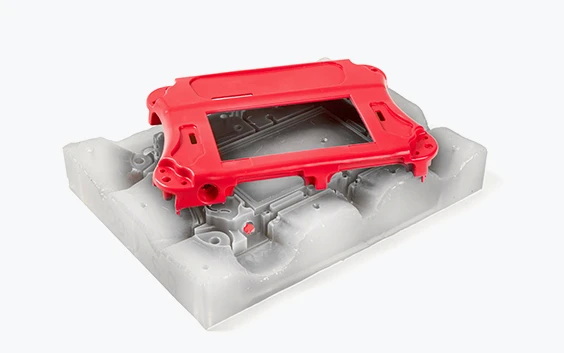
Leading companies emphasize designing with manufacturing constraints in mind to ensure defect-free casting and easy demolding:
- Draft Angles: Include 1–2 degrees of draft to aid mold release without damaging parts.
- Wall Thickness: Maintain uniform thickness, ideally between 1 and 1.5 mm, to avoid warping and ensure strength.
- Bosses and Ribs: Design bosses at least 1mm in height and width; ribs should be less than 60% of wall thickness.
- Embossing and Engraving: Minimum 1mm depth or height and separation between text details help in legibility and mold release.
- Minimize Undercuts: Simplify geometry to reduce mold complexity or consult experts for advanced solutions.
Vacuum mold casting offers flexibility in material selection, allowing parts to mimic properties of injection-molded thermoplastics and elastomers:
- ABS-like Resins: Durable, flame-retardant, suited for consumer electronics.
- Polyethylene & Polypropylene-like Resins: Elastic, chemical-resistant for packaging.
- Polycarbonate-like: High strength and heat resistance, often used for transparent parts.
- Acrylic: UV resistant and clear for lenses and lighting.
- Silicone & Rubber: Flexible, heat-resistant for seals and molds.
- Thermoplastic Polyurethane (TPU): Abrasion-resistant with balanced flexibility.
- Epoxy Resins: Highly durable and chemical-resistant.
- Polyurethane Foams: Lightweight for cores and insulation parts.
Leading vacuum casting firms employ various best practices to improve part quality and efficiency:
- Resin Degassing: Ensures air bubbles are removed, preventing surface defects.
- Effective Mold Release: Using silicone or wax release agents facilitates quicker demolding.
- Tight Mold Clamping: Prevents leaks that cause voids.
- Preheating Resin: Lowers viscosity for better mold filling.
- Multiple Vacuum Cycles: Enhances resin infiltration into complex mold areas.
- Post-processing: Sanding, polishing, and painting improve aesthetics and surface properties.
Vacuum mold casting serves a diverse range of industries, including:
- Rapid prototyping for testing and product development
- Low-volume, high-detail end-use parts production
- Medical and dental models
- Automotive components and assemblies
- Consumer electronics housings
- Jewelry and artwork reproductions
- Industrial equipment parts requiring tight tolerances
Vacuum mold casting is a versatile and efficient manufacturing process that bridges the gap between rapid prototyping and full-scale injection molding. Leading companies worldwide excel by adhering to best design practices, selecting appropriate materials, and optimizing casting and curing processes. This enables the production of precise, detailed, and high-quality parts for a broad spectrum of industries. By understanding and applying these best practices, manufacturers can leverage vacuum mold casting to rapidly produce functional prototypes or low-volume production parts that closely resemble injection-molded products in appearance and performance.

Parts typically achieve dimensional tolerances of ±0.3 mm or about ±0.3% of part size, depending on mold quality and resin used. Fine details and textures are faithfully replicated.
A wide range of polyurethane resins are available to mimic plastics such as ABS, polycarbonate, polypropylene, and flexible rubbers. Different hardness shore values can be selected.
Silicone molds can generally produce 20 to 30 parts before showing degradation in detail and dimensional accuracy, after which replacement is recommended.
Yes, vacuum casting can produce intricate parts including undercuts, provided mold design is optimized. However, some complex shapes may require additional tooling or mold splits.
Vacuum casting offers faster, cheaper tooling and is ideal for low-volume production with high detail. Injection molding suits large-scale production with higher upfront costs for tooling.
[1](https://formlabs.com/blog/vacuum-casting-urethane-casting-polyurethane-casting/)
[2](https://www.immould.com/vacuum-casting/)
[3](https://an-prototype.com/ultimate-guide-to-vacuum-casting/)
[4](https://objectify.co.in/a-comprehensive-guide-to-vacuum-casting-everything-you-need-to-know/uncategorized/)
[5](https://xdmining.in/2024/10/02/elementor-11005/)
[6](https://ame-3d.co.uk/news/a-complete-guide-to-vacuum-casting-polyurethane-casting)
[7](https://blog.isa.org/what-are-vacuum-casting-factories-a-comprehensive-guide-to-the-manufacturing-process)
[8](https://leadrp.net/blog/overview-of-vacuum-casting/)
[9](https://www.kemalmfg.com/complete-guide-to-vacuum-casting/)
[10](https://www.zintilon.com/blog/vacuum-casting/)
[11](https://www.rapiddirect.com/blog/vacuum-casting-design-guide/)
[12](https://us.metoree.com/categories/9241/)

