
Views: 222 Author: Amanda Publish Time: 2025-08-17 Origin: Site


Content Menu
● Introduction to CNC Machining
>> Wall Thickness and Tall Features
>> Hole Design
>> Design for Manufacturability (DFM)
● CNC Machining Process Best Practices
>> Material Setup and Clamping
>> Speed, Feed, and Lubrication
>> Tool Wear and Replacement Monitoring
● Advanced CNC Machining Technologies
>> Real-Time Monitoring and AI Integration
>> Material Handling and Stock Management
● Quality Control and Inspection
>> Coordinate Measuring Machines (CMM)
>> Statistical Process Control (SPC)
>> Documentation and Traceability
● Sustainability in CNC Machining
>> Environmentally Friendly Coolants and Lubricants
● Leveraging CNC for OEM Services
● Frequently Asked Questions (FAQ)
>> 1. What is CNC machining and why is it important?
>> 2. How do I design a part for CNC machining?
>> 3. What materials can be machined using CNC?
>> 4. How can CNC machining quality be ensured?
>> 5. What advanced technologies are used in CNC machining today?
CNC machining is a cornerstone technology in modern manufacturing, used extensively for prototype development, precision batch production, and complex part fabrication. The process involves computer-controlled cutting tools machining raw materials to precise specifications. As an OEM service provider to global brands, wholesalers, and manufacturers, mastering CNC machining best practices is essential to deliver high-quality, cost-effective, and timely products.
Leading CNC machining manufacturers excel by continuously optimizing design, process parameters, tooling, and quality control. This article explores the best practices derived from industry leaders, focusing on design guidelines, machining processes, materials handling, and inspection protocols to maximize productivity and product quality.
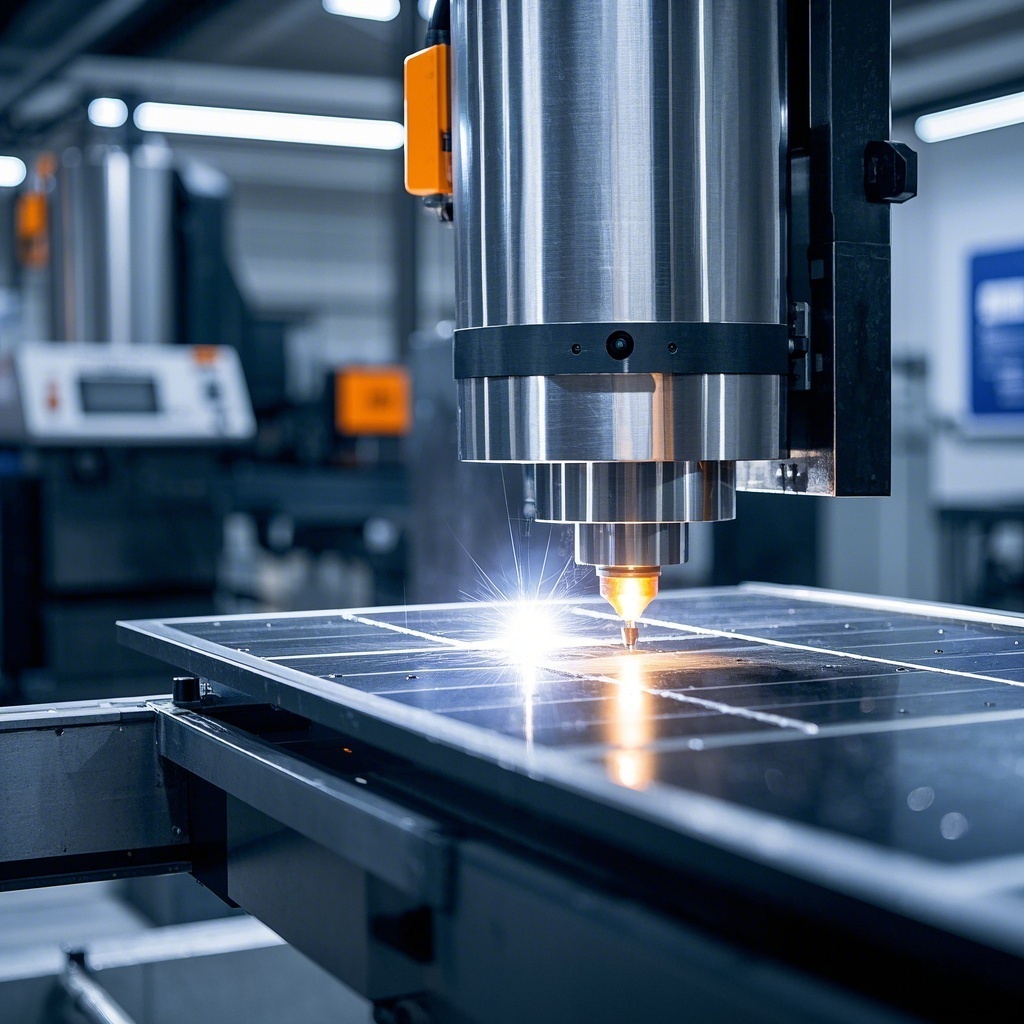
Understanding tool geometry is critical for successful CNC machining. Cutting tools possess a cylindrical shape with limited cutting length, which influences internal corners and cavity designs. Designers should avoid sharp internal edges, opting instead for radius corners that accommodate the tool shape, thereby improving surface finish and reducing machining time. Typically, a vertical corner radius should be at least one-third of the cavity depth. Tool accessibility must also be considered to avoid complicated setups or special tooling that increase costs.
Thin walls reduce the rigidity of parts and increase vibrations during machining, leading to poor quality and dimensional inaccuracies. Recommended minimum wall thickness is 0.8mm for metals and 1.5mm for polymers, with a minimum height less than four times the minimum wall thickness to avoid tall features prone to vibration. Maintaining these parameters improves surface finish and overall part integrity.
Hole sizes should conform to standard drill bit dimensions for ease of machining. For high accuracy or smaller holes, reaming and boring processes can refine dimensions. As a rule, hole depth should not exceed four times the nominal diameter to avoid machining difficulties.
For turned parts, symmetry around the axial axis simplifies machining. When asymmetrical features are necessary, alternative operations or setups might be required. Steps, chamfers, and tapers are favored shapes for CNC turning due to ease of fabrication and consistency.
Applying Design for Manufacturability principles ensures that parts are designed with the manufacturing process in mind, minimizing production cost and time. This includes standardizing features, avoiding complex geometries that require multiple orientations, and using standard tolerances unless critical. DFM encourages designers to collaborate closely with CNC machinists to align design intents with practical machining capabilities.
Secure clamping of the raw material is imperative to avoid movement or vibration which would affect dimensional accuracy and tool life. Material must be aligned precisely with the machine axes using digital or manual zeroing methods to establish the work coordinate system (WCS). Using custom fixtures for complex or irregular parts enhances stability and repeatability.
Efficient toolpaths minimize non-cutting movements and optimize cutting directions, thereby reducing cycle times and improving tool life. Advanced CAM software allows for simulation and adjustment before actual machining, preventing errors through dry runs. Adaptive clearing strategies efficiently remove bulk material while finishing passes ensure surface quality.
Selecting appropriate cutting speed and feed rates based on tool material, part material, and operation type is key to avoiding tool breakage and achieving desired surface finish. Lubrication reduces heat generation, prevents tool wear, and facilitates chip evacuation, increasing overall process stability. CNC manufacturers often employ through-tool coolant or mist lubrication for precision and cleanliness.
Implementing tool wear monitoring systems helps maintain consistent quality and avoid scrap. Tools are tracked by surface finish, dimension consistency, and cutting forces. When thresholds are exceeded, automated tool changes or alerts are triggered. Predictive maintenance, guided by AI analytics, further extends tool life and prevents unexpected downtime.
Breaking complex parts into multiple machining stages—from roughing, semi-finishing, to finishing—optimizes tool engagement and part quality. Roughing removes bulk material quickly with sturdy tools, whereas finishing employs finer tools with higher precision feeds to meet tight tolerances and surface finishes.

Manufacturers leading the industry utilize 3-axis through 5-axis CNC machines to achieve complex geometries and higher precision. Five-axis machining is particularly useful for aerospace, medical, and turbine parts, allowing access to multiple faces without repositioning the part. This reduces setup times and enhances accuracy.
Intelligent CNC systems are increasingly integrating AI for real-time monitoring and adaptive control. Sensors track tool condition, vibration, temperature, and load, allowing dynamic adjustments during operation. AI-driven predictive maintenance predicts failures before they occur, ensuring maximum uptime.
Leading manufacturers use robotic automation for part loading/unloading, tool changes, and quality inspection. Automation reduces human error, increases throughput, and allows unattended operations for longer shifts or 24/7 production runs.
Efficient material handling systems reduce lead time and waste. Using bar feeders, conveyors, and automated storage systems streamline material flow. Inventory management integrated with CNC machines' production schedules ensures just-in-time manufacturing, minimizing stock and holding costs.
To achieve close to 100% first-pass yield, manufacturers perform real-time quality monitoring via sensors and probes, checking dimensions and surface finish during and immediately after machining operations. This allows early detection of deviations and immediate corrective actions.
High-precision CMM inspections verify critical dimensions post-production, ensuring parts conform strictly to design specifications and regulatory standards such as FDA or CE where applicable. Portable CMMs and optical scanners are also used for quick verification on the shop floor.
Data from inspections and sensors feed into SPC systems to monitor process stability over time, identifying trends and variances that might indicate emerging quality issues. This statistical approach aids in continuous process improvement and reduces scrap rates.
Comprehensive documentation of materials, process parameters, inspection results, and traceability codes supports quality assurance and aids in rapid problem identification and resolution. Traceability is particularly critical for industries like aerospace and medical devices where regulatory compliance is strict.
Minimizing raw material waste through optimized nesting and toolpath strategies is an environmental and cost imperative. Leading manufacturers often recycle metal chips and scrap, returning them to suppliers for reuse.
Modern CNC equipment incorporates energy-saving modes and regenerative drives. Efficient machine programming reduces cycle time, thus lowering energy consumption per part.
Adopting biodegradable or synthetic coolants and lubricants reduces environmental impact and improves workplace safety. Proper coolant management and recycling practices are standard in top-tier machining workshops.
As an OEM service provider, integrating these best practices boosts competitiveness in international markets. Speed, precision, and adaptability to diverse client requirements allow factories to support urgent prototypes to high-volume precision production seamlessly. Cost reduction is achieved through optimized design for manufacturability, intelligent scheduling, and lean inventory management (JIT delivery).
OEM partners benefit from transparent communication, flexible order scaling, and adherence to global quality standards. Offering complementary services such as rapid prototyping, 3D printing, and precision sheet metal fabrication strengthens the value proposition.
Leading CNC machining manufacturers distinguish themselves by adhering to rigorous design standards, optimizing production parameters, embracing advanced technologies, and maintaining stringent quality control regimes. These best practices ensure efficient, cost-effective manufacturing of high-precision components across industries. Adopting these methodologies enables CNC machining providers to deliver exceptional value and reliability to global customers looking for OEM partnerships.
CNC machining is a manufacturing process where pre-programmed computer software controls machining tools to cut and shape materials. It offers precision, repeatability, and versatility essential for producing complex parts in various industries.
Design parts with tool geometry in mind: use rounded internal corners, avoid thin walls and tall features, adhere to standard hole sizes, and ensure proper tool access to all surfaces.
A wide range including metals (steel, aluminum, titanium), plastics (PEEK, nylon), and exotic alloys. Material choice depends on application requirements and machining capabilities.
Through accurate material setup, optimized toolpaths, proper selection of feed/speed, real-time monitoring, and post-process inspections with CMM.
Multi-axis machining, AI-driven predictive maintenance, thermal stability control, and automation facilitate complex parts production with high precision and efficiency.
[1] https://www.makerverse.com/resources/cnc-machining-guides/best-practices-designing-for-cnc-milling/
[2] https://firstmold.com/zh/cnc-machining-service/
[3] https://www.3erp.com/blog/cnc-machining-beginners/
[4] https://www.rapiddirect.com/zh-CN/landing-page/cnc-machining-services/
[5] https://waykenrm.com/blogs/design-for-cnc-machining/
[6] https://www.sohu.com/a/768139055_120267335
[7] https://geomiq.com/cnc-design-guide/
[8] https://cn.linkedin.com/company/zx-cncmachining
[9] https://academy.titansofcnc.com/files/Fundamentals_of_CNC_Machining.pdf
[10] https://www.1688.com/xunjia/-7v7q1vyw.html

