
Views: 222 Author: Amanda Publish Time: 2025-10-31 Origin: Site


Content Menu
● Laying the Foundation: Project Needs and Initial Documentation
>> Clearly Define Your Project's Core Needs
>> Material Selection Aligned to End Use
>> Tolerances and Surface Finish: Detail for Manufacturability
>> Technical Drawings: The Blueprint for Success
>> Special Operations and Compliance
>> Project Scheduling and Volumes
>> Safeguarding Intellectual Property
● Project Lifecycle: Stages and Communication Touchpoints
>> Initiating Contact and Assessing Manufacturer Fit
>> Aligning on Production Plans
>> Managing Production: Real-Time Dialogue
>> Final Delivery and Project Closure
● Avoiding Common Pitfalls in CNC Milling Communication
>> Ineffective Change Management
>> Unclear Roles and Contact Points
>> Delayed Escalation of Issues
● Advanced Insights: Structuring Communication for CNC Milling Services
>> Implement Standardized Templates
>> Emphasize Early Technical Alignment
>> Coordinate with FAI (First Article Inspection)
>> Leverage Digital Project Management
>> Schedule Regular Status Updates
>> Foster a Continuous Improvement Mindset
● FAQs
>> 1. How detailed should technical drawings be?
>> 2. What is the best way to manage drawing revisions?
>> 3. What digital tools are most helpful in CNC Milling workflow communication?
>> 4. How do I ensure my project requirements are understood by an overseas supplier?
>> 5. Why is a First Article Inspection (FAI) important?
Effective communication is the cornerstone of any successful CNC Milling Services project. With increased complexity in part design, multi-disciplinary teams, and global supply chains, the need for clarity and structure has never been greater. Whether your organization is an OEM, wholesaler, or production manager sourcing CNC parts, understanding and deploying best communication strategies ensures greater precision, cost-effectiveness, and partnership value from your manufacturing supplier. In the world of rapid prototyping and custom manufacturing, miscommunication is often the root cause of costly delays and errors.[11][12][13]

CNC (Computer Numerical Control) Milling is a sophisticated manufacturing process where rotary cutting tools, guided by computer programming, accurately shape materials into custom components. CNC Milling Services combine advanced hardware, software, and skilled machinists to deliver high-precision, repeatable results for prototyping, batch production, and mass manufacturing. This process is essential for industries such as automotive, aerospace, electronics, communications, and consumer products, each requiring tailored, high-quality, and often complex components.[1][14][15]
Every successful CNC Milling Services engagement begins with a thorough assessment of project objectives. Distinguish between critical-to-function features, aesthetic requirements, and non-negotiable timelines. Early in the process, preparing a project brief helps both client and supplier align on purpose, performance targets, environmental conditions, and compliance needs.[16][17][1]
Material choice is central to CNC milling success. Factors like strength, machinability, corrosion resistance, and cost should guide your selection. For example, aluminum may suit lightweight, corrosion-resistant components, while hardened steels serve well in wear-resistant applications. Always specify grade, required certifications, or post-treatment instructions. Clarity in this area eases supplier sourcing, ensures material compatibility, and saves time.[18][1]
While CNC milling machines can achieve impressive tolerances, tighter tolerance requirements escalate both complexity and cost unnecessarily. Work closely with your CNC Milling Services provider to develop a mutual understanding of what is essential for performance versus what might be relaxed. Indicate not only dimensional tolerances, but also requirements for orthogonality, concentricity, parallelism, and more when relevant. Do not neglect to specify critical surface finish characteristics—such as Ra values or the need for anodizing, polishing, or coating—supported by benchmark descriptions or reference samples.[19][1][11]
Robust technical documentation is the language of manufacturing. Supply well-dimensioned 2D drawings, CAD files (in recognized formats like STEP, DXF, or IGES), and clear annotation of critical features. Use layer separation or color coding for different tolerances, and always include Geometric Dimensioning and Tolerancing (GD&T) where necessary. If there are industry-standard references (such as thread types or fits), state them explicitly to avoid ambiguity.[1][16]
Many CNC-milled components require additional processes: heat treatment, surface coating, or special packaging must all be described in advance. Compliance with standards (ISO, ASTM, RoHS, REACH) should be identified in the documentation phase, not as an afterthought. Confirm which party is responsible for certifications and inspection reporting, and establish traceability expectations.[20][1]
Project plans should detail key milestones: prototype approval, pre-production run, and full-scale production. Estimate annual usage rates and anticipated reorder points as far as practical, so your CNC Milling Services partner can plan tooling investment and machine scheduling accurately.[12][20]
For clients sharing proprietary data, set up Non-Disclosure Agreements and define procedures for design file security, restricted shop access, and confidential shipment preparation.[16]
- Prepare a summary brief emphasizing essential features, annual usage, and desired delivery window.[20][16]
- Request information about your prospective CNC Milling Services supplier's case studies in similar materials, part tolerances, or volumes.
- Clarify which digital collaboration tools will be used for data exchange and ensure mutual compatibility.
- Exchange technical drawings and 3D files for initial feasibility review.
- Request DFM (Design for Manufacturability) input—manufacturers may suggest more economical design tweaks or flag unmachinable features.
- Adjust your requirements as needed based on expert recommendations to achieve the best balance between cost, quality, and lead time.[19][1]
- Work together to set a mutually understood production timeline, including prototype, FAI (First Article Inspection), and full production release.
- Confirm resource allocations with your supplier (machine tools, operator capacity, raw materials).
- Clearly document every revision to specifications, and establish a protocol for change management to prevent errors from “version creep”.[3]
- Request periodic updates featuring machine simulation images, in-process checkpoint media, and annotated machine operator logs.
- Schedule regular video conferences or digital review meetings at milestone stages.
- Use shared cloud folders or project management platforms for instant access to inspection data, test certificates, and shipping documentation. Such systems reduce email confusion and ensure all stakeholders stay up-to-date.[3]
- Conduct a virtual or on-site review of the completed parts via video call or detailed photo documentation before shipment.
- Make sure inspection reports, certificates, and compliance documentation are complete and clear.
- Debrief the project with your supplier to discuss lessons learned and provide mutual feedback for future improvements.
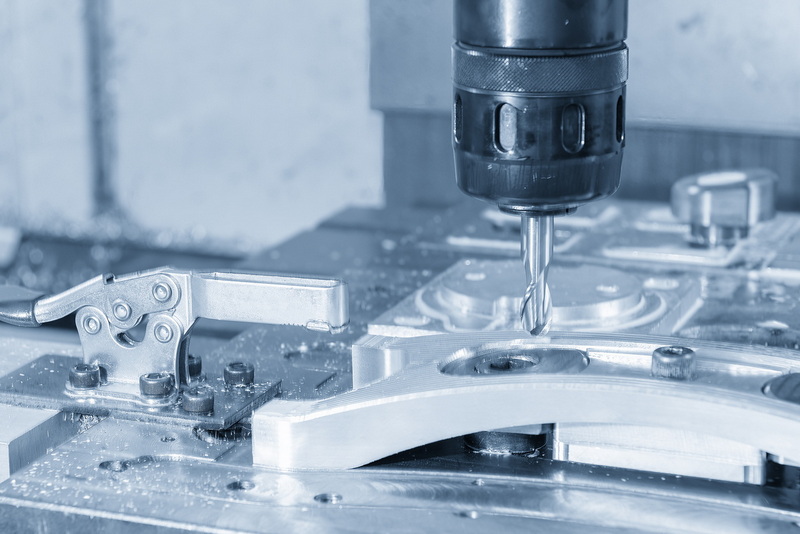
Supplying incomplete 2D/3D drawings or failing to annotate critical surface finish requirements is a frequent—and costly—error. Such ambiguities can introduce misinterpretation, require unnecessary clarification cycles, or, worst case, result in nonconforming parts and wasted resources.
If drawing revisions or order changes are issued informally, old versions can be mistakenly referenced. Always use version-controlled documentation and require formal confirmation of receipt for each update.[3]
Ambiguity in whom to contact for project-specific questions can lead to confusion and delays. Define a single point of contact (SPOC) on each side to centralize communication and decision-making accountability.[3]
Unanticipated challenges may arise—such as material shortages, tool wear, or inspection discrepancies. Fast, honest communication about potential delays or risks allows for collaborative adjustments, preserving both the delivery schedule and working relationship.
Adopt company-approved drawing templates, revision tracking protocols, and file naming conventions for clarity. Each revision should trigger a fresh signoff cycle and be kept in a dedicated, version-controlled shared directory.[3]
Host virtual or in-person “drawing clarification” meetings prior to launch to review all project documentation, flag manufacturability concerns, and achieve consensus on feature interpretation.
Use FAI as a mutual reference point: detail critical dimensions and pass/fail criteria, and agree on inspection methodology. Cross-verification prevents surprises after production is underway.
Modern CNC Milling Services providers may offer collaborative digital dashboards: here, teams can share drawings, inspection records, and approvals in real time, track progress, and troubleshoot issues before they escalate.
For large or prolonged orders, agree to weekly or biweekly progress meetings. Use structured agendas covering production status, inspection findings, pending change requests, and shipment timing. Summarize action points so nothing is missed.
Document all process feedback from previous production cycles—such as toolpath optimizations, unexpected tolerance stack-ups, or packaging improvements—and apply these learnings to each new order.
Consider a technology client needing intricate communication device brackets with multifaceted geometries and critical thread requirements. By using the above best practices, the client:
- Provided fully annotated CAD and dimensional files.
- Worked collaboratively through several DFM feedback iterations, improving features for both machinability and assembled product reliability.
- Established a joint FAI process, including documentation of all critical-to-function features and acceptance criteria.
- Maintained project schedules with cloud-based milestone tracking and weekly virtual meetings to resolve minor design details promptly.
- Closed each phase with written acceptance and feedback for continuous process refinement.
This systematic communication reduced manufacturing delays, improved part conformance, and built a foundation for partnership trust.
In today's precision-driven marketplace, the value of clear, structured, and proactive communication throughout the CNC Milling Services workflow cannot be overstated. By starting with rigorous documentation, aligning every technical and timeline detail, utilizing digital tools, and maintaining open, accountable dialogue, organizations can consistently achieve superior results, minimize risk, and establish lasting, mutually beneficial relationships with their manufacturing partners. Treating communication as an integral process, and not an afterthought, is the invisible factor that transforms paper precision into real-world excellence.[11][1][19][20][3]
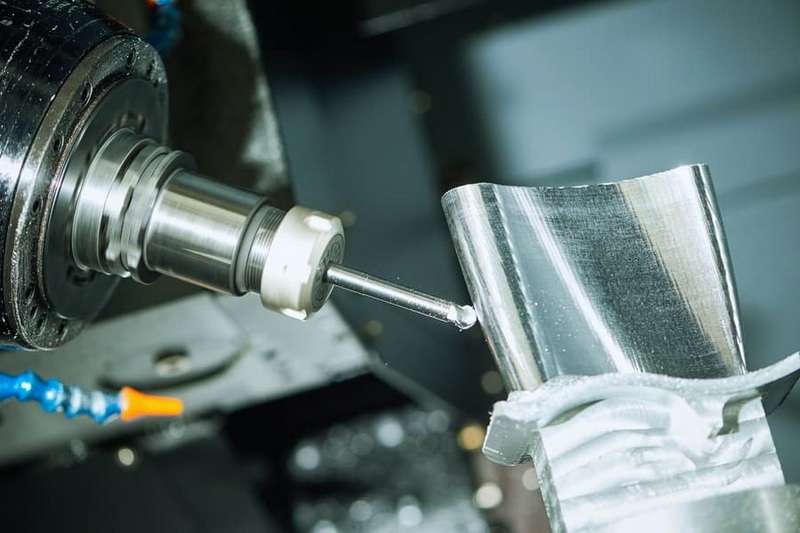
Technical drawings should indicate all critical dimensions, tolerances, thread specs, materials, and finishing instructions, leaving no ambiguity for suppliers. Clarity here prevents misinterpretation and costly errors across CNC Milling Services projects.[1][16]
Use version-controlled documentation, communicate all revisions in writing through a centralized channel, and require formal acknowledgment from both sides before changes are implemented.[3]
Cloud-based project management dashboards, collaborative drawing repositories, and online meeting tools streamline information sharing and status monitoring, making communication more transparent and efficient for CNC Milling Services.[1][3]
Deploy detailed, standardized documentation, use shared terminology, and hold regular clarification meetings. Assigning a single point of contact helps eliminate miscommunication in cross-border projects.[16][3]
FAI serves as a mutual benchmark for workmanship, compliance, and inspection methodology. It builds trust, aligns on acceptance criteria, and helps catch issues before full-scale production commences.[3]
[1](https://www.makerverse.com/resources/cnc-machining-guides/best-practices-designing-for-cnc-milling/)
[2](https://www.linkedin.com/advice/0/how-can-cnc-project-management-improve-collaboration-2rcze)
[3](https://aluphant.com/supplier-communication-and-project-coordination-best-practices/)
[4](https://www.ardelengineering.com/blog/importance-of-cnc-machining-in-the-communications-industry)
[5](https://metrosteelusa.com/best-practices-steel-fabrication/)
[6](https://precisioncncmachining.com/project-management-the-precision-manufacturing-advantage/)
[7](https://www.ddprototype.com/cnc-machining-in-communication-industry/)
[8](https://geomiq.com/cnc-design-guide/)
[9](https://www.ardelengineering.com/communications)
[10](https://sybridge.com/speed-cnc-machining/)
[11](https://steampunkfab.com/tips-for-getting-the-best-quality-from-cnc-machining-services/)
[12](https://www.gs-proto.com/blog/cnc-milling-guide/)
[13](https://www.cnchonscn.com/a-customer-communication-skills-for-cnc-machine-tool-processing-services.html)
[14](https://www.makerverse.com/resources/cnc-machining-guides/cnc-milling-everything-you-need-to-know/)
[15](https://geomiq.com/blog/cnc-milling-guide/)
[16](https://www.accelmachineshopdenver.com/blog/guide-to-machining-and-working-with-a-cnc-machine-shop)
[17](https://mdaltd.ca/importance-of-proper-planning-strategy-before-starting-your-machining-project/)
[18](https://www.americanmicroinc.com/resources/cnc-machining-material-guide/)
[19](https://www.blueringmachining.com/tips-optimizing-cnc-machining-processes/)
[20](https://mfg-solution.com/cnc-precision-machining-automotive-case-study/)

