
Views: 222 Author: Amanda Publish Time: 2026-01-11 Origin: Site


Content Menu
CNC Machining has become the backbone of modern manufacturing because it combines digital precision with repeatable, high‑volume production across metals and plastics. For overseas brands, wholesalers, and producers, partnering with a Chinese CNC Machining OEM factory offers an integrated path from rapid prototyping to stable mass production and long‑term supply.[1]
In a typical CNC precision machining line, three stations divide the workflow into logical steps: material preparation and roughing, precision finishing, and inspection plus packaging. Each station can be automated with multi‑axis machining centers, turning lathes, sheet metal cells, and 3D printing units to meet different OEM project requirements while keeping CNC Machining at the core.[2]
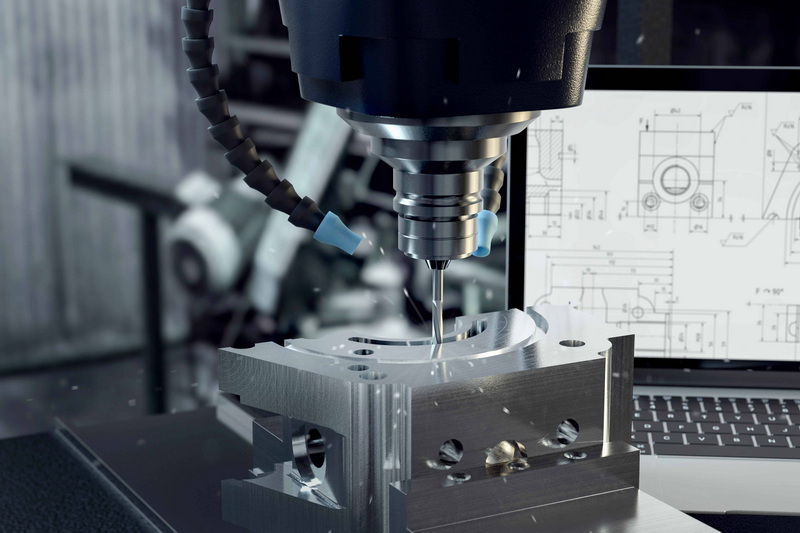
A three‑station CNC Machining line balances throughput, quality, and flexibility for both prototype and production programs. By separating roughing, finishing, and quality control, the production line reduces bottlenecks and simplifies process control for high‑mix, low‑volume as well as long‑running OEM orders.[2]
- Station 1 focuses on material loading, fixturing, and heavy stock removal on CNC milling machines and CNC lathes.
- Station 2 refines dimensions and surface finish on high‑precision CNC machining centers with tight tolerances.
- Station 3 handles measurement, assembly, marking, and packing for export to overseas customers.
Throughout all three stations, CNC Machining is coordinated by digital CAD/CAM data so engineering changes for rapid prototyping or design optimization can be implemented quickly without changing the entire line structure. This digital backbone also makes it easier to share process information and quality results with global OEM partners.[3]
The first station in the CNC Machining production line is dedicated to transforming raw material into a near‑net‑shape component ready for fine finishing. This is where bar stock, billets, plates, or castings are cut to size, clamped into fixtures, and processed on multi‑axis CNC milling machines or CNC turning centers.[2]
Key roles of Station 1 in CNC Machining include:
- Cutting long bars or sheets into blanks suitable for CNC machining centers and lathes.
- Performing rough milling and turning to remove the majority of material, leaving a small allowance for finishing.
- Drilling pilot holes, rough pockets, and basic features needed for later precision CNC operations.
This station often relies on high‑power spindles, aggressive cutting parameters, and automatic tool changers to keep cycle times low and maximize material removal rate. In an OEM context, especially in a Chinese factory serving overseas brands, Station 1 may be highly automated with bar feeders, pallet changers, and robot loaders to ensure stable CNC Machining throughput around the clock.[2]
To keep roughing operations efficient and reliable, Station 1 uses standardized fixturing and carefully chosen cutting tools. Indexable milling cutters, roughing end mills, and high‑feed cutters are common choices in CNC Machining for this stage. Operators and engineers define safe but aggressive cutting parameters aimed at maximizing cubic centimeters of material removed per minute while protecting the machine.
Coolant delivery and chip evacuation strategies also play a major role at this station. If chips are not cleared efficiently, they can damage surfaces, cause tool breakage, and destabilize the CNC Machining process. Centralized coolant systems, chip conveyors, and even mist collection help keep the working area clean and create a stable foundation for the precision steps that follow.
The second station is where CNC Machining delivers its highest value: tight tolerances, complex geometries, and fine surface finishes. At this point, parts already roughed at Station 1 are transferred—often automatically—to vertical or horizontal CNC machining centers, 5‑axis machines, or high‑precision CNC lathes for finishing operations.[4]
Key functions of Station 2 in CNC Machining lines include:
- Finishing cuts on critical faces, bores, and threads to meet dimensional tolerances, often in the range of ±0.01 mm or better.
- Multi‑axis contouring and 3D surface machining for housings, brackets, molds, and complex OEM components.
- Deburring, chamfering, and applying texturing or polishing strategies for better assembly and appearance.
Because it runs the most precise CNC Machining operations, Station 2 depends heavily on optimized CAM programs, stable tooling, and thermal control of machines. Modern factories integrate in‑machine probing and tool measurement so that offsets can be updated automatically, reducing human error and ensuring consistent quality over long runs.[4]
Multi‑axis CNC Machining is especially important at Station 2 for parts that require undercuts, compound angles, and complex 3D surfaces. With 4‑axis and 5‑axis machining centers, the workpiece can be oriented so multiple faces are accessible in a single setup. This reduces repositioning, shortens lead time, and improves accuracy by minimizing cumulative fixture errors.
For OEM customers in industries such as aerospace, robotics, and medical devices, multi‑axis CNC Machining enables the production of sophisticated components that would be difficult or impossible to manufacture with conventional methods. Precise toolpath strategies, such as adaptive clearing and high‑speed finishing, help maintain both dimensional accuracy and surface integrity while optimizing cycle time.
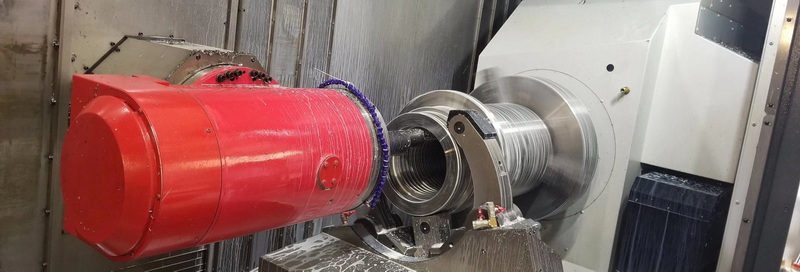
The third station closes the loop of the CNC Machining production line by validating quality and preparing parts for shipment. For OEM customers, this is where documentation, dimensional reports, and packaging standards come together to support cross‑border supply chains and long‑term product reliability.[2]
Core activities at Station 3 in CNC Machining workflows include:
- Inline or offline dimensional checks using CMMs, laser measurement, gauges, and visual inspection.
- Partial or full assembly of machined components, often combined with sheet metal and plastic parts.
- Marking parts with codes or labels and packing them in export‑ready cartons for overseas shipment.
In advanced CNC Machining lines, inspection data feeds back to earlier stations, allowing automatic adjustments to cutting parameters if trends show drift from target dimensions. This closed‑loop approach increases yield and reliability for overseas brands relying on a Chinese OEM partner for rapid prototyping and batch production.[2]
For international OEM programs, traceability is essential. At Station 3, factories maintain lot records, measurement results, and process documentation that prove each batch of CNC‑machined parts meets specification. Serial numbers, barcodes, or QR codes may be applied to each part or package, linking physical products to digital histories.
This level of documentation is especially valuable in tightly regulated sectors like automotive or medical devices, where CNC Machining quality directly impacts safety and performance. With clear traceability, OEM customers can manage field data, track revisions, and coordinate future design changes with confidence.
For foreign brands and wholesalers, a three‑station CNC Machining line in China can handle everything from one‑off prototype brackets to repeat batches of precision components. When rapid prototyping is required, CNC Machining combines with 3D printing, sheet metal fabrication, and mold manufacturing to build functional samples in a single integrated workflow.[1]
In production, the same CNC Machining line can be scaled by adding parallel machines to each station, enabling higher volumes without sacrificing process logic. Because the structure remains consistent—roughing, finishing, inspection—engineering teams overseas can reuse process knowledge across multiple projects and product families. This makes it easier to transfer successful process setups from prototype phases into long‑term production.[2]
Factories like Shangchen in China exemplify how CNC Machining can sit at the center of a broader rapid manufacturing ecosystem. Such factories provide rapid prototyping, CNC machining, precision batch production, lathe turning, sheet metal fabrication, 3D printing, and mold manufacturing for overseas brands and OEM producers.[1]
For overseas clients, this integrated model means:
- A single partner can deliver CNC Machining prototypes, bridge quantities, and long‑term production runs.
- CAD models can flow seamlessly from rapid prototyping to CNC Machining and then into tooling and molding.
- Global OEM projects benefit from shorter lead times and better coordination across multiple processes and materials.
Within this environment, the three CNC Machining stations integrate with surface finishing, coating, and final assembly lines to create an end‑to‑end OEM solution that reduces risk and simplifies supplier management.
Modern OEM manufacturing rarely relies on CNC Machining alone; instead, it blends machining with 3D printing, sheet metal fabrication, and mold production to support different stages of a product's lifecycle. For example, a new product housing might be additively manufactured for early design reviews, then transitioned to CNC Machining for functional testing, and finally to injection molding for mass production.[1]
Integrated factories commonly provide:
- CNC Machining of metals and plastics for structural parts and precision interfaces.
- Sheet metal fabrication for enclosures, brackets, and panels.
- 3D printing for complex shapes and rapid iteration on early design concepts.
- Mold manufacturing to support injection molding once designs stabilize.
By keeping these services under one roof, the factory can reuse fixtures, coordinate datum strategies, and share CAD data across processes. The three‑station CNC Machining line becomes a central hub that receives semi‑finished parts from casting or additive processes and delivers precision components ready for assembly and shipment.
A structured three‑station CNC Machining line offers several strategic benefits for overseas OEM partners. It improves traceability, stabilizes quality, and allows flexible scaling from prototype quantities to large batch production.[2]
Key benefits include:
- Process transparency: Clear separation between roughing, finishing, and inspection makes CNC Machining workflows easier to document and audit.
- Faster development cycles: Rapid prototyping and CNC Machining share the same digital backbone, allowing quick iterations using similar setups and programs.
- Stable quality: Feedback from Station 3 helps tune parameters at Stations 1 and 2 before small deviations become defects.
- Flexible capacity: Additional CNC machining centers or lathes can be added to specific stations to match demand.
- Cost efficiency: Concentrating heavy cuts in Station 1 and precision work in Station 2 optimizes machine utilization and reduces per‑part CNC Machining costs.
For buyers seeking long‑term CNC Machining partners in China, a clearly defined three‑station layout signals engineering maturity and readiness for complex, multi‑year OEM programs across diverse industries.
From a content marketing and blogging perspective, CNC Machining topics become much more engaging when explanations are structured around real production flows. A three‑station production line provides a simple narrative: raw materials enter, roughing shapes them, finishing refines them, and inspection validates them before shipment.
Writers can add value by:
- Breaking CNC Machining concepts into station‑based sections that match how factories actually work.
- Using process examples such as machining an automotive bracket or a medical enclosure across the three stations.
- Explaining how digital data, such as CAD models and inspection reports, moves alongside physical parts.
By linking CNC Machining operations to business outcomes—faster launches, improved reliability, and lower total cost—content can speak both to engineers and to purchasing or management teams.
A production line at CNC precision machining with three stations—roughing, finishing, and inspection/logistics—creates a robust framework for reliable OEM manufacturing and rapid prototyping. When this framework is combined with 3D printing, sheet metal fabrication, and mold making inside an integrated Chinese factory, overseas brands gain a single, coordinated route from early design ideas to high‑quality CNC‑machined products ready for global markets.[1]
By partnering with a capable CNC Machining supplier that organizes production into these three stations, OEM customers can shorten lead times, improve consistency, and scale production with confidence. In such an environment, the three‑station CNC Machining line is not just a technical layout; it is a strategic tool for building competitive products across automotive, aerospace, medical, industrial, and consumer sectors.

A three‑station CNC Machining production line is a structured workflow that divides operations into material preparation and roughing, precision finishing, and quality control plus logistics. This structure makes it easier to manage throughput, maintain consistent quality, and scale capacity for OEM projects in different industries.
OEM brands often choose Chinese factories for CNC Machining because these suppliers combine competitive pricing with advanced equipment, experienced engineering teams, and integrated services such as rapid prototyping and mold manufacturing. This combination lets overseas customers move from design to CNC‑machined production quickly while managing costs.
CNC Machining supports rapid prototyping by turning CAD models into accurate metal or plastic parts that can be tested for fit, function, and performance in real applications. Because CNC Machining is fully digital, design changes can be implemented quickly simply by updating CAD/CAM data rather than redesigning the entire manufacturing process.
CNC Machining lines can process a wide range of materials, including aluminum, brass, copper, stainless steel, titanium, and many engineering plastics. The final choice depends on application requirements such as mechanical strength, corrosion resistance, weight, regulatory constraints, and cost targets for the OEM product.
Quality in CNC Machining OEM projects is controlled through a mix of inline measurement, CMM inspection, gauge checks, and documented procedures that define tolerances and inspection frequencies. Data collected at the inspection station is analyzed and used to adjust machining parameters upstream, keeping dimensional accuracy and surface quality stable over long production runs.
[1](https://www.sc-rapidmanufacturing.com/what-is-rapid-prototyping-in-software-development.html)
[2](https://reliablecncmachining.com/construction-of-an-automated-production-line-for-cnc-machining-services/)
[3](https://www.china2west.com/rapid-prototyping-services-china/)
[4](https://ltprecision.com/what-we-do/machining/)

