
Views: 222 Author: Amanda Publish Time: 2026-01-11 Origin: Site


Content Menu
● Understanding CNC Turn-mill Machining Centers
● Gear Hobbing in CNC Machining
● Architecture of a Precision Turn-mill with Hobbing
● Expanded Process Flow: From Bar Stock to Finished Gear Component
● Cutting Strategies and Tooling for CNC Machining with Hobbing
● Advantages for OEM CNC Machining Customers
● Gear Hobbing on Turning Centers vs Dedicated Hobbers
● Surface Quality and Precision in CNC Machining
● Efficiency and Automation in Turn-mill CNC Machining
● Role in Prototyping, Small Batches, and Mass Production
● Design for Manufacturability in CNC Machining with Hobbing
● Quality Assurance and Inspection of CNC Machined Gears
● FAQ
>> 1. What is a CNC turn-mill machining center?
>> 2. How does gear hobbing work in CNC Machining?
>> 3. Why combine turn-mill and gear hobbing on one machine?
>> 4. What types of parts benefit most from this CNC Machining approach?
>> 5. Is this suitable for both prototyping and mass production?
A precision CNC turn-mill machining center with gear hobbing capability combines turning, milling, drilling, and high-accuracy gear cutting in a single CNC Machining setup, dramatically improving efficiency and part quality. This type of integrated CNC Machining solution is ideal for OEM customers who need complex shafts, gear components, and precision housings produced consistently at scale.[1][2]

A CNC turn-mill machining center is a hybrid machine that can perform both turning and milling operations in one clamping using advanced CNC controls. By integrating multiple cutting processes in a single CNC Machining workflow, it reduces setups, improves positional accuracy, and shortens overall cycle time.[3][1]
Key characteristics of a turn-mill CNC Machining center include:[1]
- Multi-axis control (typically X, Z, and often Y plus C-axis spindle indexing)
- Live tooling for milling, drilling, and tapping on a turning platform
- Capability to complete most CNC Machining operations in a single setup
For overseas OEM clients, this integration means fewer fixtures, lower handling costs, and more stable dimensional consistency across batches in demanding CNC Machining projects.[2]
Gear hobbing is a specialized CNC Machining process used to cut gear teeth, splines, and sprockets using a rotating cutting tool called a hob. During hobbing, both the hob and the gear blank rotate in a synchronized relationship so the teeth are progressively generated along the cylindrical surface.[4][5]
In a modern CNC Machining environment, gear hobbing is valued because:[4]
- It is fast and efficient for medium- and high-volume gear production
- It delivers good tooth profile accuracy and surface quality for functional gears
- It is highly repeatable when controlled by a precise CNC synchronization system
On a CNC turn-mill machining center, gear hobbing can be performed directly after turning the gear blank, allowing a complete gear shaft or gear-integrated part to be finished in one continuous CNC Machining cycle.[6]
A precision CNC turn-mill machining center with gear hobbing capability typically combines multiple spindles and axes into a single rigid structure to support complex CNC Machining tasks. Research literature describes advanced machines with three spindles and five controlled axes designed specifically to integrate turning, milling, and hobbing functions for high-precision parts.[7]
Core elements of this type of CNC Machining center include:[8][7]
- Main spindle for turning outer diameters, faces, and internal features
- Sub-spindle for part transfer and simultaneous CNC Machining on the back side
- Live-tool spindle or milling head for contouring, drilling, and slotting
- Gear hobbing unit mounted as a driven tool with synchronized motion
Such machines rely on powerful CNC systems that can tightly synchronize spindle speeds and axis motions, which is critical for accurate gear generation, complex 3D surfacing, and precise multi-operation CNC Machining.[1]
A typical manufacturing sequence for a shaft with integrated gear teeth on a CNC turn-mill machining center follows a highly optimized CNC Machining workflow.[9]
A more detailed step-by-step process can be described as:[6][9]
1. Blank preparation and bar feeding
- Bar stock or pre-cut blanks are loaded using an automatic bar feeder or gantry loader.
- The CNC Machining program calls up the correct chuck jaws, collet, or fixture to grip the work securely.
2. Rough turning and facing
- The main spindle performs rough turning operations to remove excess material, establish reference diameters, and square faces.
- CNC Machining parameters such as feed rate, depth of cut, and spindle speed are optimized to balance tool life and productivity.
3. Semi-finish and finish turning
- Critical diameters such as bearing seats, seal surfaces, and locating shoulders are finished to tight tolerances.
- The CNC Machining cycle may include automatic tool nose compensation and in-process gauging for high-precision zones.[2]
4. Milling and drilling of axial and radial features
- Live tooling performs cross-holes, keyways, flats, and threaded holes without removing the part from the chuck.
- Complex 3D contours or pockets are machined using interpolated multi-axis CNC Machining paths.
5. Gear hobbing operation
- The hob cutter is loaded into a driven toolholder designed for gear hobbing on turning centers.[8]
- Spindle synchronization is activated so the rotational ratio between hob and workpiece corresponds to the required gear tooth count and module.[5]
6. In-process measurement and correction
- After hobbing, the machine may probe tooth flanks or reference surfaces using an on-machine measurement system.
- CNC Machining offsets can be updated automatically to correct minor deviations and maintain consistent quality in mass production.[2]
7. Deburring, chamfering, and edge finishing
- Deburring tools or brushes remove sharp edges on gear teeth, keyways, and cross holes.
- Chamfers are machined to improve assembly and reduce stress concentration, all within the same CNC Machining cycle.
8. Back-side machining on sub-spindle
- For more complex parts, the sub-spindle takes over and repeats turning, milling, and CNC Machining operations on the second end.
- This configuration ensures that concentricity and runout between both sides are tightly controlled.
By combining these operations, the machine delivers a fully finished gear component with tight runout, concentricity, and stable tooth form control, without transferring the part to a separate CNC Machining line or dedicated hobbing machine.[10]
Cutting strategies and tooling selection strongly influence productivity and surface quality in CNC Machining involving gear hobbing. A well-designed process balances tool life, cutting forces, and thermal stability.[4]
Important considerations for CNC Machining engineers include:[5][4]
- Hob geometry and coating
- Module, pressure angle, helix angle, and the number of gashes are chosen to match design requirements.
- Modern coatings improve wear resistance and allow higher cutting speeds in long CNC Machining runs.
- Cutting parameters
- Feed per revolution and hob speed determine chip thickness and surface finish.
- In CNC Machining of hard materials, conservative feeds and advanced coolants reduce wear and prevent thermal damage.
- Machine rigidity and fixturing
- A rigid spindle and stable workholding system minimize vibration, which is crucial for fine pitch gear CNC Machining.
- Short overhangs and optimized support improve tooth profile accuracy.
By carefully tuning these parameters in the CNC Machining program, manufacturers can achieve consistent gear quality while keeping cycle times competitive for international OEM customers.[1]
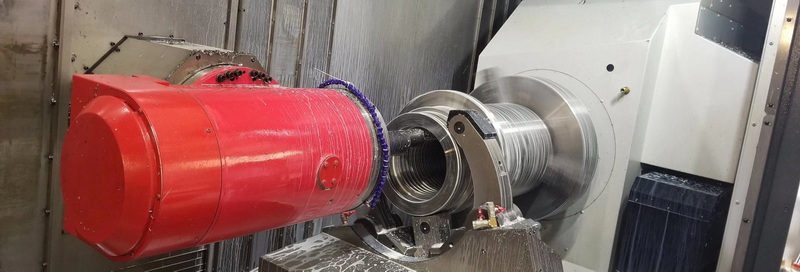
For overseas brand owners, wholesalers, and manufacturers, a precision CNC turn-mill machining center with gear hobbing capability offers significant business and engineering advantages within CNC Machining projects.[2][1]
Major benefits include:[3][1]
- Reduced clamping times, which decreases accumulated positioning errors and improves dimensional accuracy.
- Shorter lead times, because turning, milling, drilling, and gear hobbing occur in a single CNC Machining cell.
- Lower tooling and fixture costs, as fewer dedicated machines and setups are required.
- Better consistency in mass production, especially for precision shafts, gear components, and complex housings.
In high-volume CNC Machining runs, these advantages translate into more stable quality, lower per-piece costs, and smoother supply chains for OEM customers relying on outsourced manufacturing partners.[2]
When evaluating CNC Machining strategies, OEMs often compare gear hobbing on a turning center to using a dedicated gear hobbing machine. Integrated hobbing on a CNC turn-mill machining center can cover a broad range of gear requirements while eliminating intermediate handling.[10][6]
Key differences relevant to CNC Machining users include:[10][4]
- Integrated systems excel when gears are only one feature on a multi-functional shaft or housing.
- Dedicated hobbers remain ideal for extremely high-volume, gear-only production lines.
- A combined CNC Machining cell simplifies scheduling and inventory by consolidating multiple operations into one machine.[2]
For many OEM applications that require complex turned parts with integral gears, the integrated CNC Machining approach provides the best balance of flexibility, precision, and cost.[1]
The integration of turning, milling, and gear hobbing within one rigid machine frame is a strong advantage for high-precision CNC Machining. Modern turn-mill centers and multi-axis milling systems can achieve micron-level accuracy with carefully controlled tool paths and compensation strategies.[11][7]
Important precision-related factors in CNC Machining include:[7][11]
- High structural rigidity to suppress vibration and improve surface finish on critical diameters and gear flanks.
- Advanced CNC control algorithms that manage interpolation, spindle orientation, and synchronized rotation.
- In-process inspection or online measurement functions that support closed-loop correction during CNC Machining.[2]
For gear hobbing specifically, accurate synchronization between the hob and the workpiece spindle ensures proper tooth count, pitch, and involute form for functional gears produced in CNC Machining environments.[5]
Automation is increasingly integrated into CNC Machining centers, including turn-mill machines with gear hobbing capability. Features such as bar feeders, gantry loaders, and robotic arms allow continuous unmanned operation for extended periods.[11]
In CNC Machining production lines, typical automation benefits include:[1][2]
- Stable throughput with fewer operator interventions and predictable cycle times.
- Reduced labor cost per part and better utilization of high-value machines.
- Improved process consistency, especially in repetitive gear hobbing and multi-step CNC Machining runs.
For overseas OEM customers, a supplier combining automation with advanced CNC Machining capabilities can handle both rapid prototyping and precision mass production under tight delivery schedules.[2]
Turn-mill machining centers with gear hobbing capability are well suited to both rapid prototype development and high-volume CNC Machining. On the same equipment, engineers can validate new designs and then scale up to batch or mass production without redesigning the process flow.[1]
In a full-service CNC Machining factory that also offers 3D printing, sheet metal fabrication, and mold making, turn-mill and hobbing capabilities fill a crucial role for:[12][1]
- Functional prototypes that require real-material gear performance and accurate mating with other components.
- Pilot runs for new gear shafts, actuator components, and transmission parts.
- Long-term production contracts where CNC Machining quality and repeatability are critical to the brand's reputation.[2]
This continuity from initial CNC Machining prototype to stable mass production reduces risk, shortens design cycles, and helps OEM customers launch products more quickly in global markets.[2]
To fully leverage a turn-mill machining center with gear hobbing, engineers should consider design-for-manufacturability principles tailored to CNC Machining.[13]
Key design recommendations include:[13][4]
- Standardize modules, pressure angles, and gear widths where possible to simplify tooling.
- Align gear locations and bearing seats so they can be machined in a single clamping in CNC Machining cycles.
- Avoid unnecessary undercuts or extremely thin webs that compromise rigidity during gear hobbing.
- Specify realistic tolerances aligned with the capabilities of modern CNC Machining centers and inspection methods.
By adjusting designs to suit integrated CNC Machining and hobbing, OEMs can reduce overall cost while maintaining the required performance and durability of mechanical assemblies.[1]
High-quality gear production on a CNC turn-mill machining center depends on rigorous inspection and process control. Modern CNC Machining factories combine in-process monitoring with final inspection using specialized gear measurement tools.[10]
Typical quality assurance practices in CNC Machining for gear components include:[4][10]
- Measuring runout and concentricity of gear teeth relative to bearing seats and reference diameters.
- Checking lead, pitch, and profile using gear measuring instruments or coordinate measuring machines (CMMs).
- Recording CNC Machining data, tool life, and inspection results for traceability, especially for automotive, robotics, and aerospace customers.
Robust quality systems reassure overseas OEM clients that each shipment of CNC Machining parts meets specification, even across large-volume production campaigns.[2]
A precision CNC turn-mill machining center with gear hobbing capability offers a powerful, integrated solution for modern CNC Machining demands, combining turning, milling, drilling, and high-quality gear cutting in one platform. By reducing setups, improving synchronization, and enabling automation, this technology delivers better accuracy, shorter lead times, and lower total cost, making it especially attractive for overseas OEM customers seeking reliable CNC Machining partners. As markets demand more complex components with integrated gears and tight tolerances, the combination of turn-mill and hobbing in a single CNC Machining center will continue to be a key differentiator in global precision manufacturing.[6][7][10][1][2]
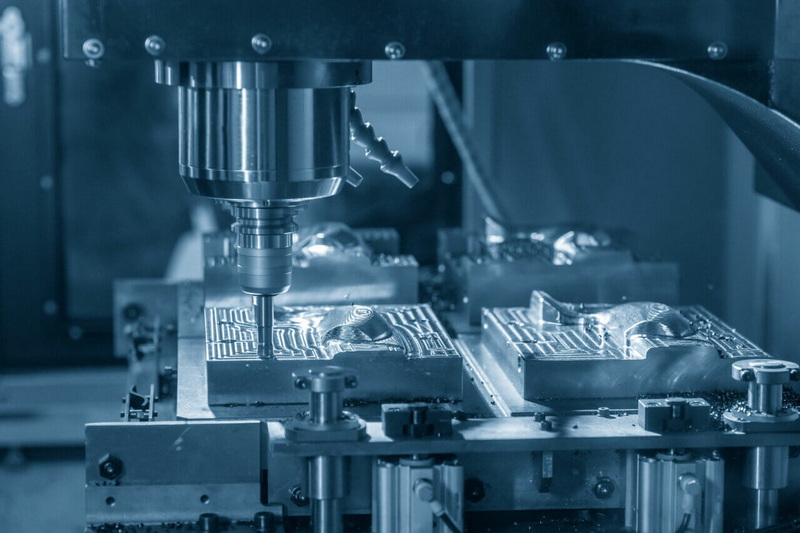
A CNC turn-mill machining center is a multi-function machine that performs turning and milling operations, and often drilling and tapping, within a single CNC Machining setup. It uses advanced CNC controls and live tooling to finish complex parts in one clamping, improving accuracy and efficiency in CNC Machining production.[1][2]
Gear hobbing in CNC Machining uses a rotating hob cutter and a rotating gear blank that move in a synchronized speed ratio to generate gear teeth progressively. The CNC coordinates spindle speeds and axis motion so that the hob gradually cuts the full tooth profile while maintaining correct pitch, tooth count, and geometry.[5][4]
Combining turn-mill and gear hobbing on one CNC Machining center eliminates intermediate setups and transfers between different machines. This integrated approach reduces positional errors, shortens cycle time, and lowers floor-space and equipment costs while enhancing consistency in CNC Machining mass production.[6][1]
Parts that combine turned shafts, bearing seats, and integral gears or splines gain the most from integrated CNC Machining with turn-mill and hobbing. Typical examples include transmission shafts, actuator components, precision motor drive parts, and custom gear-coupled connectors that require tight tolerances.[4][6]
Yes, turn-mill machining centers with gear hobbing capability are ideal for both rapid prototypes and long-term CNC Machining production. The same machine and process can validate early designs, then scale to high-volume runs with consistent accuracy and repeatability for demanding OEM applications.[1][2]
[1](https://www.acemicromatic.net/advantages-of-turn-mills/)
[2](https://www.camprocnc.com/en/news/industry/efficiency-of-cnc-turn-mill-in-precision-machining)
[3](https://www.toplevelcnc.com/turn-milling-advantages/)
[4](https://www.motorgearengineer.com/blog/gear-hobbing-introduction-working-advantages-applications/)
[5](https://toolbox.igus.com/9966/what-is-gear-hobbing)
[6](https://www.mmsonline.com/videos/hobbing-on-a-turning-center)
[7](https://www.sciencedirect.com/science/article/pii/S0141635914001524)
[8](https://www.cmz.com/en/applications-cnc-lathe-gear-hobbing/)
[9](https://www.pairgears.com/blog/The-Process-and-Benefits-of-Custom-Gear-Hobbing_b13414)
[10](https://www.wto-tools.com/Marketing/Newsletter/WTO/WTO_Abwaelzfraeseinheit/NEWSLETTER_07_2020_KV1_0_US.html)
[11](https://www.lsrpf.com/en/blog/gear-milling-vs-gear-hobbing-the-most-comprehensive-technical-and-economic-comparison)
[12](https://hppi.com/knowledge-base/cnc-machining/cnc-milling)
[13](https://www.komacut.com/blog/cnc-milling-vs-cnc-turning/)

