
Views: 222 Author: Amanda Publish Time: 2025-07-18 Origin: Site


Content Menu
● The Fundamentals of Rapid Prototyping
>> Why is Rapid Prototyping Critical in Aerospace?
● The Rapid Prototyping Process in Aerospace
>> Step 1: Conceptualization and CAD Modeling
>> Step 2: Material and Method Selection
>> Step 3: Prototype Fabrication
>> Step 4: Initial Testing and Evaluation
>> Step 5: Iteration and Refinement
>> Step 6: Advanced Validation
>> Step 7: Final Review and Production Transition
● Key Technologies in Aerospace Rapid Prototyping
>> 3D Printing (Additive Manufacturing)
>> Digital Simulation and Virtual Prototyping
● Benefits of Rapid Prototyping for Aerospace Parts
>> Accelerated Development Cycles
>> Customization and Flexibility
>> Environmental Sustainability
● Challenges and Solutions in Aerospace Rapid Prototyping
>> Strict Regulatory Standards
>> High Material and Equipment Costs
>> Complex Geometries and Tight Tolerances
>> Supply Chain and Lead Time Pressures
● Real-World Applications and Case Studies
>> Engine and Propulsion Systems
>> Cabin Interiors and Ergonomics
>> Unmanned Aerial Vehicles (UAVs) and Satellites
● Future Trends in Aerospace Rapid Prototyping
>> Automation and Artificial Intelligence
● FAQ
>> 1. What is rapid prototyping, and why is it important in aerospace?
>> 2. Which rapid prototyping technologies are most commonly used in aerospace?
>> 3. What are the main benefits of rapid prototyping for aerospace part development?
>> 4. What challenges does rapid prototyping face in the aerospace industry?
>> 5. How is rapid prototyping shaping the future of aerospace manufacturing?
The aerospace industry is synonymous with precision, innovation, and relentless pursuit of excellence. As the demand for lighter, stronger, and more complex components intensifies, rapid prototyping has emerged as a transformative force in aerospace part development. Leveraging advanced technologies such as 3D printing, CNC machining, and digital design, rapid prototyping accelerates the journey from concept to reality, enabling engineers and manufacturers to iterate, test, and refine components with unprecedented speed and accuracy.
This article explores the profound impact of rapid prototyping on aerospace part development, delving into its processes, benefits, challenges, applications, and future trends. Whether you are an OEM, a supplier, or an engineer, understanding the role of rapid prototyping is essential for staying competitive in the fast-evolving aerospace sector.
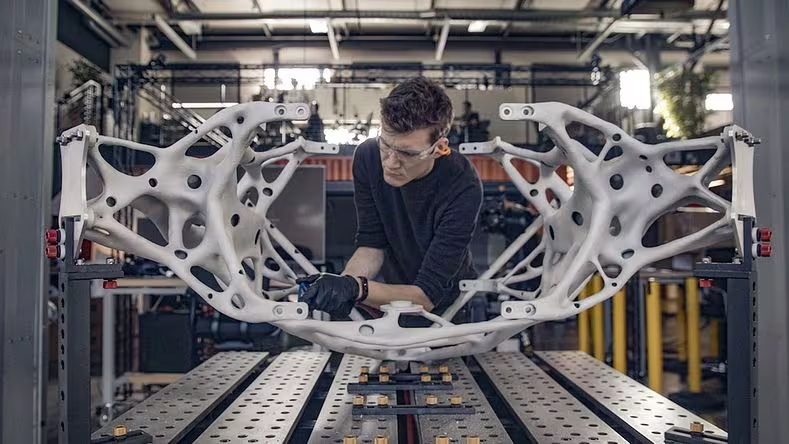
Rapid prototyping is a collection of advanced manufacturing techniques that enable the quick fabrication of physical models or assemblies from digital designs. Unlike traditional manufacturing, which often requires lengthy tooling and setup, rapid prototyping transforms computer-aided design (CAD) files into tangible parts in a matter of hours or days. This process supports both low-fidelity models for initial concept validation and high-fidelity prototypes that closely resemble final production parts.
Aerospace engineering demands components that withstand extreme conditions—high temperatures, intense pressure, and rigorous mechanical stress. Rapid prototyping empowers engineers to:
- Visualize and validate complex geometries
- Test material performance under simulated conditions
- Iterate designs rapidly to optimize function and manufacturability
- Reduce development cycles and costs
Every aerospace prototype begins with a detailed digital model. Engineers use sophisticated CAD software to design components, ensuring all functional and regulatory requirements are addressed from the outset. This digital foundation is critical for enabling rapid prototyping, as it allows seamless translation into manufacturing instructions.
Selecting the right material is crucial. Aerospace-grade metals such as titanium and aluminum, as well as high-performance polymers, are commonly used. The choice of rapid prototyping method—additive manufacturing (3D printing), subtractive manufacturing (CNC machining), or hybrid approaches—depends on the part's complexity, required precision, and intended use. Material properties such as strength-to-weight ratio, thermal resistance, and fatigue life are carefully considered to match aerospace standards.
The digital model is transformed into a physical prototype using the selected manufacturing technique. Additive methods build parts layer by layer, enabling complex internal structures and lightweight lattice designs that are difficult to achieve with traditional methods. Subtractive methods carve components from solid blocks of material, ensuring high precision and excellent surface finish. Hybrid manufacturing combines the strengths of both, allowing for rapid iteration without sacrificing quality.
Prototypes undergo rigorous testing to assess geometric accuracy, fit, and basic functionality. Early validation helps identify design flaws before significant resources are committed. Non-destructive testing methods such as ultrasound, X-ray inspection, and 3D scanning are often employed to verify internal features and dimensional accuracy.
Based on test results, engineers refine the design, often producing several prototype iterations. Rapid prototyping enables quick adjustments and re-testing, ensuring the final part meets all specifications. This iterative loop is vital in aerospace, where even minor design improvements can yield significant performance gains.
Comprehensive testing—including structural, thermal, and fatigue assessments—ensures the prototype can withstand the demanding aerospace environment. Environmental simulations replicate extreme temperatures, vibration, and pressure conditions to confirm durability and safety. This stage often involves collaboration between design engineers, material scientists, and quality assurance teams.
Once validated, the prototype serves as the blueprint for full-scale production, with all lessons learned incorporated into the final design. Detailed documentation and manufacturing instructions are prepared to facilitate smooth transition to mass production, whether through traditional manufacturing or advanced rapid manufacturing techniques.
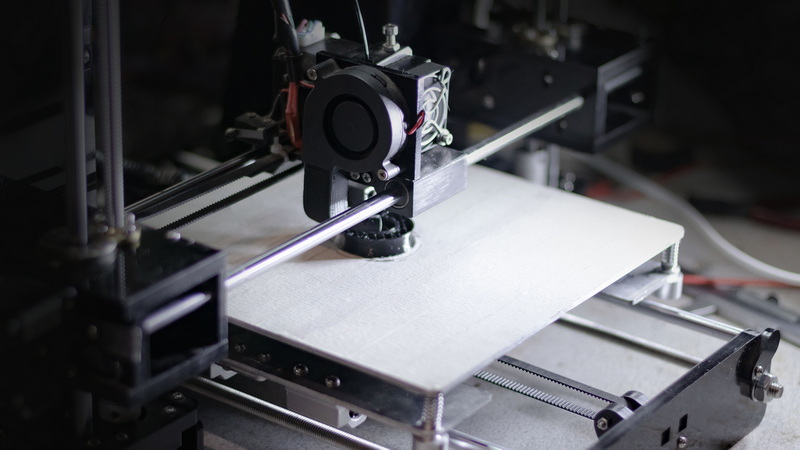
3D printing is revolutionizing aerospace manufacturing by enabling the creation of intricate, lightweight parts with minimal waste. Technologies such as Selective Laser Sintering (SLS), Direct Metal Laser Sintering (DMLS), Electron Beam Melting (EBM), and Fused Deposition Modeling (FDM) are widely used to produce everything from brackets to turbine blades. These methods allow for complex internal geometries, such as cooling channels within engine parts, that improve performance and reduce weight.
CNC (Computer Numerical Control) machining offers unmatched precision and repeatability, making it ideal for prototyping critical aerospace components. It supports a wide range of materials and can achieve micron-level tolerances, essential for flight-ready parts. CNC machining is often used for final finishing of parts initially produced by additive methods, ensuring tight tolerances and superior surface quality.
Combining additive and subtractive methods, hybrid manufacturing maximizes design freedom while ensuring the highest levels of accuracy and surface finish. This approach is particularly useful for aerospace parts requiring complex internal structures alongside precise external dimensions.
Advanced simulation tools allow engineers to test and optimize designs virtually, reducing the number of physical prototypes required and accelerating the development cycle. Computational fluid dynamics (CFD), finite element analysis (FEA), and thermal simulations help predict how prototypes will perform under real-world conditions, guiding design decisions before physical fabrication.

Rapid prototyping drastically shortens the time from concept to prototype, enabling aerospace companies to bring innovations to market faster and respond swiftly to changing requirements. This speed is critical in an industry where technological advancements and regulatory demands evolve rapidly.
By minimizing tooling, setup, and material waste, rapid prototyping reduces development costs. Iterative testing and refinement also prevent costly errors in later production stages. The ability to produce prototypes in-house or through specialized service providers further reduces expenses associated with outsourcing.
Engineers can explore complex geometries and innovative solutions that would be difficult or impossible to achieve with traditional manufacturing. This leads to lighter, stronger, and more efficient aerospace components. Features such as lattice structures and topology-optimized shapes improve strength-to-weight ratios, enhancing fuel efficiency and payload capacity.
Early and frequent testing ensures that only the best designs progress to production, resulting in higher-quality, more reliable parts. Rapid prototyping helps identify potential failure points and manufacturing challenges early, reducing the risk of recalls or in-service failures.
Rapid prototyping supports the creation of custom or one-off parts tailored to specific missions or platforms, reducing inventory and maximizing operational flexibility. This capability is increasingly important for specialized aerospace applications such as satellites, UAVs, and experimental aircraft.
By reducing material waste and enabling lightweight designs that improve fuel efficiency, rapid prototyping contributes to more sustainable aerospace manufacturing. Additionally, the ability to produce parts on demand minimizes overproduction and inventory storage.
Aerospace components must meet stringent safety and performance standards. Rapid prototyping processes are continually evolving to ensure compliance through advanced material testing and certification protocols. Collaborations with regulatory bodies and adherence to industry standards such as AS9100 ensure prototypes meet necessary qualifications.
Specialized materials and machinery can be expensive. Strategic planning and efficient resource allocation help manage costs, while ongoing technological advances are making rapid prototyping more accessible. Partnering with experienced rapid manufacturing service providers can optimize cost-effectiveness.
Producing intricate designs with tight tolerances requires cutting-edge equipment and skilled operators. Continuous training and investment in the latest technologies are essential. Advanced metrology tools and quality control processes ensure prototypes meet exact specifications.
Global supply chain disruptions can impact material availability and prototyping timelines. Building resilient supply chains and leveraging digital inventories help mitigate these risks. Localized manufacturing and additive techniques can reduce dependency on complex supply chains.
The need for multiple design iterations can strain resources. However, the long-term benefits—reduced risk, higher quality, and faster time-to-market—far outweigh the initial investment. Efficient project management and digital collaboration tools streamline iteration cycles.
Rapid prototyping is used to develop and test wing sections, fuselage reinforcements, and aerodynamic fairings, ensuring structural integrity and optimal performance. Lightweight lattice structures created through additive manufacturing reduce weight without compromising strength.
Prototypes of turbine blades, fuel nozzles, and other critical engine parts are produced to validate thermal behavior and mechanical strength under extreme conditions. Rapid prototyping enables testing of cooling channels and complex internal geometries that improve engine efficiency.
Seats, overhead bins, and control panels are prototyped to assess comfort, safety, and usability, enhancing passenger and crew experience. Customization for different aircraft models and configurations is facilitated by rapid prototyping.
Detailed housings for electronic systems are prototyped to ensure proper fit, heat dissipation, and durability. Rapid prototyping allows for quick iteration of enclosure designs to accommodate evolving electronic components.
Lightweight, specialized components for drones and satellites are rapidly prototyped to meet unique mission requirements. The ability to produce complex geometries and integrate multiple functions into single parts is a key advantage.
Exact replicas of assembly fixtures and training aids are produced to support ground crews and technicians in maintenance and repair operations. Rapid prototyping enables the creation of realistic models for hands-on training without risking actual aircraft components.
The development of new aerospace-grade alloys and high-performance polymers is expanding the possibilities for rapid prototyping, enabling even lighter and stronger components. Materials with enhanced thermal and fatigue resistance will open new frontiers in aerospace design.
AI-powered design and manufacturing tools are streamlining the prototyping process, optimizing designs for performance and manufacturability. Machine learning algorithms can predict potential design flaws and suggest improvements, reducing iteration cycles.
Digital twins—virtual replicas of physical components—allow real-time monitoring, testing, and optimization, further accelerating development cycles. Integration of digital twins with rapid prototyping enables continuous feedback loops between virtual and physical models.
The ability to produce parts on-demand is revolutionizing aerospace supply chains, reducing inventory costs and lead times. Rapid prototyping technologies are key enablers of this shift, supporting just-in-time production and rapid replacement parts manufacturing.
Rapid prototyping supports sustainable manufacturing by minimizing waste and enabling the use of recyclable materials. Future developments will focus on eco-friendly materials and energy-efficient manufacturing processes.
Rapid prototyping is redefining aerospace part development, offering unparalleled speed, flexibility, and innovation. By embracing advanced technologies and iterative design processes, aerospace companies can accelerate development cycles, reduce costs, and deliver higher-quality components. The ability to quickly produce and test complex, lightweight, and custom parts is transforming the way aerospace products are designed and manufactured. As the industry continues to evolve, rapid prototyping will remain at the forefront, driving the next generation of aerospace innovation and helping manufacturers meet the ever-increasing demands for safety, performance, and sustainability.
Rapid prototyping is the fast creation of physical models from digital designs, allowing engineers to quickly test, iterate, and refine aerospace components. It is crucial for accelerating development, reducing costs, and ensuring components meet strict safety and performance standards.
The most widely used technologies include 3D printing (additive manufacturing), CNC machining (subtractive manufacturing), and hybrid manufacturing, which combines both approaches for maximum precision and design freedom.
Key benefits include faster development cycles, cost savings, enhanced design flexibility, improved product quality, and the ability to produce customized or one-off parts tailored to specific needs.
Challenges include meeting strict regulatory standards, managing high material and equipment costs, achieving tight tolerances for complex geometries, and navigating supply chain disruptions. Continuous innovation and strategic planning help overcome these obstacles.
Rapid prototyping is driving the adoption of advanced materials, automation, digital twin technology, and on-demand manufacturing. These trends are making aerospace development faster, more efficient, and more sustainable.

