
Views: 222 Author: Amanda Publish Time: 2025-10-10 Origin: Site


Content Menu
● Introduction to Prototyping Methods
>> What is a 3D Print Prototype?
>> What is Traditional Prototyping?
● Advantages of 3D Print Prototype
>> Cost-Effective for Low Volume
>> Complex Geometries Made Possible
● Disadvantages of 3D Print Prototype
>> Surface Finish and Accuracy
● Advantages of Traditional Prototyping
>> Superior Surface Quality and Finish
>> Proven Strength and Functionality
>> Established Industry Standards
● Disadvantages of Traditional Prototyping
>> Higher Costs for Small Batches
● Choosing the Right Prototyping Method
● FAQ
>> 1. What materials can be used for 3D print prototypes?
>> 2. How accurate are 3D print prototypes compared to traditional methods?
>> 3. Can 3D print prototypes be used for functional testing?
>> 4. How does the cost of 3D print prototyping compare for larger production runs?
>> 5. Which industries benefit most from 3D print prototyping?
In the fast-evolving world of product development, creating prototypes is a crucial step that brings ideas to life before mass production. Today, manufacturers and designers face a significant choice: should they opt for a 3D print prototype or stick to traditional prototyping methods? This article breaks down the pros and cons of each approach, helping you understand the best way to turn your concepts into tangible models.
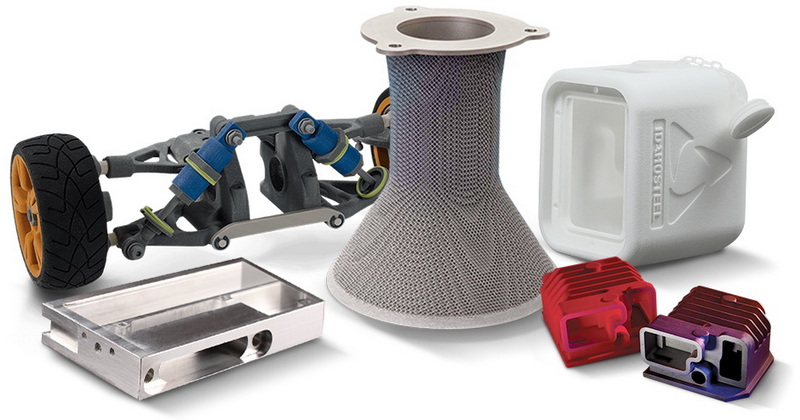
Prototyping bridges the gap between conceptualization and production. Whether you're developing a new gadget, automotive part, or packaging design, prototypes help identify flaws, improve functionality, and streamline manufacturing.
A 3D print prototype is created through additive manufacturing, where layers of material are deposited to build a physical object directly from a digital 3D model. This technology uses materials like plastics, resins, and metals, depending on the printer type. The process allows for fast, flexible, and cost-effective production of prototypes that can range from simple conceptual models to highly functional parts.
Traditional prototyping includes various methods such as machining, casting, injection molding, and handcrafting. It often involves subtractive manufacturing — removing material from blocks — or utilizing molds to form parts. This approach has been relied upon for decades and is deeply rooted in industries where precision, finish, and material fidelity are critical.
One of the biggest advantages of a 3D print prototype is speed. Products can be printed within hours or days, significantly faster than the weeks traditional prototyping may take. This rapid prototyping enables designers to test multiple iterations quickly, reducing the overall product development timeline and accelerating time to market.
3D printing minimizes material waste by adding only the necessary material layer by layer. It requires no expensive molds or tooling, making it economical for one-offs or small batches. This cost efficiency is particularly attractive for startups, inventors, and businesses testing new products without committing to mass production.
3D printing excels at producing intricate shapes and designs impossible to achieve via traditional methods. It supports the creation of complex internal lattices, channels, and undercuts without additional assembly or tooling costs, allowing developers to push design boundaries and optimize product function.
Because 3D print prototypes stem directly from digital CAD models, design modifications can be implemented rapidly without the need for retooling. This flexibility encourages innovation and iterative improvements throughout the development process.
Modern 3D printing technologies have expanded material options dramatically. Beyond standard plastics like PLA or ABS, advanced printers now use engineering-grade polymers, flexible materials, and metal powders, enabling prototypes that closely mimic final product properties and support functional testing.
3D printing's additive nature reduces waste compared to subtractive methods. By consuming only required materials, manufacturers can minimize environmental impact. This sustainability aspect further promotes 3D printing in industries with growing ecological concerns.
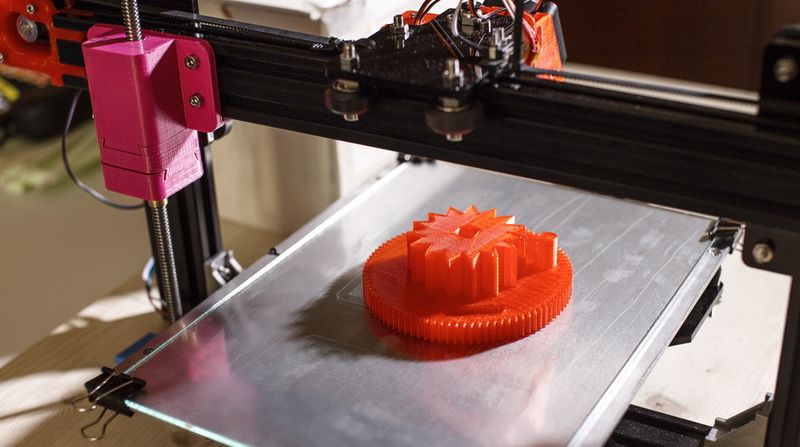
Despite advances, 3D printed prototypes sometimes have visible layer lines, a rougher texture, or minor dimensional inaccuracies compared to traditionally prototyped parts. While post-processing techniques like sanding, polishing, or coating can improve finish, it adds time and effort.
While material options continue to expand, 3D printing still lags behind traditional processes in availability of all production-grade materials. Specialized plastics, high-performance composites, or exotic alloys may not be suitable or economically feasible for additive manufacturing, limiting certain applications.
The mechanical properties of 3D printed parts depend highly on the printing technology and orientation. Some methods produce parts that are anisotropic or less robust than their traditionally manufactured counterparts, potentially limiting their use in demanding testing or end-use scenarios.
Most commercial 3D printers have build volume limitations, restricting the size of prototypes that can be printed in one piece. Very large parts may require segmentation and subsequent assembly, affecting integrity and increasing complexity.
Traditional prototyping techniques such as CNC machining and injection molding produce prototypes with high-precision dimensions and smooth surfaces, often requiring minimal finishing before evaluation or presentation. This is vital for products where visual aesthetics or tight tolerances are non-negotiable.
Traditional methods allow the use of final production materials, such as specific metals, engineering plastics, or composites. This enables realistic testing of mechanical properties, thermal resistance, chemical compatibility, and other critical performance factors.
Machined or molded prototypes generally possess superior strength and durability, making them suitable for rigorous functional testing, load bearing, or environmental exposure that imitates actual product conditions.
Traditional prototyping processes benefit from extensive industrial experience, broad availability of machinery, and standardized quality measures. Many industries have built long-standing relationships with suppliers and rely on these methods to guarantee consistent results.
Producing traditional prototypes often involves creating molds, fixture setups, or CNC programming, which can take several weeks. This longer lead time slows down the product development cycle and may delay market entry.
Tooling costs and material waste make traditional prototyping expensive for low-volume runs or single units. Investing in molds or machining setups might not be justifiable for early-stage concepts or small production requirements.
Once tooling or machining programs are set, making changes to a prototype design can be cumbersome and costly. The process is less flexible, especially when multiple design iterations are necessary.
Subtractive manufacturing methods inherently generate waste material since parts are carved from solid blocks. This inefficiency adds costs and environmental burdens.
Choosing between a 3D print prototype and traditional prototyping depends on the project's goals, timeline, budget, and technical requirements.
- For Concept Validation and Early-Stage Development: 3D printing is ideal for quickly bringing ideas into physical form, enabling iterative design and early user feedback.
- For Functional, Mechanical, or Final Form Testing: Traditional methods are preferred when prototypes must replicate exact production materials and withstand rigorous real-world testing.
- For Complex Geometries and Customization: The flexibility of 3D printing allows designers to explore shapes and structures impossible with traditional manufacturing.
- For Large Volume Production Prototypes: Traditional prototyping methods often provide better scalability, lower unit cost per part, and superior finish.
Increasingly, companies adopt a hybrid approach that leverages the strengths of both prototyping styles. For example, initial 3D printed models help validate design and ergonomics rapidly. Once the design stabilizes, traditional prototypes produced via CNC machining or molding can verify function, material properties, and manufacturing readiness. This integration accelerates development while optimizing costs and quality.
Both 3D print prototype and traditional prototyping have unique advantages that serve different purposes in the product development life cycle. 3D printing excels in rapid iteration, cost efficiency for low volumes, and design complexity, while traditional methods remain superior for material fidelity, surface finish, and mechanical strength. Selecting the right prototyping technique depends on your project's specific needs, balancing speed, cost, and functionality. By combining both methods strategically, manufacturers and designers can ensure optimal results and faster innovation.
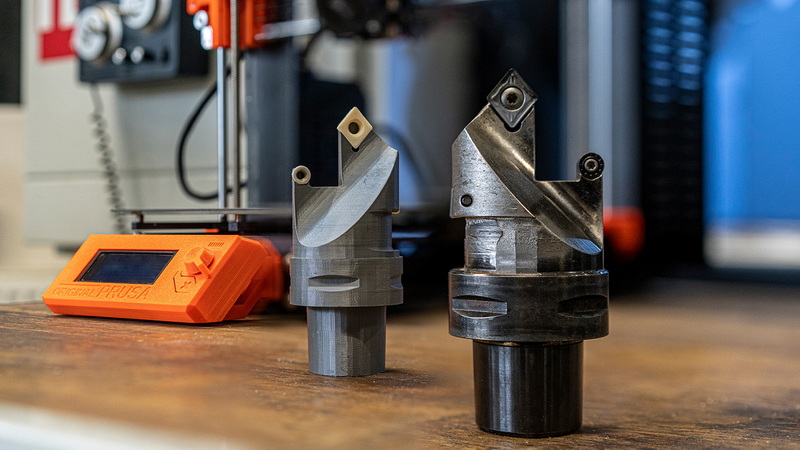
Common 3D printing materials include PLA, ABS, resin, nylon, and metal powders. Advanced printers now support engineering-grade polymers and flexible or high-strength materials suitable for functional testing.
Accuracy varies by technology but generally ranges from ±0.1 mm to ±0.3 mm, suitable for most iterative design and functional validations. Traditional machining often achieves tighter tolerances.
Yes, depending on the material and printing method. Durable materials such as nylon or metal allow functional tests, although mechanical strength may differ from final mass-produced parts.
3D printing is typically less cost-effective than traditional molding or machining for large volumes due to higher per-unit time and material costs.
The aerospace, automotive, healthcare, consumer electronics, and industrial design sectors benefit significantly from rapid, flexible 3D prototyping because of their complex and innovative product requirements.

